 Products


| Quantity: | |
|---|---|


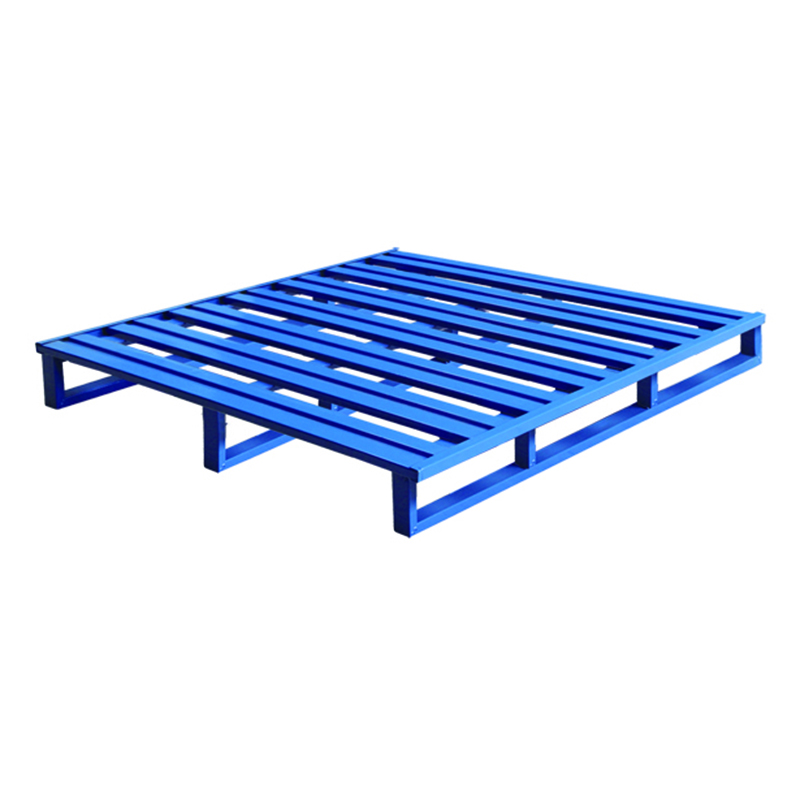
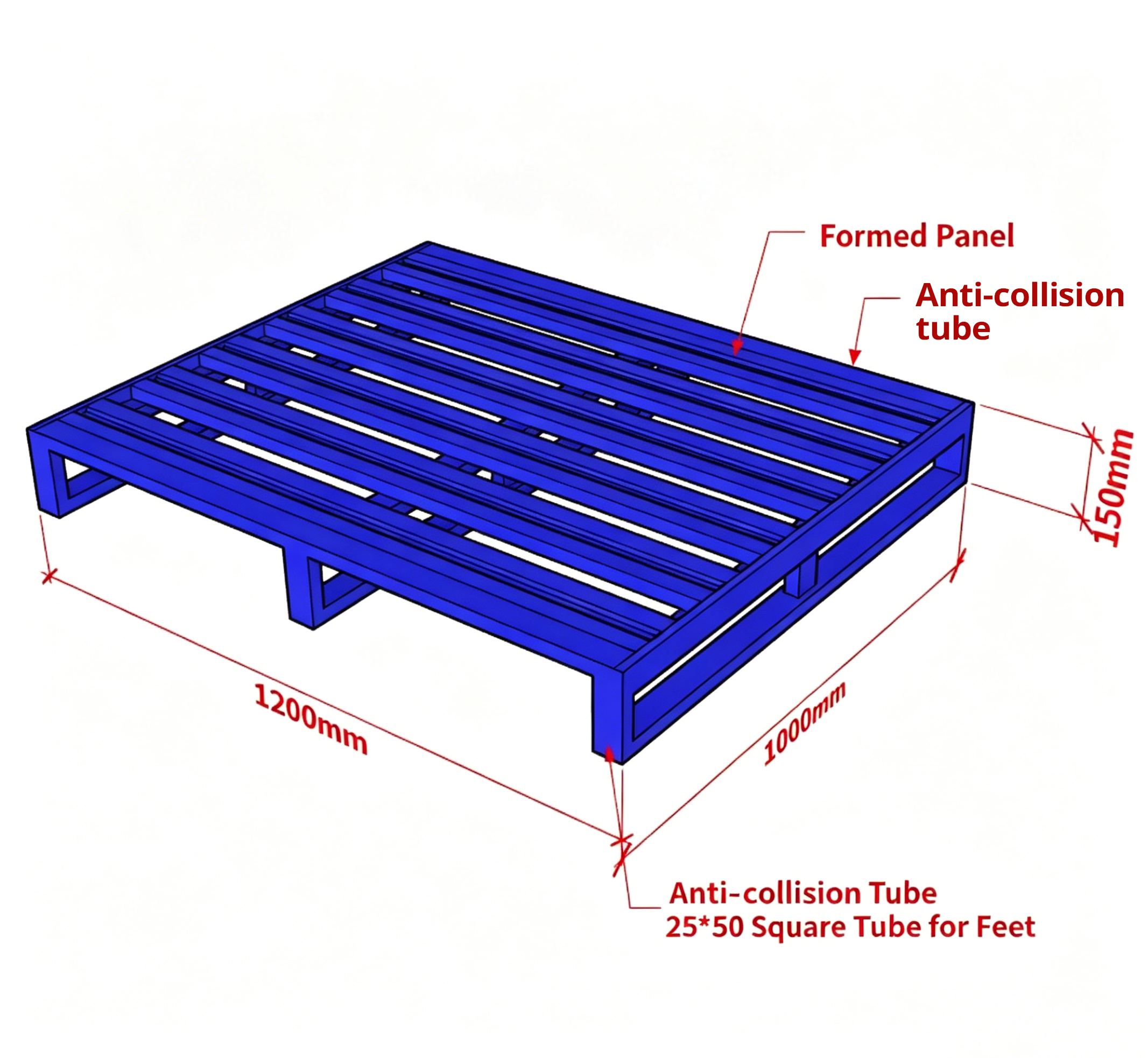
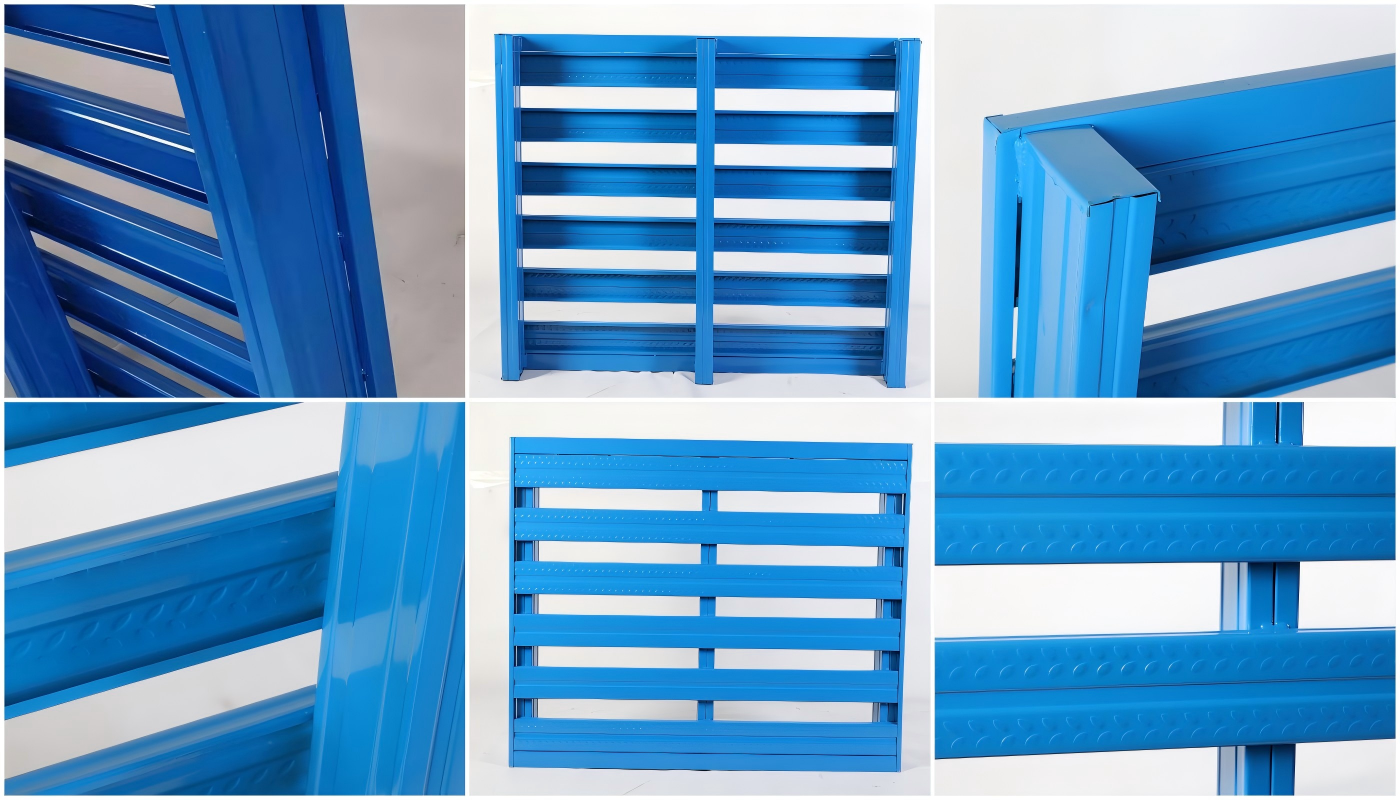
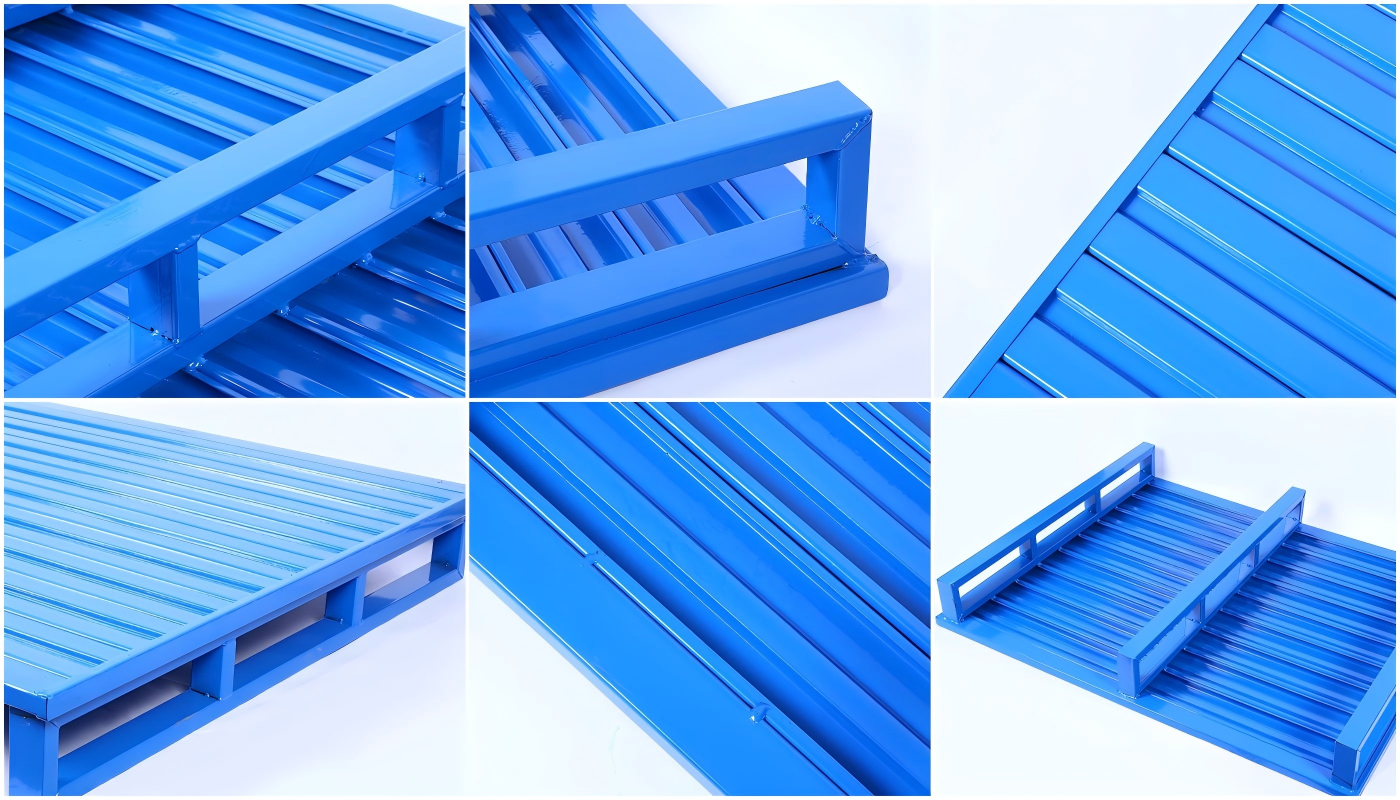
These metal platforms are universally recognized as critical auxiliary equipment in modern industrial warehousing. The main material—galvanized steel plate—is formed by specialized equipment, supported by various profiles, connected and strengthened by solid rivets, and then welded securely under C02 gas protection. This meticulous craftsmanship results in an ultra-light metal tray series that excels in ground storage, high-bay shelf storage, cargo intermodal transportation, and rapid inventory turnover.
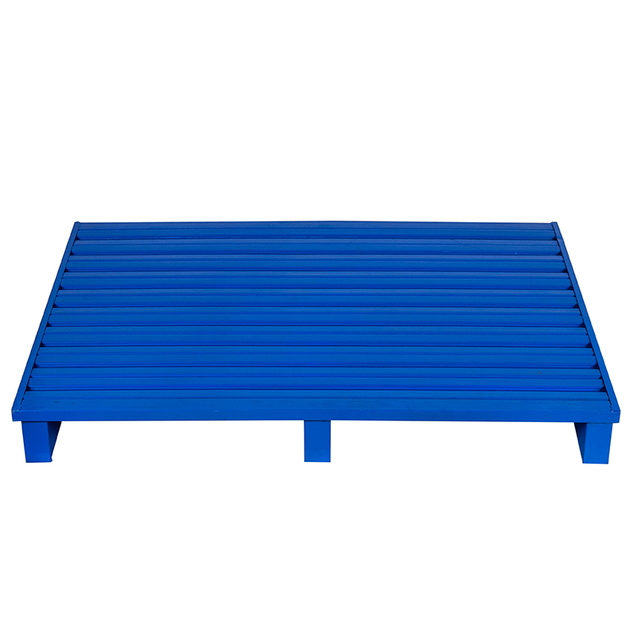
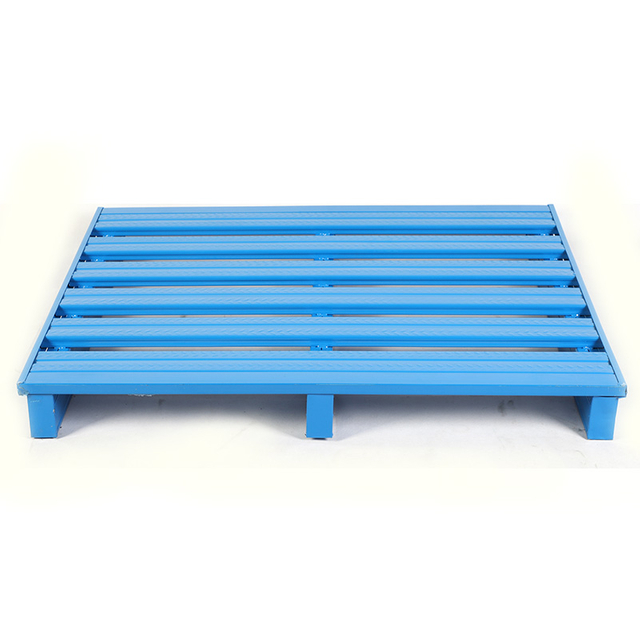
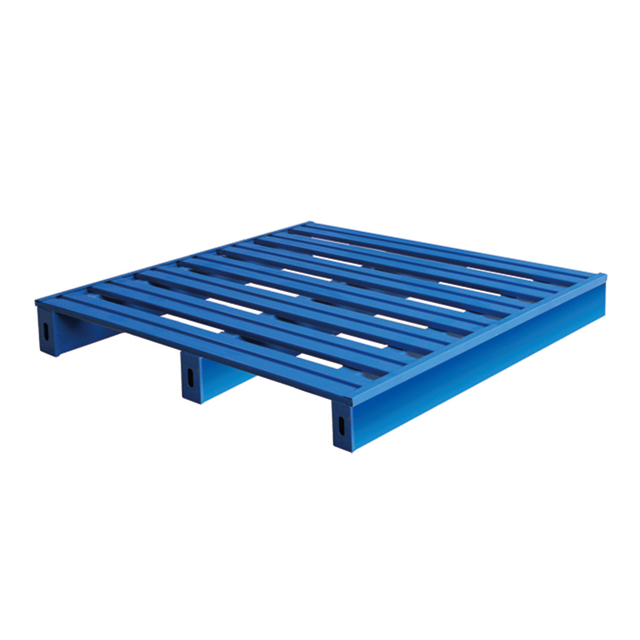
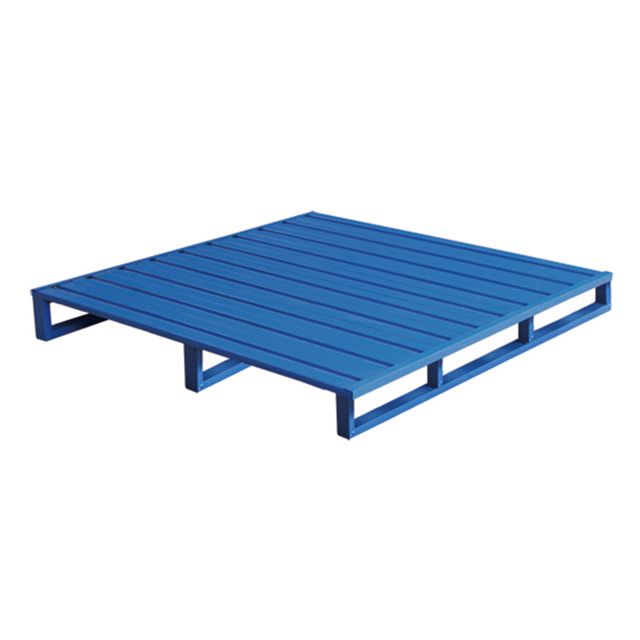
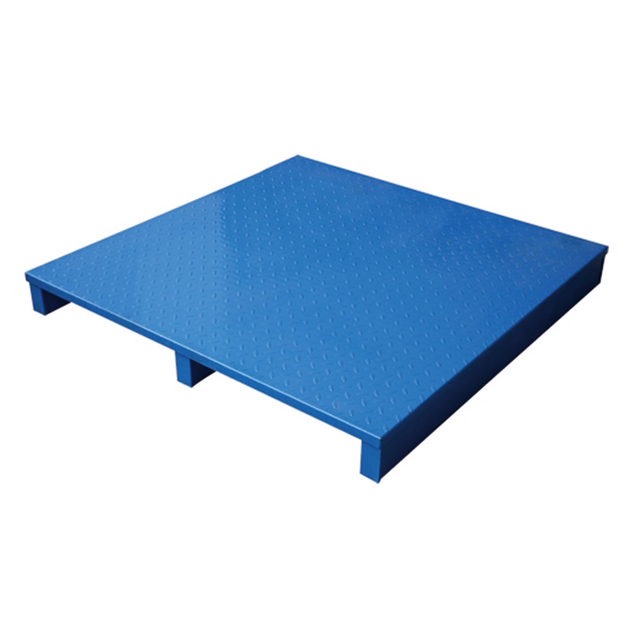
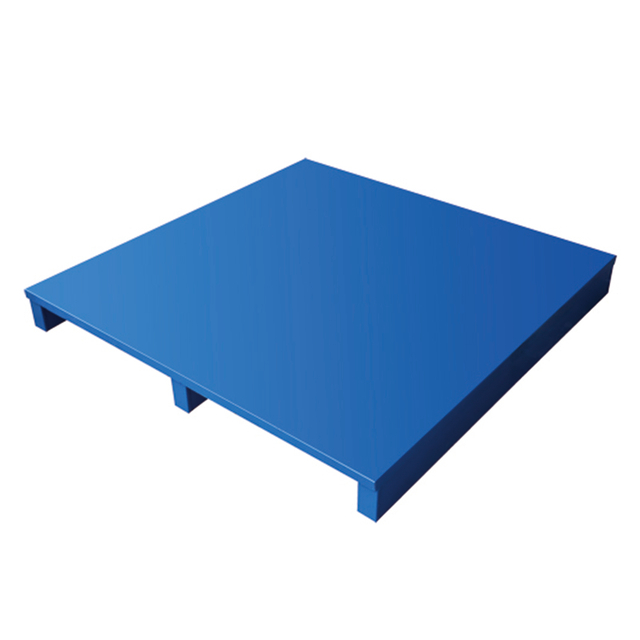
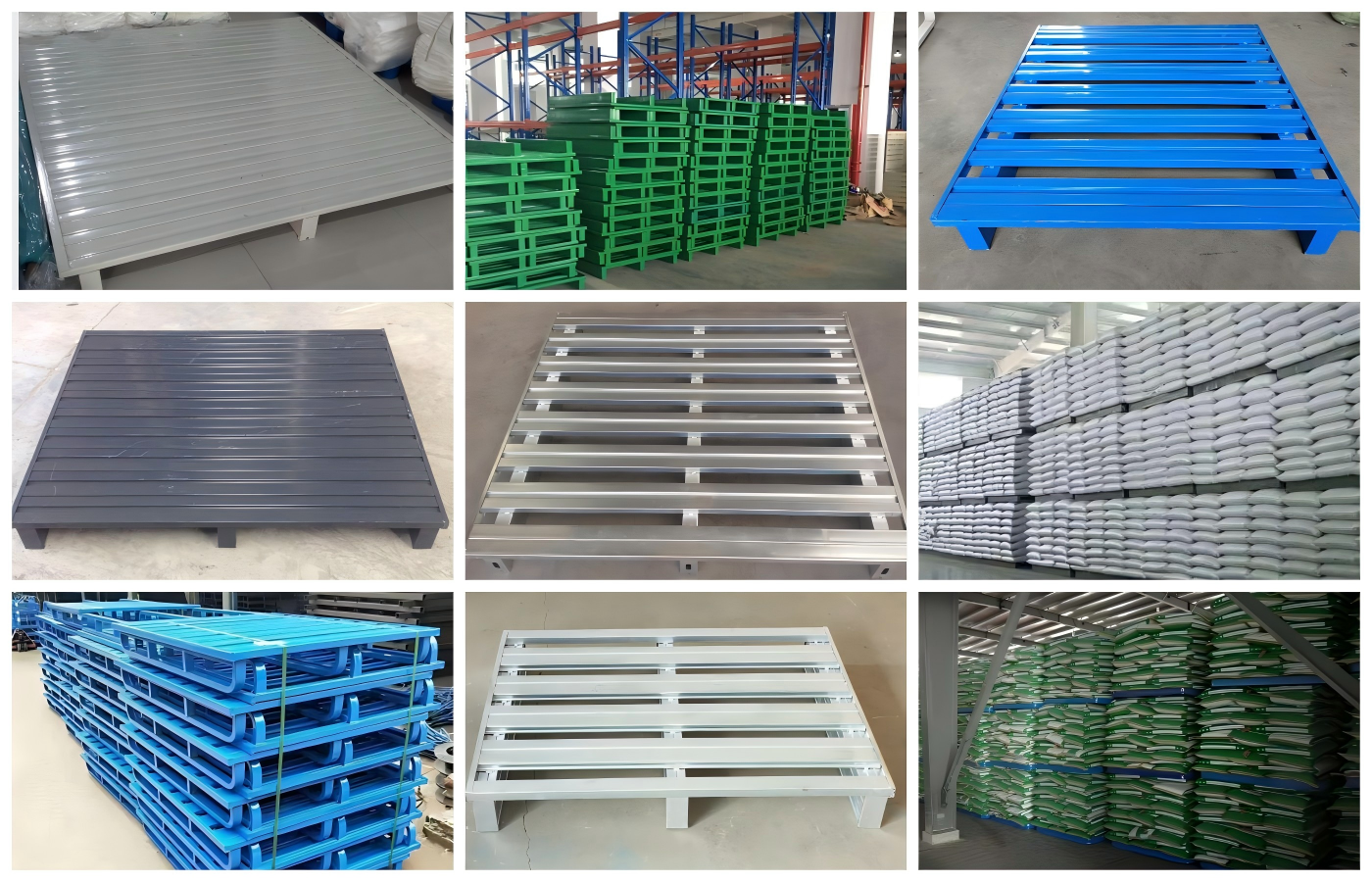
The Blue Four-in-One Half-Flat Pallet Tray serves as a foundational platform for heavy-duty cargo containment, stacking, and handling. Engineered specifically for fluid forklift and pallet jack operations, this unitized container tool transforms how facilities manage floor storage, rack systems, and intermodal transport. The distinct blue powder-coated finish provides a vibrant visual indicator for specific inventory zones while offering a smooth, tactile surface that resists the daily friction of heavy boxes and machinery. Whether deployed in food processing, chemical storage, or mechanical manufacturing, the structural dimensions and load-bearing capacities adapt to specific rack sizes and industry demands.
Constructed from premium galvanized steel sheets, the tray undergoes precision forming through specialized cold-roll equipment. The basic structure features a single-layer half-flat deck supported underneath by strategically placed longitudinal beams, blocks, and reinforced legs. We utilize CO2 gas-shielded welding to join the rivet-connected structural profiles, ensuring the joints remain solid, unyielding, and visually clean under extreme stress. The minimum clearance height is strictly calibrated to guarantee effortless entry for mechanical handling equipment, preventing operational bottlenecks and keeping automated workflows moving without interruption.
Subjected to rigorous ISTA-standard compression and drop tests, this metal platform maintains absolute structural stability during heavy-load stacking and frequent mechanical turnover. It effortlessly outperforms alternative materials in raw carrying strength, ensuring that even the heaviest industrial components remain securely supported without bending the deck.
Constructed entirely from metal, the tray offers a closed-loop lifecycle. Once it reaches the end of its decades-long service life, the steel retains substantial scrap value, preventing resource waste and supporting sustainable operational practices that align with modern environmental goals.
We treat the surface to ensure a completely smooth finish, complemented by anti-slip edge banding. The absence of sharp burrs or rough welds protects delicate cargo packaging from tears and minimizes handling risks for warehouse personnel during manual adjustments. The chassis remains solid, lightweight, and highly rigid, offering stable packaging performance.
The combination of a galvanized steel core and a baked-on blue powder coating creates an impenetrable barrier against moisture, water, and rust. Compared with wooden alternatives, it eliminates the risk of breeding pests; compared with plastic options, it delivers superior strength, wear resistance, and temperature tolerance.
Navigating international borders becomes effortless. Unlike organic materials that harbor pests, this metal structure requires no re-steaming, high-temperature disinfection, or chemical anti-corrosion treatments, fully complying with international environmental regulations and expediting global transit.
The 4-way insertion design virtually improves the convenience of space utilization and daily operations. Furthermore, its sturdy bottom plate design conforms perfectly to the strict requirements of automated assembly lines and modern packaging systems.
Superior Load-Bearing Capacity: Delivering the highest load-bearing capacity among all platform types, this unit securely holds dense, heavy materials without bowing, flexing, or experiencing structural fatigue over time.
100% Eco-Friendly & High ROI: Fully recyclable and reusable, ensuring zero waste of resources. The extremely low breakage rate and zero-maintenance design mean replacement costs are virtually eliminated, significantly lowering the long-term total cost of ownership.
Enhanced Structural Integrity: Features a non-slip surface treatment and reinforced edge banding. The base structure is reinforced, offering a lightweight profile combined with high structural rigidity, thereby ensuring stable packaging performance during rapid transit and sharp turns.
Weather and Corrosion Resistance: Resistant to water, moisture, and rust. Compared to wooden pallets, they offer significant environmental advantages, completely bypassing vulnerabilities like absorbing moisture, splintering, and pest infestation, ensuring a hygienic foundation for sensitive goods.
Superior Performance over Plastic Pallets: Offers distinct advantages in terms of strength, abrasion resistance, temperature tolerance, and cost-effectiveness compared to plastic pallets, preventing winter brittleness or summer warping in demanding environments.
Ideal for Exports: Requires no fumigation, high-temperature sterilization, or anti-corrosion treatments. This is particularly beneficial for export shipments, bypassing complex quarantine inspections and complying with international environmental regulations to prevent costly delays at customs.
Safety and Durability: Exhibits a high coefficient of friction when placed on storage racks, preventing slippage under heavy loads and ensuring safe, reliable operation. Its excellent structural rigidity allows for high load capacities and ensures exceptional durability, protecting both the valuable inventory and the personnel working below.
Operational Flexibility: Features a four-way entry design that inherently optimizes space utilization and operational efficiency. Furthermore, its sturdy base design is fully compatible with conveyor roller systems and automated packaging lines, keeping mechanized workflows running at peak efficiency without jams.
For facilities integrating AGVs or robotic pick-up systems, dimensional consistency matters more than raw load capacity. This pallet series is manufactured with tightly controlled tolerances on the following critical measurements:
Leg/Block Height Uniformity: Consistent clearance height across every unit in a batch, preventing sensor misreads or fork alignment errors during automated pick-up.
Fork Channel Width Tolerance: Precisely dimensioned entry channels reduce the risk of partial tine engagement, a common cause of load instability in automated systems.
Deck Flatness Control: Minimal surface deviation ensures consistent optical or laser sensor readings used by AGV navigation and pallet-detection systems.
Batch-to-Batch Repeatability: Manufacturing under fixed tooling and jig setups ensures that units produced months apart maintain the same dimensional profile, critical for large automated fleets scaling over time.
We support end-to-end custom development for clients with specific automation or facility integration requirements:
Technical Consultation – Discuss your AGV model, forklift specifications, or racking system tolerances with our engineering team.
Drawing-Based Design – Free technical drawings are prepared reflecting your exact dimensional and load requirements.
Tooling Setup – For large-volume OEM orders, dedicated tooling can be arranged to maintain consistent output across future reorders.
Pilot Batch Verification – A small pilot batch can be produced and tested on-site with your actual automated equipment before full-scale production.
Full Production & Traceability – Mass production proceeds with batch tracking, allowing quality issues to be traced back to specific production runs if needed.
Beyond standard load testing, this pallet series undergoes additional verification relevant to automated handling environments:
Repeated Cycle Fatigue Testing: Units are subjected to simulated repetitive pick-up/drop-off cycles to verify long-term structural stability under high-frequency automated handling.
Dimensional Sampling Inspection: Random units from each batch are measured against technical drawings to confirm tolerance compliance before shipment.
Static & Rack Load Compression: Standard compression testing confirms rated capacity under both floor and elevated rack support conditions.
Documentation Support: Test records and dimensional inspection reports can be provided to support your internal equipment qualification process.
Automotive Assembly Lines: Consistent fork geometry supports synchronized AGV movement between production stations without manual realignment.
High-Throughput Distribution Centers: Dimensional repeatability reduces automated system downtime caused by pallet misreads.
Smart Warehousing Pilot Projects: Facilities transitioning from manual forklifts to automated fleets benefit from a pallet standard that works reliably across both handling methods during the transition period.
Multi-Shift Manufacturing Plants: Fatigue-tested structure withstands continuous multi-shift handling cycles without premature wear.
Structural Warranty: Coverage against manufacturing defects in welds and rivet joints for a defined period from delivery.
Dimensional Compliance Guarantee: If units fail to meet agreed dimensional tolerances upon inspection, replacement or rework is provided.
Technical Support for Automation Integration: Our team remains available to assist with troubleshooting if dimensional or handling issues arise after deployment with AGV or robotic systems.
Repeat Order Consistency: Saved specifications and tooling references ensure future reorders match the original batch's dimensional profile.
Periodically check fork channel surfaces for wear or deformation, especially in high-frequency automated handling environments
Inspect weld joints at load-bearing intersections every few hundred handling cycles in extreme-duty settings
Clean deck surface regularly to prevent debris accumulation that could interfere with AGV optical sensors
Q1: How important is dimensional tolerance for AGV compatibility?
A: Very important — inconsistent leg height or fork channel width can cause AGV pick-up errors or load instability, which is why this series is manufactured under tightly controlled tolerances.
Q2: Can you provide dimensional inspection reports with our order?
A: Yes, batch sampling inspection reports can be provided upon request to support your equipment qualification documentation.
Q3: What happens if our AGV system requires a non-standard fork channel width?
A: We can produce custom tooling to match your specific AGV or forklift fork dimensions; please share your equipment specifications for a tailored design.
Q4: How does fatigue testing differ from standard load testing?
A: Fatigue testing simulates repeated pick-up and drop-off cycles to verify long-term structural stability, whereas standard load testing confirms performance under a single static or dynamic load event.
Q5: Can this pallet be used during a transition period from manual to automated handling?
A: Yes, its dimensional consistency and standard fork entry design make it reliable for both manual forklift operations and automated AGV handling simultaneously.