
 Products


| Quantity: | |
|---|---|


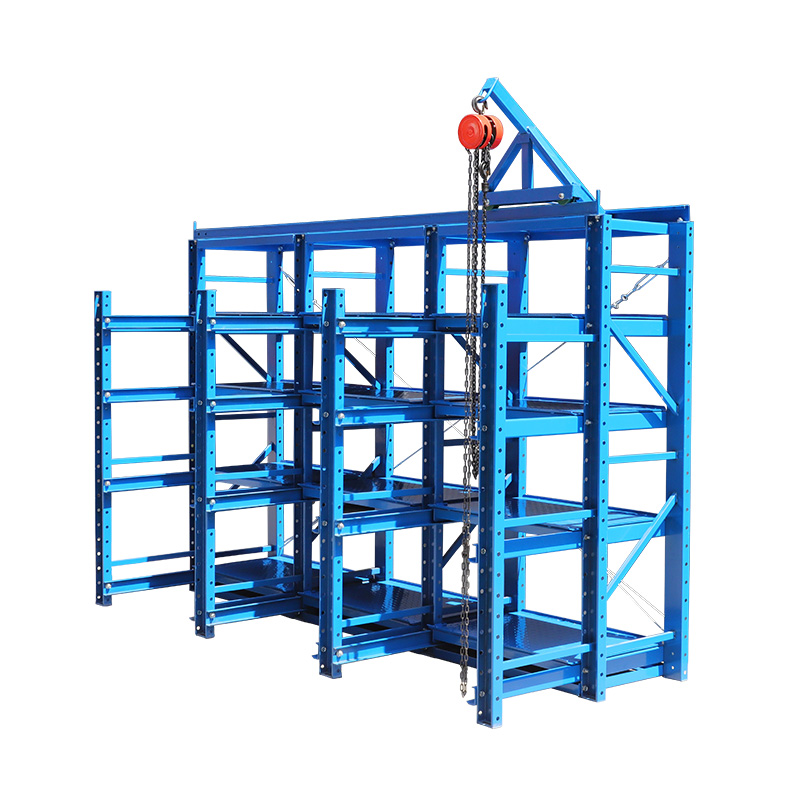
Drawer-type mold racks (also known as mold shelving units) are heavy-duty storage systems specifically designed for various types of factory molds—including plastic, hardware, die-casting, and powder metallurgy molds. Featuring a structure comprising double or triple upright columns combined with pull-out drawer tiers, these racks utilize a modular, bolted assembly design. The top section is frequently equipped with a manual or electric hoist and trolley system. Available in light-duty, standard, and heavy-duty configurations, a typical single drawer offers a load capacity of 800–1000 kg and extends approximately 65% (with full-extension models reaching up to 99%). Occupying a floor area of just 1–2 square meters, a single unit can store dozens of small to medium-sized molds, making them widely utilized in injection molding, stamping, and mold-making workshops, as well as general warehouses.

Enables vertical, multi-tiered storage, eliminating floor clutter and significantly improving site utilization efficiency.
Features pull-out drawers that, when used in conjunction with a hoist, allow for the effortless lifting and handling of molds, thereby facilitating rapid mold changeovers.
Equipped with limit stops and safety pins to prevent drawers from accidentally sliding out, thereby safeguarding the integrity of the stored molds.
Facilitates organized storage through classification and zoning, ensuring a neat and orderly environment that simplifies mold inventory management and maintenance.
Constructed from thickened steel and finished with an anti-corrosive powder coating; offers exceptional load-bearing capacity, resists deformation, and ensures a long service life.
Significantly saves warehouse space and maximizes storage capacity utilization.
Drawers can be easily pulled out for convenient mold access, thereby improving mold changeover efficiency.
Prevents collisions and abrasion between molds, thereby preserving their precision and integrity.
Offers exceptional load-bearing capacity and ensures a long service life.
Facilitates efficient management, making mold inventory checks and retrieval quick and easy.
Prevents accidental sliding and falling, ensuring safer operation.
Tiers can be freely adjusted to accommodate molds of various specifications.
Allows for splicing and expansion as needed, offering high flexibility and adaptability.
Suitable for use in a wide range of workshop and production environments.
Facilitates effortless lifting and handling of heavy molds.
Mold rack, also known as mold rack or drawer rack, is mainly used for storage and management. Various types of molds do not occupy space. A mobile hoist truck can be configured to facilitate the lifting of molds.
Load bearing range: 200-1500kg/layer
Specification and color: conventional specification 3100 * 600 * 2000, customizable according to mold size
Conventional colors: blue, green.
Applicable warehouse parameters: warehouse for storing more similar molds.
Applicable industry/type of goods: used for placing various types of plastic molds, hardware molds, mechanical molds, and other equipment.
Storage method: The mold can be accessed by a hoist truck or a horizontal crane, or small molds can be accessed manually.
Specification (one main and two auxiliary) | 3050*600 +300*2000 | Crown block bearing | 500KG |
Floor height (four floors) | Layer rated load | 1000KG | |
Layer size | 900*600 | Colour | Sky blue |
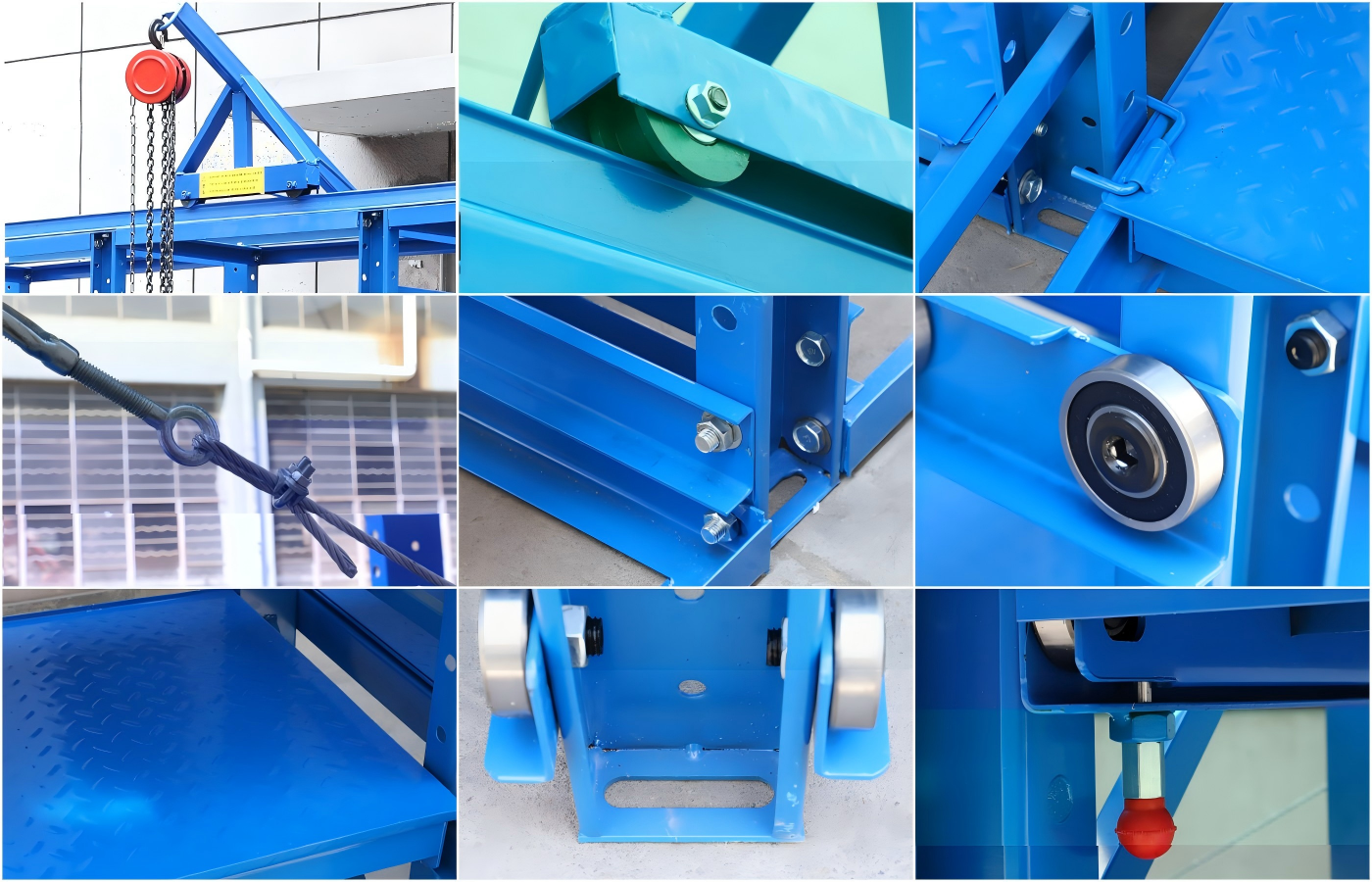
Features a robust frame that resists deformation under heavy loads.
Ensures smooth drawer movement and offers excellent wear resistance and durability.
Provides a secure and stable framework while allowing for easy installation and disassembly.
Includes safety pins and anti-slip baffles for multi-layered protection and increased reliability.
Creates a smooth surface that is highly resistant to paint chipping and rust.
Centralized storage for plastic and injection molds, facilitating rapid mold changeovers.
Categorized storage for stamping dies and tooling fixtures, preventing damage from bumps and impacts.
Storage solutions for heavy-duty die-casting molds and automotive component molds.
Temporary storage for molds undergoing inspection, maintenance, or internal circulation.
Organized management and storage for various types of molding dies and precision jigs.
Centralized storage management to save space and facilitate 5S standardization within the workshop.
Constructed from welded thickened structural steel, each shelf boasts a strong load-bearing capacity capable of accommodating both light and heavy molds; custom-reinforced and heavy-duty models are also available upon request.
Equipped with heavy-duty bearing slides, the drawers glide smoothly and effortlessly, making daily operation labor-saving and resistant to jamming.
Standard features include safety pins and limit mechanisms; the drawers automatically lock into place when extended, preventing accidental detachment or tipping to ensure safety.
The vertical spacing between shelves is freely adjustable, making the rack compatible with molds of varying dimensions and heights to suit a wide range of specifications.
The rack undergoes a surface treatment process involving rust removal, phosphating, and electrostatic powder coating, providing excellent rust resistance and abrasion durability suitable for humid and dusty workshop conditions.
Featuring a modular assembly structure, installation is straightforward; additional shelves, sections, or capacity expansions can be easily implemented at any time.
The drawers can be extended significantly (up to a large portion of their depth); when paired with a manual hoist or overhead crane, the lifting and retrieval of molds become simple and highly efficient.
The robust structure is highly resistant to deformation, ensuring durability for many years under normal usage conditions; maintenance simply requires periodic cleaning of the slide rails and inspection of safety components.
1. Distribute molds evenly across the shelves; avoid placing excessive weight on one side or exceeding the maximum load capacity.
2. Operate the drawers with a gentle push and pull motion; always insert the safety pins once the drawer has been closed.
3. Periodically inspect the slide rails, fasteners (screws/bolts), and limit mechanisms, tightening or maintaining them as needed.
4. Avoid exposure to strong acids or alkalis that could cause corrosion, and keep the rack clean and dry.
5. Prioritize placing heavier molds on the lower shelves to ensure the overall stability and safety of the rack. Would you like me to condense this further into an ultra-short version, so it can be used directly in promotional materials or brochures?
