
 Products


| Quantity: | |
|---|---|


Automotive storage racks are specialized industrial shelving systems designed specifically for the storage, sorting, and circulation of automotive components. The main structure is constructed from high-quality Q235 cold-rolled steel, formed through welding and assembly processes. To address the characteristics of automotive parts—namely their vast variety, diverse specifications, and varying sizes—these racks feature a layered, partitioned, and modular design. They are available in various configurations, including shelf-type, pegboard-type, cantilever-type, drawer-type, and combination-type models. The surfaces undergo anti-corrosion and rust-proofing treatments—such as electrostatic powder coating or galvanization—ensuring a stable structure and flexible load-bearing capacity. Widely utilized in settings such as automotive OEMs, parts warehouses, 4S dealership service centers, auto repair shops, and parts manufacturing plants, these racks serve as dedicated storage equipment for achieving standardized storage, efficient management, and convenient access for automotive components.
Overall, the product is compatible with the storage of the entire spectrum of automotive parts—ranging from small items (screws, clips, oil seals) to medium-sized items (filters, brake pads, sensors) and heavy-duty items (wheel hubs, shock absorbers, transmission components). The racks can be freely combined and flexibly adjusted to meet the specific storage requirements of automotive parts with varying specifications.
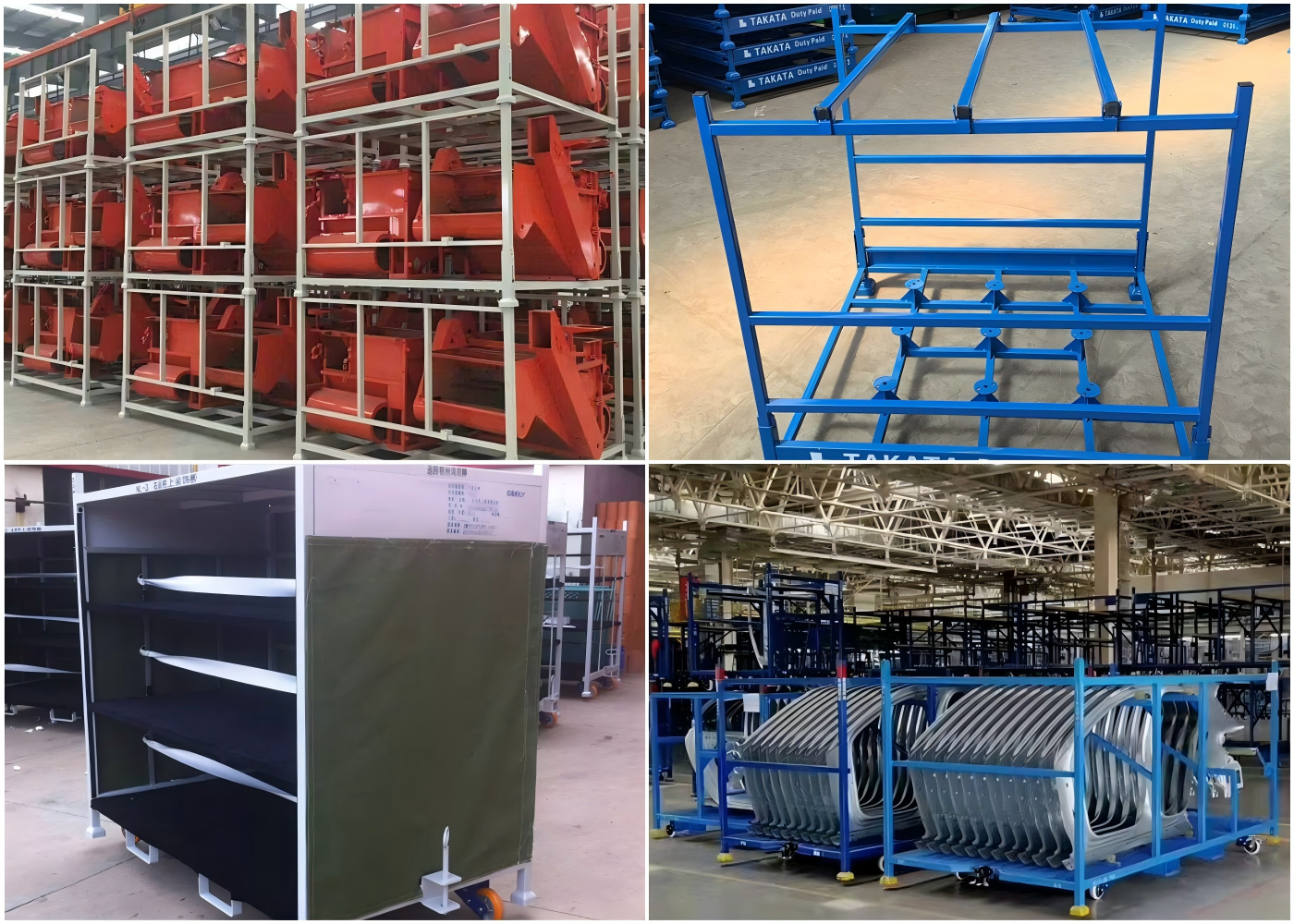
Featuring a multi-layered, multi-compartment, and modular structural design, the racks allow for precise, partitioned storage based on part category, model, specification, or vehicle type. This resolves issues associated with the vast variety, potential for confusion, and disorderly stacking of automotive parts, thereby enabling the organized and systematic storage of components.
With open or semi-open structural designs—complemented by layered shelving, pegboard slots, and drawer configurations—parts remain fully visible at a glance. This allows for rapid access and sorting without the need for rummaging, significantly boosting the efficiency of warehouse stocking and material retrieval operations.
The vertical, multi-layered structure fully leverages the vertical space within a warehouse. The layered and compartmentalized design allows for the precise segmentation of storage areas; compared to flat-surface stacking, this approach substantially increases storage capacity while simultaneously minimizing the warehouse floor space footprint required.
Elevated, multi-tiered storage keeps accessories off the ground, preventing exposure to moisture, rust, impact damage, scratches, and deformation caused by compression. This ensures that the appearance and performance of precision automotive components remain intact.
Featuring adjustable tiers and a differentiated load-bearing design, the system accommodates automotive accessories of varying weights simultaneously. Heavy-duty components are stored on the lower tiers, while lighter items are placed on the upper tiers, ensuring structural stability and operational flexibility.
Accessories are arranged according to uniform specifications and can be paired with signage and classification labels to enable visual inventory management. This facilitates efficient stocktaking, verification, and control, preventing stock accumulation or loss, and elevating the overall standard of warehouse management.
Select models are equipped with casters and feature a mobile design, facilitating the seamless circulation and transport of accessories between workshops, warehouses, and workstations. This makes the system ideally suited for use across the entire automotive lifecycle—from manufacturing and after-sales service to maintenance and repair operations.
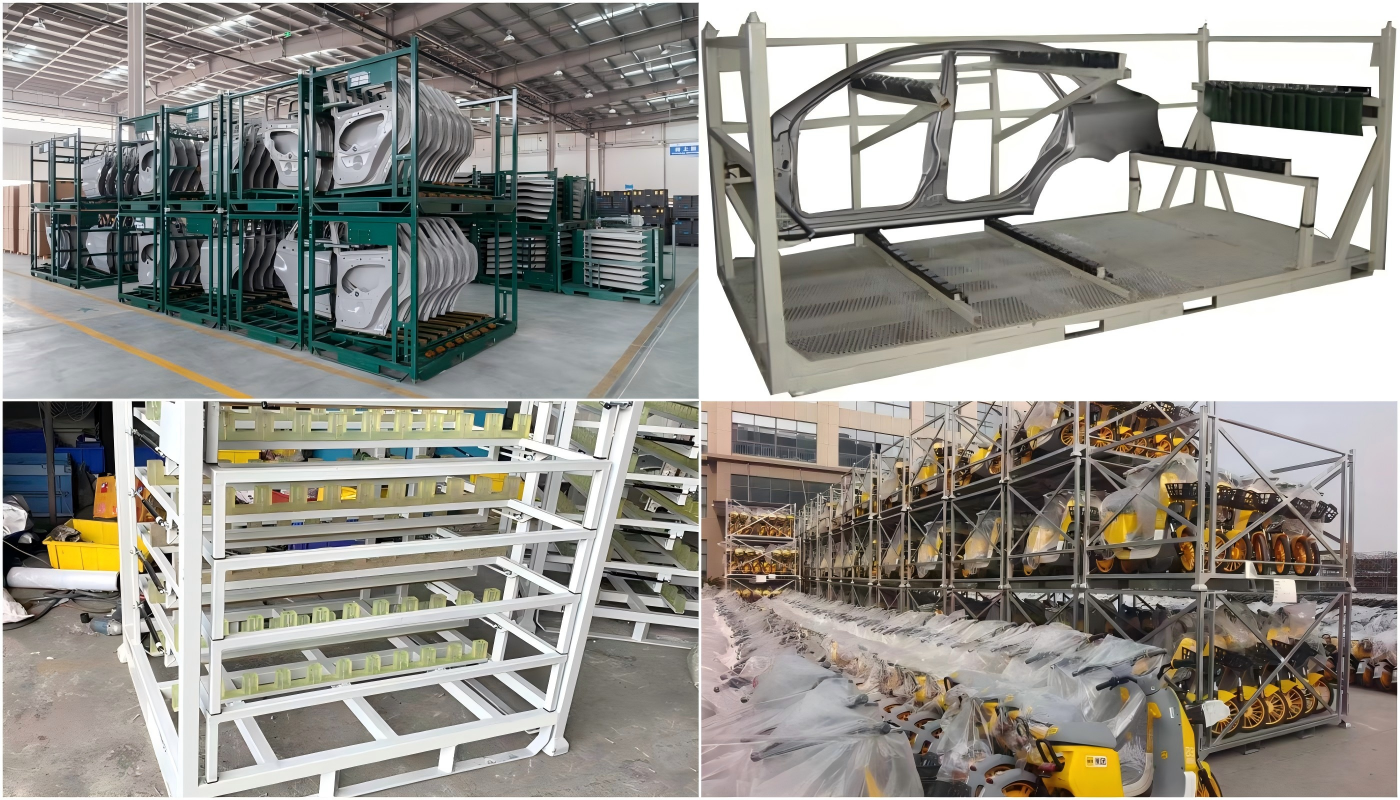
Custom-engineered to address the unique characteristics of automotive parts—including their vast variety, diverse specifications, and wide range of sizes—the system accommodates everything from small fasteners and medium-sized consumables to heavy-duty components, providing a one-stop storage solution for all accessory categories.
The vertical, multi-tiered structure combined with a modular, compartmentalized design fully leverages vertical warehouse space and optimizes storage zones. Compared to traditional floor-stacking methods, this approach significantly boosts storage capacity while effectively minimizing the required warehouse footprint.
Featuring an open, transparent structure with a tiered and compartmentalized layout, the system ensures that the placement of accessories is immediately visible. When combined with proper labeling, this allows for rapid storage, retrieval, and stocktaking without the need for rummaging, thereby drastically reducing the time required for order picking and material requisition, and boosting overall operational efficiency.
The elevated, multi-tiered storage design isolates accessories from ground-level moisture and dust, while preventing mutual compression, impact damage, and scratches. This effectively safeguards precision components against rust, deformation, and physical damage, thereby ensuring the continued quality and integrity of all stored parts.
Featuring a tiered load-bearing design—with the lower tiers supporting heavy components and the upper tiers storing lighter parts—the robust overall frame remains stable without wobbling or deforming, effectively meeting the mixed-storage requirements for both light and heavy automotive parts.
Constructed from thickened steel treated with anti-corrosion processes, the unit is highly resistant to wear, impact, and rust. Designed for long-term, cyclical use without the need for frequent replacement, it significantly reduces the long-term investment costs associated with warehousing equipment.
Suitable for a diverse range of settings—including automotive OEMs, parts warehouses, 4S dealership service centers, auto repair shops, and component processing plants—it simultaneously addresses multiple operational needs such as storage, sorting, inventory turnover, and product display.
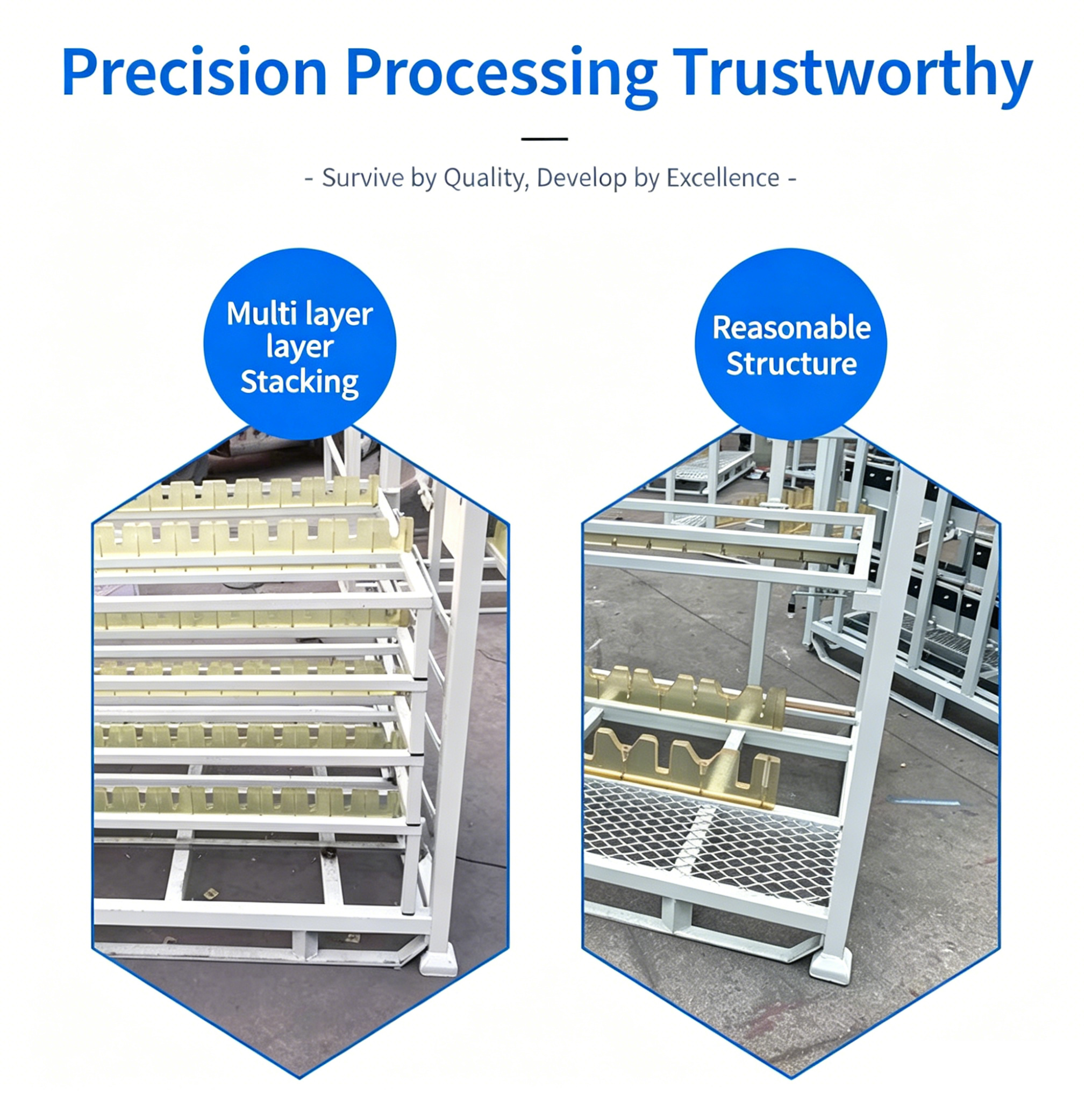
Units can be freely spliced together, and shelves or dividers can be added or removed to flexibly adjust the storage structure. This adaptability accommodates parts of varying specifications and warehouses of different sizes, allowing you to effortlessly create a customized storage solution tailored to your specific automotive parts inventory.
Shelf heights can be freely adjusted vertically to accommodate automotive parts of varying heights, preventing wasted vertical space and maximizing operational flexibility.
Features dedicated slots for label cards and designated labeling areas, allowing for classification tags based on vehicle model, part number, or category. This enables visual inventory management, effectively eliminating errors such as misretrievals or misplacement.
Available in a wide variety of styles—including standard shelving, pegboard-style, drawer-style, cantilever-style, and mobile units with casters—the range offers precise solutions for every need: choose compartmentalized units for small parts or reinforced units for heavy components.
All corners and edges are rounded and polished to be burr-free, preventing accidental scratches or injuries to operators. Models equipped with casters offer flexible mobility for easy repositioning, while integrated brakes allow for secure locking, facilitating the efficient transfer of parts between workstations.
Most products feature a snap-fit or simple bolt-together assembly structure. All necessary hardware is included with the shipment, requiring no specialized tools; units can be quickly assembled and put into immediate use.
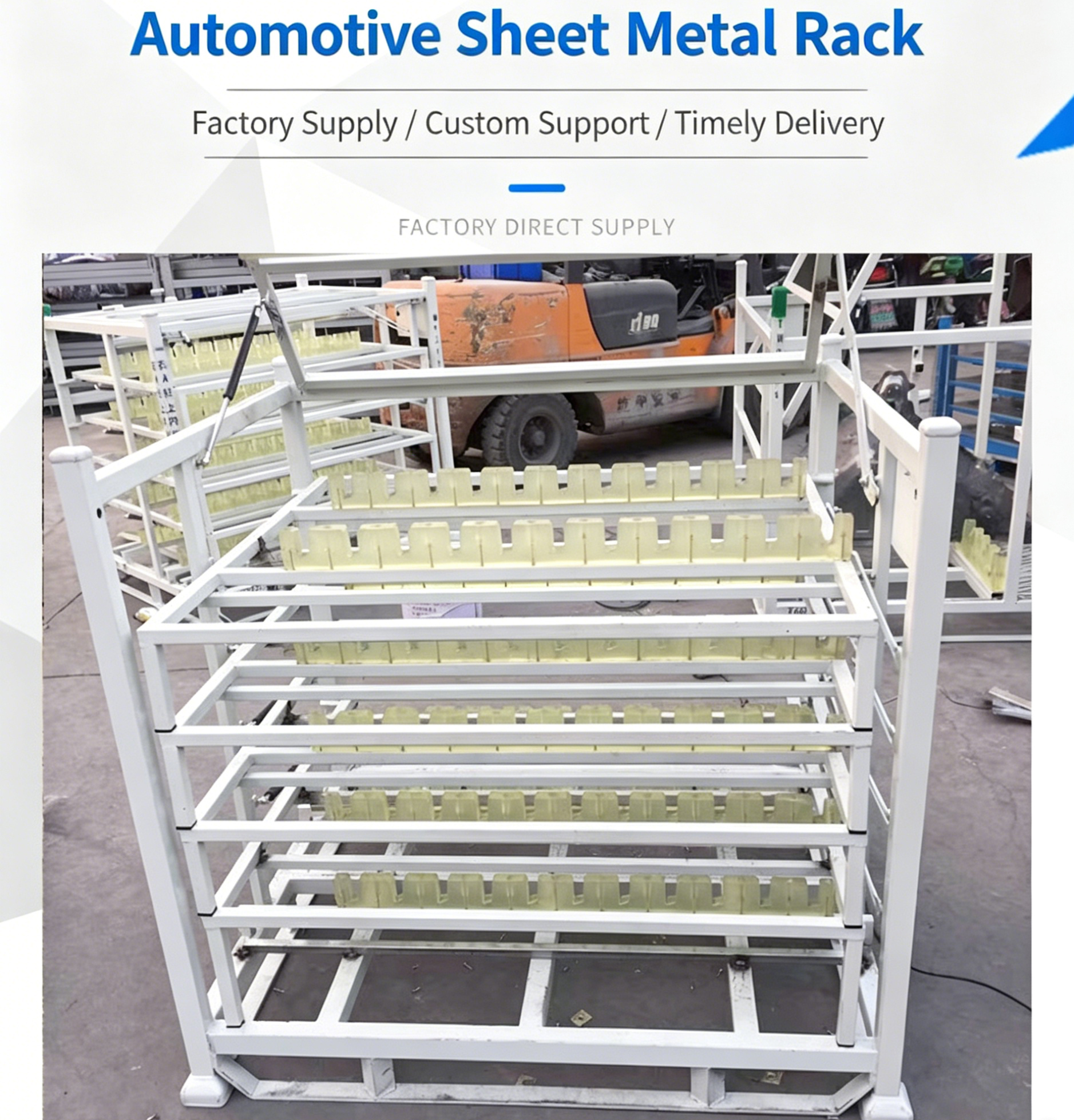
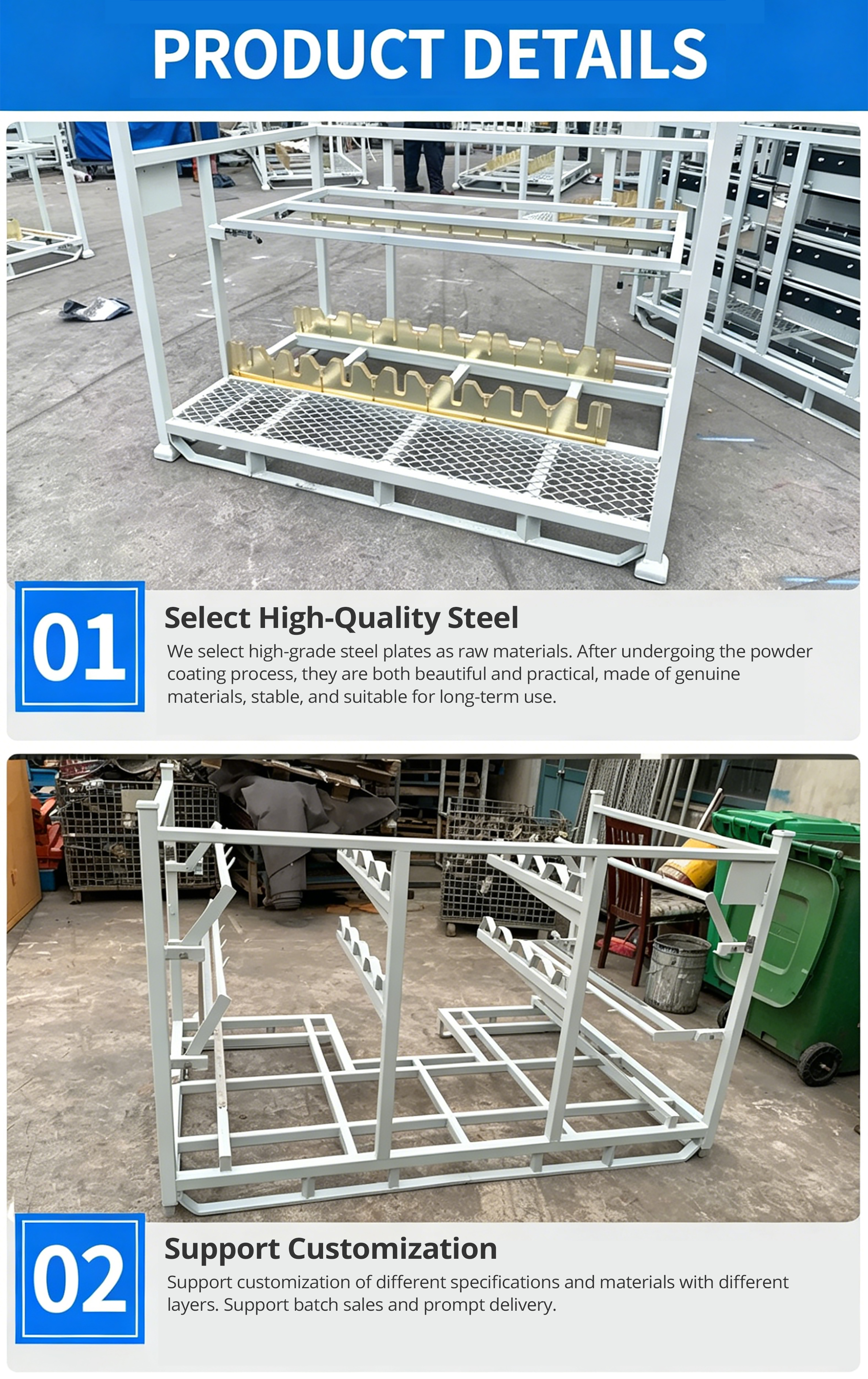
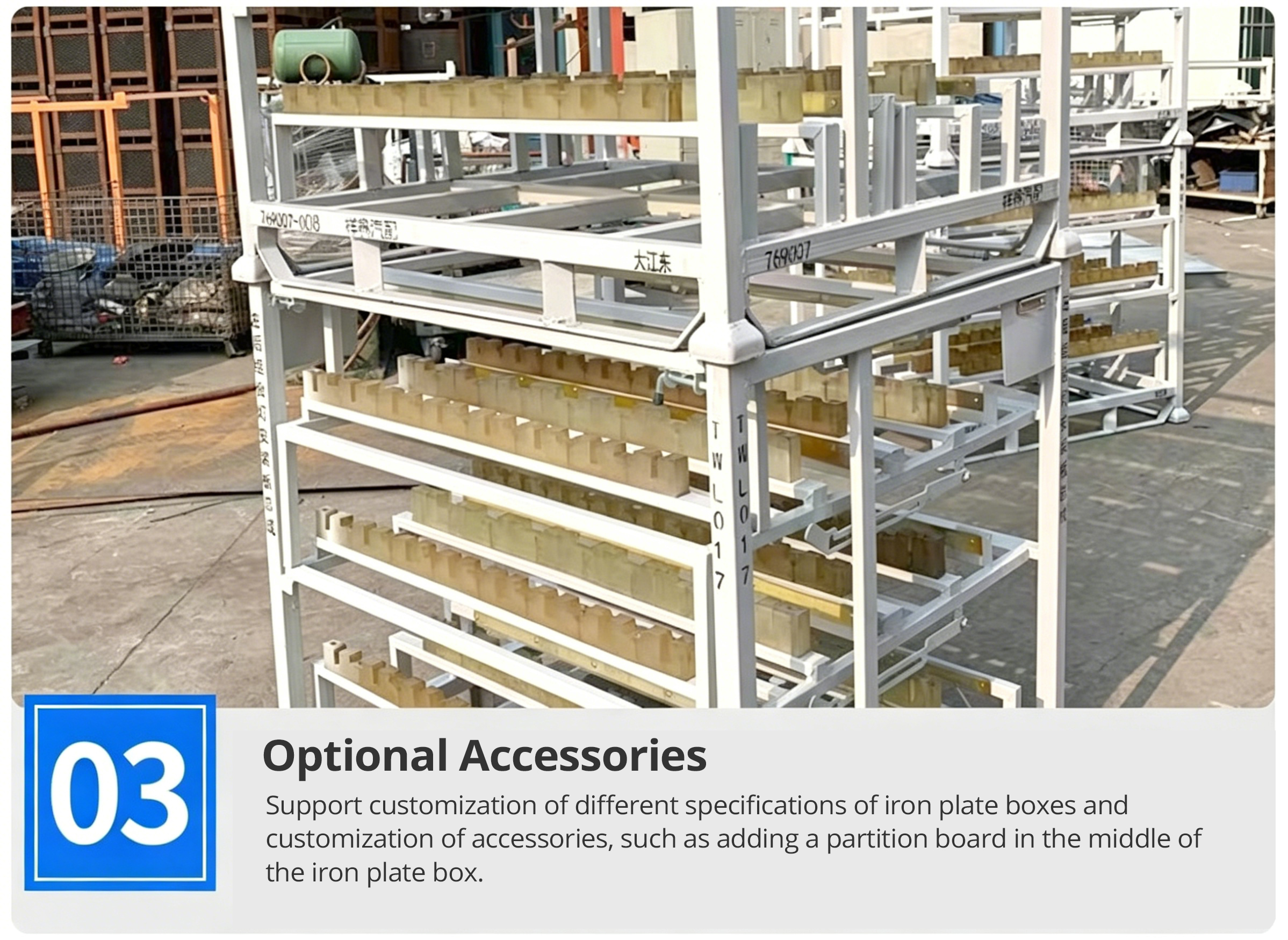
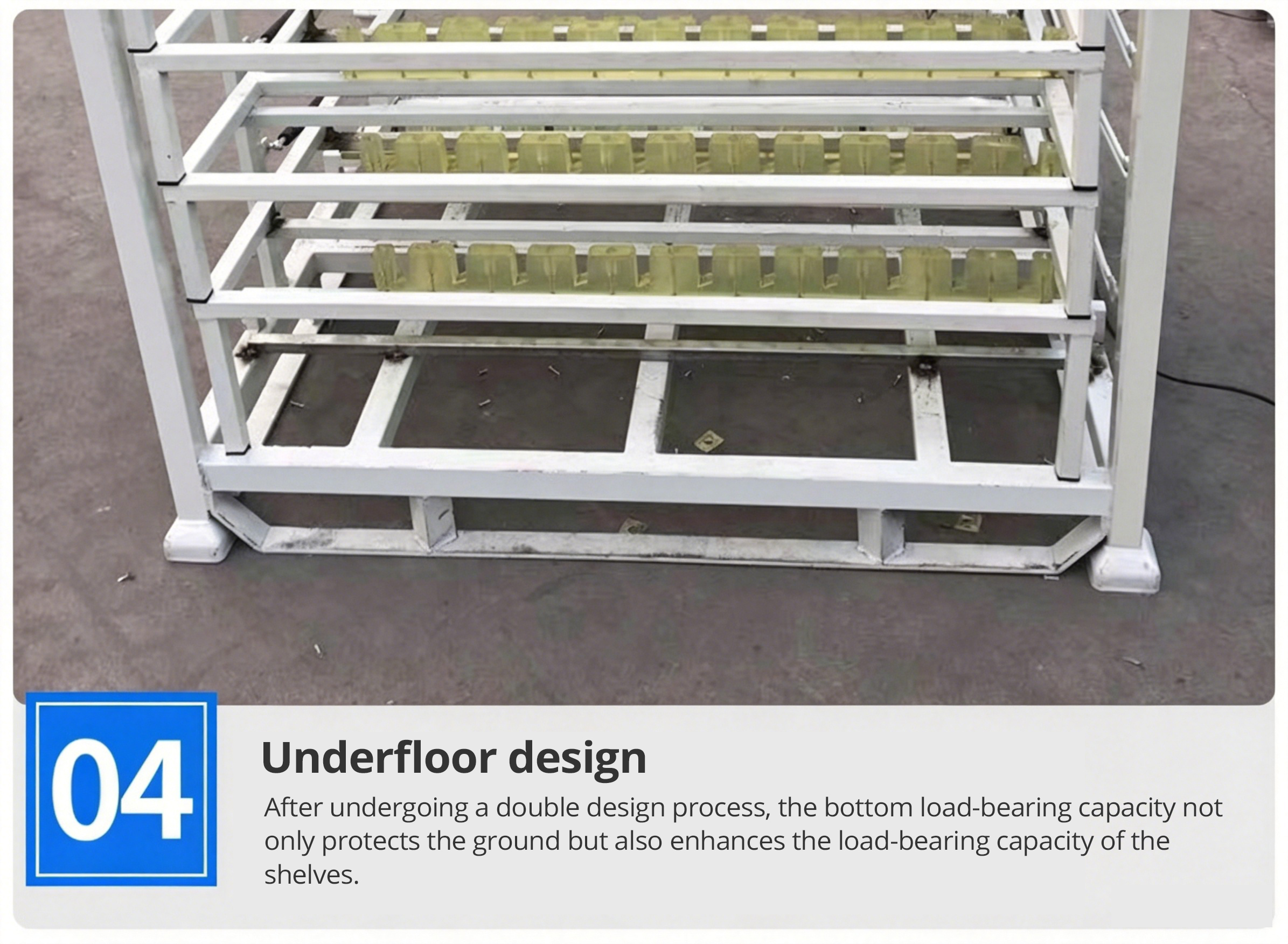
Material: Q235 cold-rolled steel
Stock: 1200*1500*1250
Load-bearing capacity: 1 ton
Column: 50*50/1.2/1.5/2.0/2.5
Bottom outer frame: 50*50*1.2/1.5/2.0
Guardrail: 30*40*1.0/1.2/1.5
Strengthening rib: 30*50*1.0/1.2/1.5
Surface powder coating
Color sample: Blue
Load-bearing capacity: 500KG - 5 tons
According to customer requirements, non-standard customization is supported.
The main structure is constructed from high-strength Q235 cold-rolled square tubing and steel plates. This material is exceptionally rigid, highly resistant to bending and compression, and offers stable load-bearing performance; it is highly durable and resistant to deformation or fracture even after prolonged use.
The upright columns are thickened and reinforced, additional crossbeams are installed at the base, and the shelf decks are fitted with load-bearing ribs. This design ensures uniform load distribution, significantly enhancing overall stability and heavy-duty load capacity while effectively preventing tipping or structural collapse.
Critical load-bearing points undergo fully automated, continuous welding to ensure uniform, robust seams free of any weak spots. For modular assembly models, components are precision-stamped using high-accuracy molds, ensuring a tight fit for the interlocking buckles and a secure, wobble-free connection.
Utilizing electrostatic powder coating, high-temperature baking paint, and hot-dip galvanizing processes, the surface coating exhibits strong adhesion. It provides superior resistance to rust, corrosion, and oil stains, making it ideally suited for use in humid or oil-prone environments such as auto repair shops and warehouses.
Featuring standardized and uniform dimensions, the system is fully compatible with standard warehouse pallets, parts bins, forklifts, and other equipment, thereby facilitating large-scale, standardized warehouse management operations.
The edges of the shelf decks are fitted with raised lips to prevent parts and components from sliding off. The base features an anti-slip treatment to ensure stable placement; for heavy-duty applications, the unit can be further secured to the floor using expansion bolts to provide an additional layer of safety. Parameter Category | Standard Model Specifications | Heavy-Duty Model Specifications | Remarks
Main Body Material | Q235 Cold-Rolled Square Tubing, Cold-Rolled Steel Plate | Q235 Thickened Cold-Rolled Square Tubing, Thickened Steel Plate | Robust material; high load-bearing and compression resistance
Upright Specifications | 40×40mm Square Tubing | 50×50mm / 60×60mm Square Tubing | Thicker uprights for enhanced stability
Shelf/Beam Specifications | 30×30mm Square Tubing, 1.0mm Steel Plate | 40×40mm Square Tubing, 1.5–2.0mm Steel Plate | Customizable options available upon request
Tubing/Plate Thickness | 1.0mm, 1.2mm | 1.5mm, 2.0mm, 2.5mm | Greater thickness results in higher load-bearing capacity
Standard Overall Dimensions (L×W×H) | | | Non-standard (custom) dimensions available
Number of Tiers | 4 Tiers, 5 Tiers (Adjustable Shelves) | 4 Tiers, 5 Tiers (Reinforced Shelves) | Shelf spacing is freely adjustable
Single-Tier Rated Load | 100kg, 150kg, 200kg | 300kg, 400kg, 500kg | Varies based on material thickness
Overall Rated Load | 400–1000kg | 1200–2500kg | /
Structural Type | Assembly-type, Shelf-type, Pegboard-type | Assembly-type, Reinforced Shelf-type, Cantilever-type | Optional drawer-type or compartment-type configurations
Surface Treatment Process | Electrostatic Powder Coating, High-Temperature Baking Paint | Electrostatic Powder Coating, Hot-Dip Galvanizing | Anti-corrosion, rust-proof, oil-resistant
Welding Process | Fully Automatic Spot Welding / Full Welding | Fully Automatic Full Welding + Reinforcement Welding | Firm weld points; no cold welds
Forklift Entry / Mobility | / | Optional 4-way forklift entry ports at base; universal casters with brakes | Optional mobility/forklift transport features
Accessory Configuration | Label Slots, Shelf Retaining Edges | Label Slots, Reinforced Retaining Edges, Anti-slip Foot Pads | Optional dividers, drawers, and hooks
Product Net Weight | 30–60kg | | 70–120 kg Varies depending on dimensions and thickness
Applicable Scenarios 4S Dealerships, Auto Repair Shops, Standard Auto Parts Warehouses Automotive OEMs, Large-scale Auto Parts Storage Facilities, Heavy-duty Parts Depots
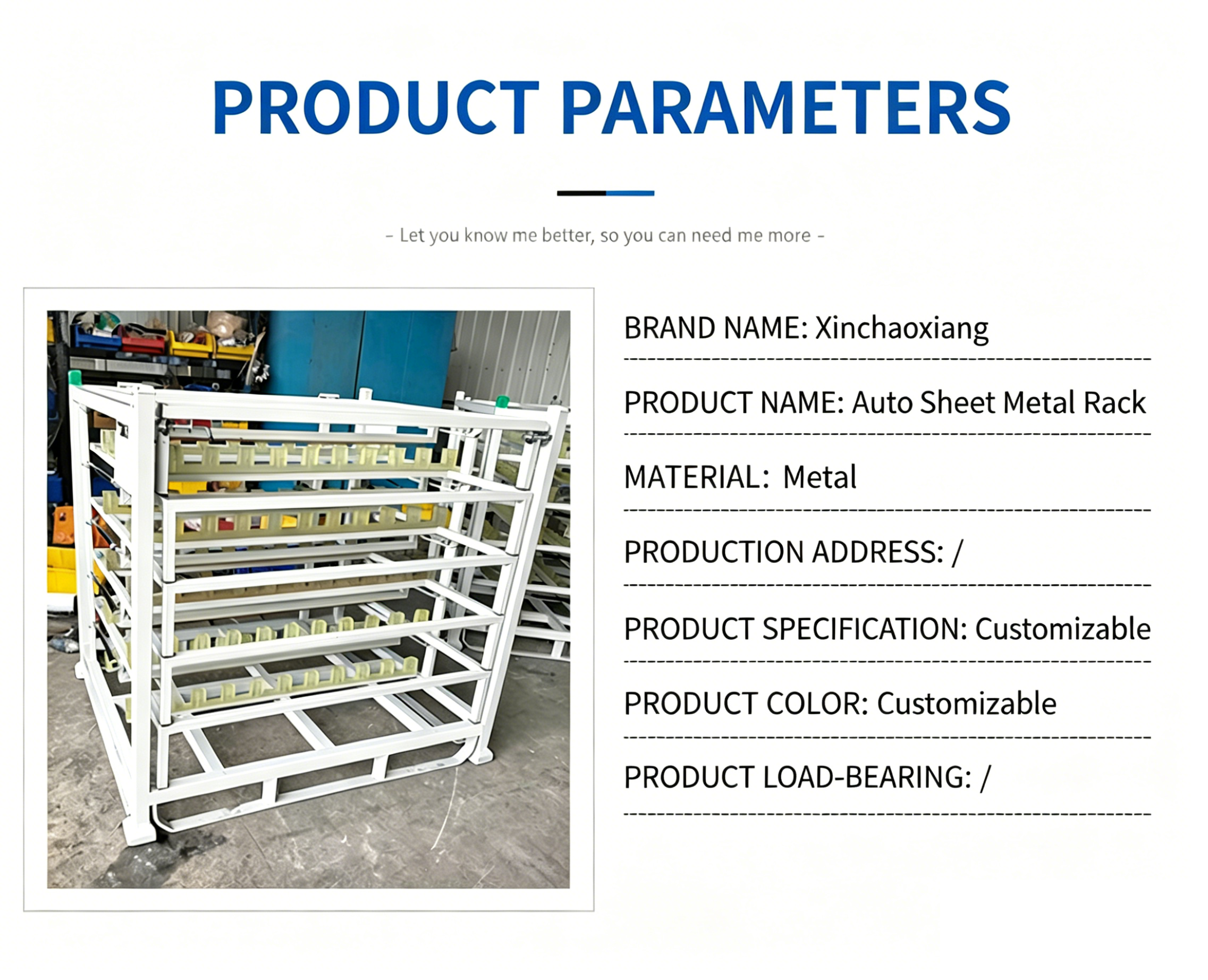
Stores maintenance parts, consumables, exterior components, and repair spares; features clear categorization, rapid retrieval, and standardized inventory management.
Organizes loose parts such as filters, brake pads, oil seals, light bulbs, hoses, and small hardware; eliminates clutter and ensures efficient access.
Stores large volumes of parts in designated zones, arranged in multi-tiered, compartmentalized layouts; facilitates sorting, packing, and shipping while maximizing warehouse space utilization.
Provides designated storage and turnover points for production line components, stamped parts, rubber/plastic parts, and small materials; supports standardized workshop management protocols.
Categorizes and stores semi-finished goods, finished parts, metal stampings, and small precision components; offers protection against dust, moisture, and accidental impact damage.
Independently categorizes and stores "Three-Electric" system accessories, small body parts, and specialized repair components; specifically tailored to meet the unique parts storage requirements of NEV models.
Centralizes the storage of spare parts for logistics vehicles, heavy equipment, and bus fleets; facilitates routine maintenance and rapid component replacement.
Organizes aftermarket wheels, suspension components, body kits, and specialized tuning accessories into designated zones; ensures a neat, aesthetically pleasing layout that streamlines part selection and order fulfillment.
- Causes: Uneven flooring; thin-walled upright columns; loose beam connections; uneven load distribution.
- Solutions: Place the unit on a flat, hard, and level surface; periodically tighten all connecting fasteners; place heavier items on the lower shelves to ensure balanced load distribution; for heavy-duty applications, select models featuring thickened and reinforced structural components.
- Causes: Overloading, concentrated heavy pressure at a single point, lack of reinforcing ribs on shelves.
- Recommendations: Strictly adhere to the maximum load capacity per shelf; distribute large, heavy items evenly across the shelf surface; utilize thicker shelves equipped with reinforcing ribs to prevent localized heavy pressure.
- Causes: Lack of designated zones or labeling, mixing of large and small parts, inappropriate shelf spacing.
- Recommendations: Install dividers, compartment inserts, or parts bins; affix labels indicating part categories or vehicle models; adjust shelf heights as needed to facilitate categorized, designated-location storage.
- Causes: Shelves lack raised edges/lips, large gaps between components, open-style storage layout.
- Recommendations: Select shelf models featuring raised edges or protective barriers; utilize parts bins, storage containers, or pegboards with hooks; consolidate loose, small parts into enclosed storage units.
- Causes: High humidity in the warehouse, heavy oil/grease accumulation (common in auto repair shops), damaged paintwork, prolonged poor ventilation.
- Recommendations: Maintain a dry and well-ventilated warehouse environment; regularly clean up oil and grease spills; touch up paint on damaged areas; for humid environments, select galvanized or corrosion-resistant rack models.
- Causes: Vibrations caused by frequent loading/unloading, improper initial installation, aging components.
- Recommendations: Ensure clips are securely seated and screws are tightly fastened during initial installation; conduct periodic inspections to tighten and reinforce connections; install anti-loosening washers in areas subject to frequent vibration.
- Causes: Sharp rack corners/edges, lack of protective guards, rough handling during loading/unloading.
- Recommendations: Select rack models featuring rounded or smoothed corners/edges; handle items with care during storage and retrieval; store sharp or pointed accessories in separate, isolated sections to prevent them from scratching other items.
- Causes: Fixed, non-adjustable shelf heights; mismatch between rack dimensions and the size/nature of the stored accessories.
- Recommendation: Utilize modular parts racks with adjustable shelf heights; arrange accessories strategically by height; and maximize vertical space through multi-tiered storage.
- Causes: Debris entangled in the wheel body, rusted bearings, or worn-out brakes.
- Recommendation: Regularly clear debris from the casters; periodically lubricate the wheel axles; promptly replace any damaged casters; and engage the brakes when the unit is parked in a fixed location.
