
 Products


| Quantity: | |
|---|---|


Cantilever racking is a heavy-duty warehouse storage system specifically designed for long, tubular, and sheet-like goods. Its defining feature is the series of cantilever arms extending horizontally from the upright columns, creating a "cantilever" structure upon which goods can be directly suspended or rested. This racking system features an open structure that facilitates easy access; it is particularly well-suited for storing irregularly shaped items—such as pipes, profiles, sheet materials, wire coils, rods, and long shaft components—and is widely utilized across industries including construction materials, steel, timber, mechanical processing, and logistics.
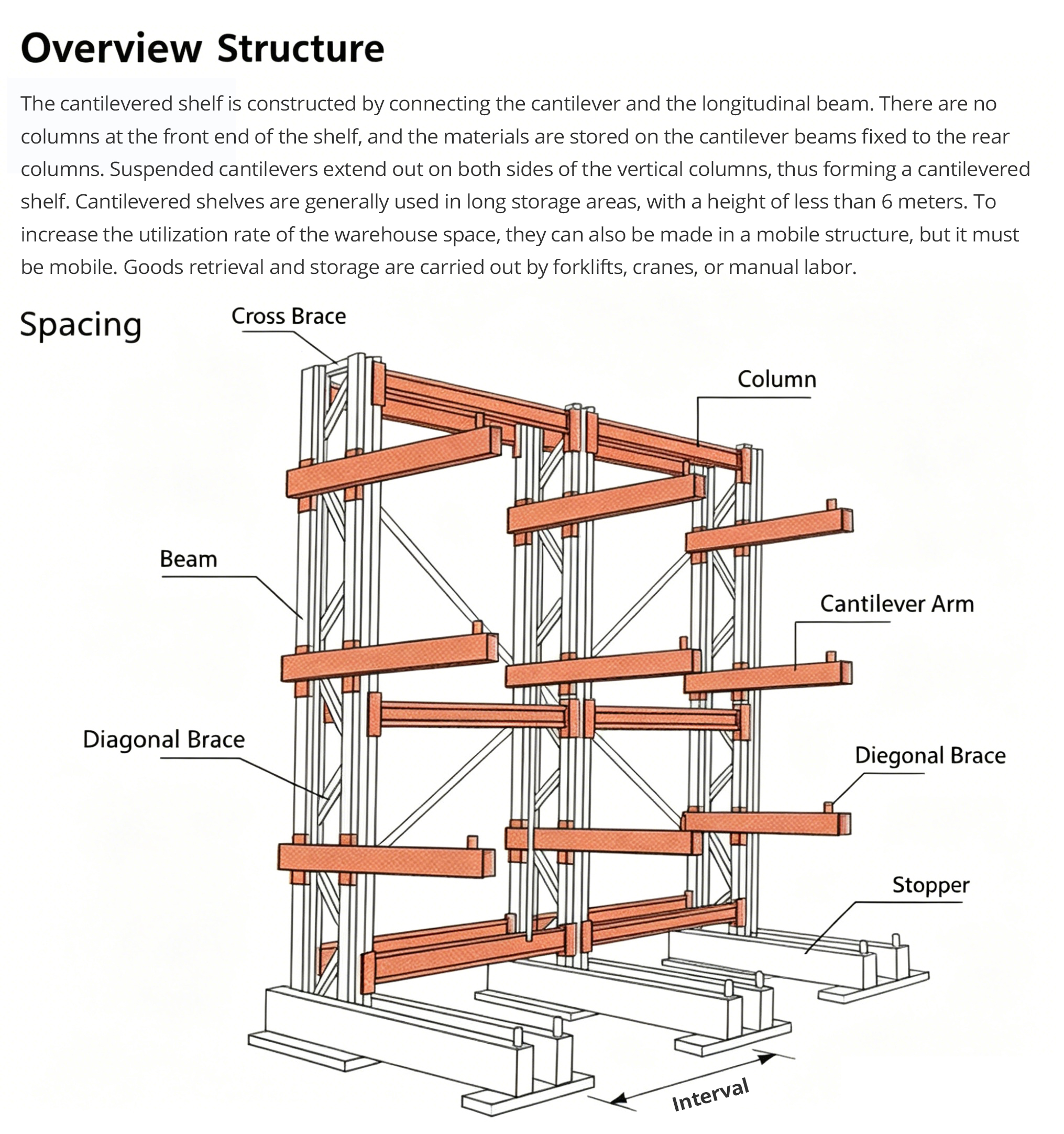
Specifically engineered for long and irregularly shaped goods, effectively resolving the limitations of standard pallet racking systems regarding the storage of long-span items.
The multi-tiered, three-dimensional cantilever structure maximizes the use of both vertical and lateral space, significantly increasing storage capacity compared to floor-stacking methods.
Featuring an open, unobstructed design with options for single-sided or double-sided cantilever configurations, the system allows for rapid loading and unloading of goods from the side using forklifts or cranes.
Constructed from thickened steel, the system features high-strength connections between the uprights and cantilever arms, enabling it to safely support heavy long materials such as pipes and structural profiles.
Goods are stored in distinct zones across individual cantilever arms, facilitating easy classification and inventory numbering, thereby enabling the implementation of 5S standardization within the warehouse.
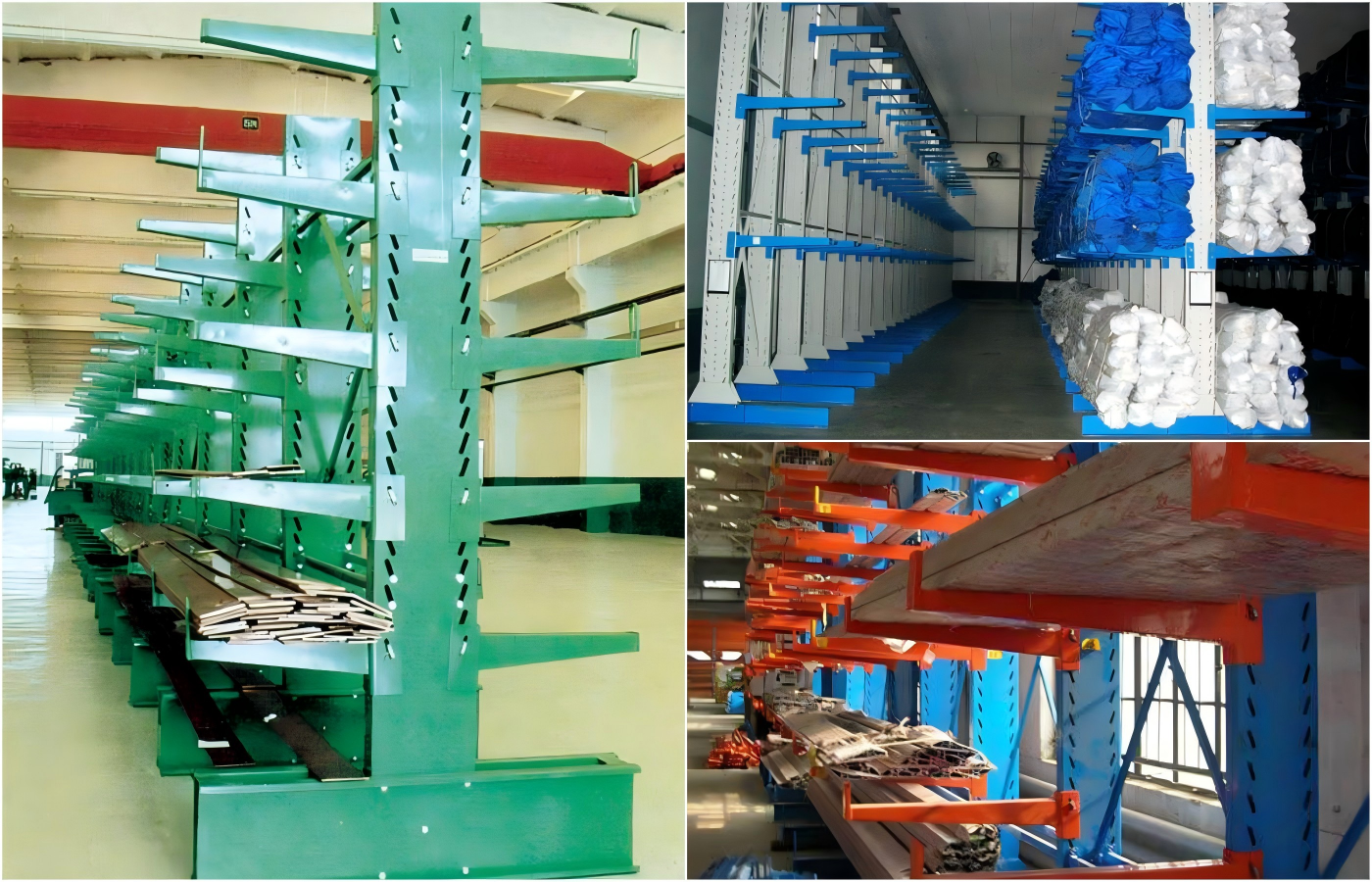
1. Specialized storage solution for long-shaped and irregularly shaped goods, resolving storage challenges that traditional shelving systems cannot address.
2. Multi-tier vertical storage maximizes warehouse space utilization and eliminates the clutter of floor-level stacking.
3. Unobstructed access to goods ensures high operational efficiency and facilitates rapid sorting and retrieval.
4. Robust load-bearing capacity allows for the stable storage of heavy, long materials; the structure is both sturdy and durable.
5. Clear categorization of stored items simplifies inventory management and stocktaking, thereby standardizing warehouse organization.
1. Available in single-sided or double-sided configurations to flexibly adapt to various site layouts and access requirements.
2. Cantilever arm height and spacing are freely adjustable to accommodate goods of varying lengths and specifications.
3. Open-structure design provides clear visibility of all stored goods, ensuring convenient and snag-free access.
4. Modular assembly design allows for easy expansion, disassembly, and relocation as needed, offering high operational flexibility.
5. Wide range of applications, suitable for use in industries involving building materials, steel, timber, piping, and structural profiles.
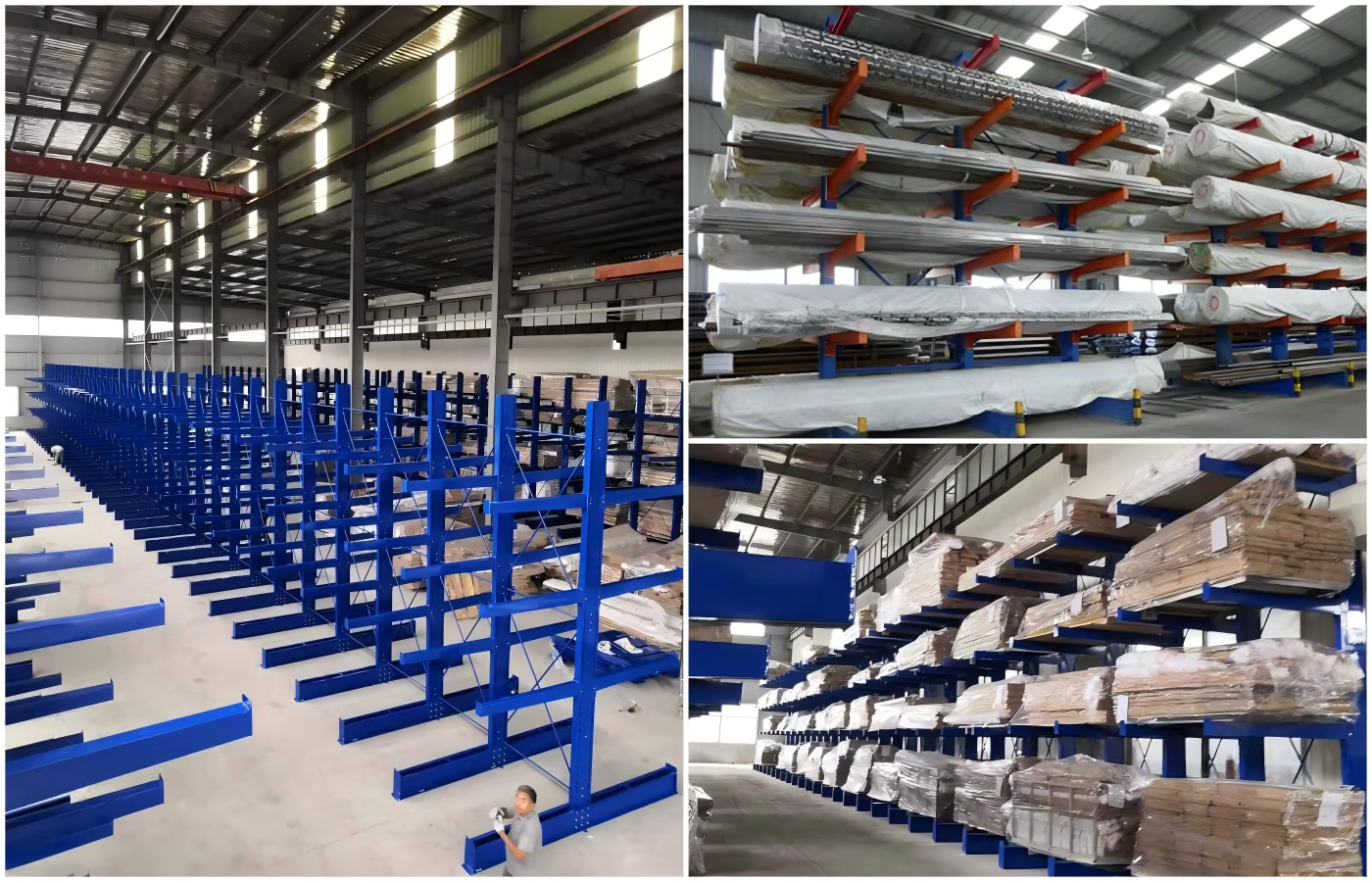
1. Constructed from thickened, high-quality structural steel; the upright columns possess exceptional load-bearing strength and resistance to deformation.
2. Reinforced connection between cantilever arms and upright columns ensures uniform load distribution and a secure, wobble-free structure.
3. Surface treatment features acid pickling, phosphating, and electrostatic powder coating processes for superior rust prevention, corrosion resistance, and abrasion resistance.
4. Equipped with anti-slip and anti-collision accessories to enhance safety during both storage and operational activities.
5. Assembly utilizes either bolt-on or snap-lock mechanisms, ensuring quick installation and robust structural stability.
1. Upright Columns: High-quality cold-rolled or hot-rolled structural steel, offering high tensile strength and resistance to torsion.
2. Cantilever Arms: Thickened rectangular steel tubing and precision-formed profiles, designed to withstand bending stress and heavy loads.
3. Base Unit: Fully welded structure utilizing thickened steel plates; provides a stable counterweight to prevent tipping.
4. Fasteners: High-strength, rust-resistant bolts and positioning locks.
5. Surface Treatment: Acid pickling and phosphating process for effective rust removal and surface preparation. + Electrostatic powder coating: corrosion-resistant and impact-resistant.
1. Style: Single-sided or double-sided cantilever racking.
2. Single-Arm Load Capacity: 300 kg – 1500 kg (heavy-duty models available via customization).
3. Rack Height: Standard range: 2000 mm – 6000 mm.
4. Cantilever Arm Length: 600 mm – 1500 mm (customizable upon request).
5. Adjustment Method: Multi-hole column design allows for free and flexible adjustment of shelf levels.
6. Overall Structure: Modular assembly structure; units can be spliced together or extended.
7. Compatible Equipment: Forklifts, side-loading forklifts, and overhead cranes (used in conjunction for accessing and storing long materials).
Storage of steel pipes, round bars, angle steel, channel steel, structural profiles, and long steel stock.
Storage of wooden boards, slats, long panels, timber, and square lumber.
Storage of PVC pipes, water pipes, long industrial pipelines, and long plastic materials.
Storage of long shaft components, elongated parts, and long metal materials.
Storage of aluminum alloy profiles, long aluminum stock, and long plastic-steel materials.
Centralized storage for various types of extra-long, extra-wide, or irregularly shaped long goods.
Place long materials steadily in the middle of the cantilever arms to ensure even load distribution; avoid off-center loading, overloading, or stacking materials solely on one side.
Use forklifts, side-loading forklifts, or overhead cranes to access and retrieve goods from the side; handle materials gently during lifting and lowering, and strictly avoid impacting the columns or cantilever arms.
Adjust the cantilever arm positions (via the column holes) according to the height of the materials being stored; securely fasten all connecting components and verify stability before placing any goods on the rack.
Strictly prohibit climbing on or stepping onto the cantilever arms; strictly prohibit unauthorized cutting or modification of the rack structure; ensure that adequate safety aisles and access lanes are maintained.
Place heavy materials on lower levels and lighter materials on upper levels; regularly inspect bolts and cantilever arms for any signs of deformation or looseness.
Keep the storage area dry and tidy; avoid the prolonged storage of corrosive materials to extend the service life of the racking system.
Specifically designed for storing long, irregular-shaped items such as pipes, profiles, timber, sheet materials, and long aluminum extrusions.
Constructed from thickened steel, each cantilever arm offers strong load-bearing capacity with uniform stress distribution; under normal conditions—provided it is not overloaded—it will not bend or deform.
Equipped with a weighted, welded base for excellent stability; simply ensure that you avoid heavy unilateral loading or placing goods off-center.
The upright columns feature a multi-hole design, allowing for free adjustment of vertical spacing to accommodate materials of varying heights.
The open-structure design facilitates side-loading operations with forklifts; however, it is recommended to operate at low speeds, and anti-collision guards can be installed for added protection.
Supports modular extension by splicing multiple units together; available in both single-sided and double-sided configurations that can be freely combined to facilitate efficient warehouse planning.
Treated via a phosphating process followed by electrostatic powder coating, providing excellent rust and corrosion resistance; for outdoor applications, customized enhanced anti-corrosion treatments are available.
1. Center the goods on the arms to ensure even load distribution; strictly prohibit overloading or placing disproportionately heavy loads on one side.
2. Place heavy materials on the lower levels and lighter materials on the upper levels to enhance overall stability.
3. Operate forklifts slowly and carefully to avoid colliding with the upright columns or cantilever arms.
4. Regularly inspect bolts, bases, and cantilever arms for any signs of looseness or deformation; tighten or repair them promptly as needed.
5. Strictly prohibit climbing on or stepping on the racking system, and do not attempt to cut or modify the structural components without authorization.
