 Solutions


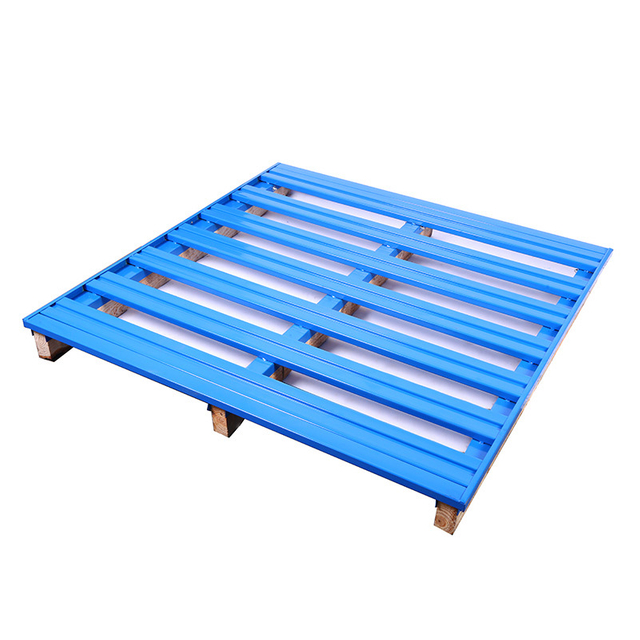
As a heavy-duty, high-strength, and long-lifespan unitized logistics carrier, the steel pallet is specifically designed to address critical pain points in warehousing and logistics-such as the susceptibility of traditional wooden pallets to damage, the insufficient load-bearing capacity of plastic pallets, their poor environmental credentials, and the high costs associated with frequent replacements. At its core, this solution integrates customized steel pallet products, comprehensive adaptability across all warehousing and logistics scenarios, and end-to-end implementation services. Crafted from high-quality, thickened steel using precision manufacturing techniques, these pallets boast superior load-bearing capacity, exceptional durability and corrosion resistance, eco-friendly recyclability, and seamless compatibility ith mechanized operations. The solution comprehensively serves a wide range of sectors-including industrial manufacturing, warehousing and logistics, cold chain operations, chemicals, automotive parts, and food processing-meeting the full spectrum of process requirements, from static storage and dynamic turnover to forklift handling and
automated high-bay warehousing. Ultimately, it empowers enterprises to achieve logistics unitization and warehousing standardization while significantly reducing long-term costs associated with logistics consumables.
1. Heavy-Duty Cargo Storage: Storage of heavy goods-such as factory raw materials, finished products, hardware, construction materials, and automotive parts-within both automated high-bay systems and conventional flat warehouses.
2. Logistics Turnover: Internal material transfer within factory premises, long-haul trunk line transportation, and containerized cargo handling at ports and terminals.
3.Specialized Environment Storage: Storage within cold storage facilities, low-temperature workshops, moisture-proof and corrosion-resistant warehouses, and facilities housing non-corrosive chemical goods.
4.Equipment Integration: Operation in conjunction with heavy-duty racking systems, stacking racks, forklifts, stackers, and automated storage and retrieval systems (AS/RS).
5.Long-Term Cyclic Use: Scenarios involving high-frequency, high-intensity, and cross-regional logistics turnover operations.
1. Wooden pallets are prone to breakage, mold, and insect infestation; they possess weak load-bearing capacity, require frequent replacement, and incur high overall costs.
2. Plastic pallets often lack sufficient load-bearing capacity, are susceptible to deformation and aging, and are unsuitable for heavy-duty cargo or extreme low/high-temperature environments.
3. Pallet damage during cargo storage and turnover operations can lead to goods falling or becoming damaged, thereby posing significant safety hazards.
4. Traditional pallets are incompatible with automated warehousing systems and heavy-duty racking structures, exhibiting poor overall system compatibility.
5. Discarded wooden and plastic pallets are difficult to recycle, fail to meet environmental compliance standards, and entail high disposal costs.
- Structural Features: Fork entry is restricted to the front and rear directions only; the structure is simple, offering superior overall load-bearing capacity; the base features either a solid-deck or longitudinal-beam configuration.
- Load-Bearing Parameters: Dynamic load capacity of 1–3 tons; static load capacity of 3–8 tons.
- Core Advantages: Lower manufacturing cost and excellent structural stability, making them ideal for the static storage of heavy-duty cargo.
- Applicable Scenarios: Storage within heavy-duty racking systems, floor stacking, and operations involving unidirectional forklift movement.
- Structural Features: Accessible from all four sides, compatible with a wide variety of forklifts and stackers, offering exceptional operational flexibility.
- Structural Forms: Available in three mainstream structural configurations-"Chuan" (川), "Tian" (田), and "Ri" (日) shapes—which can be selected based on specific requirements.
- Core Advantages: Facilitates convenient cargo turnover without restrictions regarding site layout or approach direction, making them ideal for high-frequency logistics circulation.
- Applicable Scenarios: Logistics transit hubs, inter-plant transfers, automated high-bay warehouses, and containerized shipping.
- Customization Features: Surface fitted with anti-slip patterns or rubber mats; edges feature protective edging/hemming.
- Core Advantages: Effectively prevents cargo slippage, minimizes product collision and damage, and enhances transportation safety.
- Applicable Scenarios: Cold chain logistics, food industry, hardware manufacturing, handling of fragile goods, and high-bay racking storage environments.
- Customization Options: Customizable dimensions, load capacities, and structural designs; optional additions include corner guards, side fences/rails, and casters; available surface treatments include galvanizing, painting, or plastic-dipping for corrosion resistance.
- Applicable Scenarios: Handling of irregularly shaped cargo, export shipping, specialized workshop operations, and environments requiring high-standard corrosion and rust protection.
Constructed from high-quality Q235 cold-rolled steel plates, featuring an integrated stamped and welded structure that ensures exceptional stability and a load-bearing capacity far exceeding that of wood or plastic pallets.
Surface treatments-including electrostatic powder coating, galvanizing, or plastic-dipping-provide robust protection against rust, corrosion, moisture, and mold, making the pallets suitable for use in diverse environmental conditions.
Dimensions adhere to international and domestic logistics standards, ensuring perfect compatibility with various types of forklifts, storage racks, and transport vehicles for maximum versatility.
100% recyclable and environmentally non-polluting; represents a one-time investment for long-term use, resulting in a total cost of ownership significantly lower than that of traditional pallets.
Features rounded corners and edges-free of burrs or sharp points—to prevent injury to personnel and damage to cargo; designed to remain free of bending or deformation even under heavy loads.
Dynamic load capacity reaches up to 3 tons, while static load capacity reaches up to 8 tons-offering a load-bearing capability 3 to 5 times greater than that of standard plastic or wood pallets. Designed to withstand long-term use without deformation or structural failure, making them ideal for handling a wide range of heavy and super-heavy cargo.
Under normal operating conditions, the service life extends to 8–10 years, eliminating the need for frequent replacements and saving on recurring procurement costs. This resolves the issues associated with traditional pallets-specifically their high breakage rates and cumbersome maintenance requirements-offering exceptional long-term cost-effectiveness.
Resistant to extreme heat and cold, moisture, water, and corrosion, these pallets function reliably in specialized environments such as cold storage facilities, high-temperature workshops, and humid warehouses. Unaffected by weather or environmental fluctuations, they boast a wide range of applications.
Featuring a standard fork-entry design, these pallets facilitate rapid loading, unloading, handling, and stacking when paired with forklifts. This boosts warehouse and logistics turnover efficiency, integrates seamlessly with automated and intelligent warehousing systems, and significantly reduces manual labor time.
Free from formaldehyde and pests, these pallets require no fumigation or disinfection, fully complying with environmental regulations for export cargo and preventing potential issues during customs inspections. Their smooth surfaces are easy to clean, making them ideal for the stringent hygiene requirements of food, pharmaceutical, and other clean-storage environments.
Constructed with a robust, integral structure, these pallets present no risk of loosening or breakage, ensuring safer storage and transportation of goods. They are stackable—saving valuable space when not in use—and are perfectly compatible with a wide variety of warehousing equipment and transportation vehicles.
A dedicated professional team engages directly with the client to define specific requirements regarding cargo weight, dimensions, usage scenarios, operational equipment, and environmental/export compliance needs, thereby distilling the core operational requirements.
Based on the assessment, we customize the pallet's dimensions, structural design, load-bearing capacity, and surface treatment processes. We then present a comprehensive product proposal, a detailed price quotation, and a tailored implementation plan.
Utilizing standardized production lines, we maintain rigorous quality control over steel materials, welding processes, and load-bearing testing to ensure that every pallet meets the highest operational standards.
We offer nationwide door-to-door delivery services. In-stock products are shipped immediately, while customized orders are delivered precisely on schedule. We also provide on-site guidance regarding proper usage and maintenance procedures.
We provide comprehensive after-sales services, including product warranties, repairs, and refurbishment. Our lifetime technical support ensures that any issues arising during operation are promptly resolved, guaranteeing long-term, stable performance.
This solution is widely applicable across a diverse range of industries, including mechanical manufacturing, automotive components, hardware and building materials, cold chain logistics, food processing, chemicals, pharmaceuticals, port freight operations, automated warehousing, and export trade. It serves as the preferred pallet solution for handling heavy-duty cargo, meeting high-standard logistics requirements, and facilitating long-term, cyclical material turnover.
The steel pallet solution distinguishes itself through core advantages such as high load-bearing capacity, extended service life, strong adaptability, and low total cost of ownership. It serves as a complete replacement for traditional wooden and plastic pallets, effectively resolving common challenges in corporate warehousing and logistics—specifically, high consumable costs, low operational efficiency, significant safety hazards, and failure to meet environmental standards. By enabling the standardization, consolidation, and eco-friendly transformation of logistics carrying equipment, this solution represents the optimal choice for enterprises seeking to optimize their logistics systems and reduce operational expenses.