
 News
News Views: 0 Author: Site Editor Publish Time: 2026-08-28 Origin: Site


Warehouses constantly fight a losing battle against capacity constraints. When new inventory arrives, facility managers often default to installing more fixed shelves. This knee-jerk reaction unintentionally shrinks your usable floor space. Mandatory operational aisles consume massive amounts of your valuable footprint. To solve this, you must look beyond basic linear square footage. Instead, evaluating actual cubic volume utilization reveals the real efficiency of your layout. Deciding between portable systems and fixed infrastructure is a major operational pivot. Neither storage method holds a universal advantage over the other. The space-saving efficiency depends entirely on your specific SKU count, load crushability, and picking methodology. Read on to discover exactly how to analyze your current setup. You will learn which storage method unlocks the most capacity for your distinct inventory flows.
Stacking racks maximize cubic space and minimize aisle footprint, making them the superior space-saver for bulk goods, seasonal inventory, and large, low-SKU batches.
Industrial shelving maximizes accessibility but limits spatial efficiency due to fixed aisle requirements, making it strictly suited for high-SKU, manual-pick operations.
The true cost of space involves operational flexibility: a stacking rack system can be broken down and nested when empty, instantly reclaiming floor footprint.
Facility planners often confuse dense storage with smart storage. You must clearly define your equipment before planning a layout overhaul. Fixed shelving and portable frames serve entirely different operational goals. They handle inventory flows in opposing ways.
Industrial shelving acts as the permanent backbone of many fulfillment centers. Planners bolt or clip these rigid structures directly to the warehouse floor. They remain fixed in place permanently.
Continuous Accessibility: They provide unimpeded access to individual items. Workers can pick single cartons without moving other pallets.
Fixed Infrastructure: Once installed, they dictate your entire floor plan. You cannot easily adjust the layout for unexpected bulk shipments.
Mandatory Aisles: Shelving requires dedicated, permanent operational aisles. Forklifts and pickers need constant clearance to navigate safely.
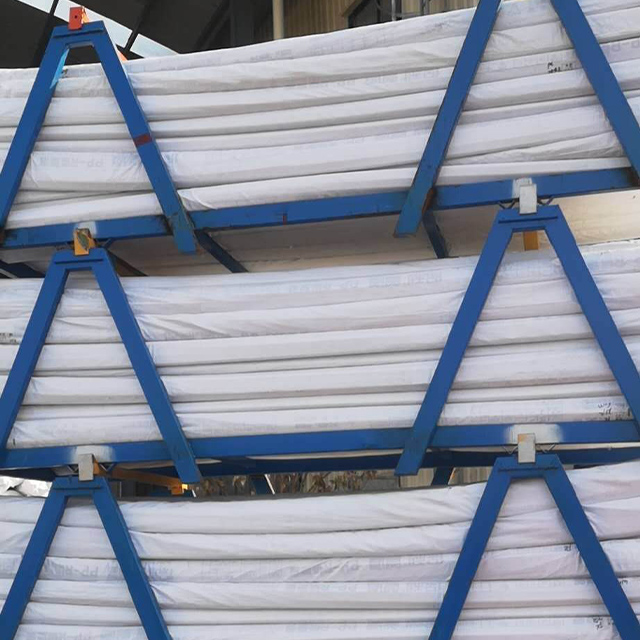
A portable frame offers a much more agile approach. A Stacking Rack consists of modular bases and removable corner posts. You design these units to hold either palletized materials or loose bulk items.
Vertical Block-Stacking: You can safely stack these units four to five tiers high. They require zero permanent floor installation.
High Mobility: Forklifts move these units fully loaded. They act as both protective storage and internal transport containers.
Adaptive Layouts: You can reconfigure your storage blocks daily. This flexibility accommodates suddenly shifting inventory volumes.
Warehouse space calculations often mislead operations managers. They measure the flat footprint instead of measuring the available air space. True capacity relies entirely on cubic volume utilization.
Static rows visually fill a room, but they hide massive inefficiencies. Up to 50 percent of your total warehouse footprint disappears into aisles. Forklifts and pedestrians require wide, empty lanes to function.
Furthermore, vertical space above the top shelf often becomes dead space. Standard shelving limits how high you can place manual-pick items safely. Empty shelves cannot simply vanish during low-inventory periods. They sit empty and continue consuming valuable floor space.
Portable systems attack spatial waste from multiple angles. Stack Racks eliminate the need for intermediary aisles entirely. You achieve high-density block stacking by storing units two, three, or four deep.
You also gain massive vertical optimization. Some goods possess awkward shapes or easily crushable forms. Think of bulk tires or heavy fabric rolls. Standard floor stacking destroys these items under their own weight. Portable frames protect the load while stacking straight to the ceiling.
Finally, these systems provide a unique nesting advantage. When demand drops, you simply disassemble or nest the empty frames. You can store four to six empty racks in the exact footprint of a single unit. This instantly frees up floor space for staging or manufacturing.
Storage Strategy Comparison Table
Feature | Industrial Shelving | Modular Portable Racks |
|---|---|---|
Aisle Requirement | Up to 50% of total footprint | Minimal (Block stacking removes inner aisles) |
Vertical Utilization | Limited by manual reach and top shelf | Maximized (Stacks up to 5 tiers high) |
Empty State | Consumes full operational space | Nests densely to reclaim floor space |
Ideal Inventory | High-SKU, individual piece picking | Low-SKU, bulk goods, seasonal batches |
Recognizing your specific material flow dictates your equipment choices. Certain environments heavily favor modular, high-density strategies. You should deploy portable frames under the following four conditions.
Seasonal or Fluctuating Inventory: Peak seasons demand incredible flexibility. Holiday retail spikes or agricultural harvests flood warehouses quickly. Storage needs expand and contract rapidly during these months. Portable frames let you scale up density instantly and tear it down later.
Hard-to-Palletize & Crushable Goods: Many bulk items cannot support top-heavy weight. FIBC bulk bags, fragile boxed goods, and heavy automotive parts resist traditional floor stacking. The steel frames bear the full vertical weight. This completely protects your fragile bulk items from crushing forces.
LIFO (Last-In, First-Out) Inventory Flows: High-density blocks limit direct access to older pallets. Therefore, they fit perfectly into LIFO workflows. Batch turnover becomes much more important than individual item access. You simply pull the newest materials from the front of the block.
Multi-Facility Logistics: Constant handling damages goods and wastes labor hours. You can load portable frames directly onto shipping trucks. This dramatically reduces material handling steps between different warehouse locations. It acts as a protective shipping container and a storage shelf simultaneously.
Best Practice: Always map out your seasonal peaks before ordering equipment. Ensure your ceiling clearance safely accommodates your maximum predicted stack height.
Despite the density benefits of portable frames, rigid structures still dominate certain industries. Some workflows absolutely fail without dedicated aisles. You should invest in static shelving under these specific scenarios.
E-Commerce & Micro-Fulfillment: High-velocity order fulfillment thrives on speed. Piece-picking environments require 100 percent accessibility to every single SKU at all times. You cannot move heavy steel blocks just to grab one t-shirt. Static rows guarantee immediate visual and physical access.
FIFO (First-In, First-Out) Strictness: Many industries regulate inventory expiration dates tightly. Pharmaceuticals and specific food items strictly require FIFO compliance. Older stock must be picked and shipped first. Static aisles ensure workers can always reach the oldest batch without obstruction.
Lightweight, Non-Palletized Goods: Small components do not require heavy steel containment. Hardware, loose parts, and bin-stored items need granular organization. Standard shelves handle these lightweight goods perfectly. Workers do not need heavy material handling equipment to pick these tiny orders.
Common Mistake: Do not force bulk storage solutions into piece-picking zones. Mixing the two without a clear boundary drastically slows down order fulfillment times.
Transitioning to a dynamic layout introduces new operational hurdles. You must train your team to handle these new risks. Proper planning prevents bottlenecks and accidents on the warehouse floor.
High-tier stacking demands very specific material handling equipment. You must ensure your forklifts feature appropriate mast heights. Operators also need specialized training. They must learn how to properly align corner posts while stacking loads 15 feet in the air.
Density planning requires strict layout discipline. Poorly planned block-stacking setups often result in empty, inaccessible slots. This happens behind front-facing racks when operators pull stock randomly. This "honeycombing" effect creates trapped, wasted cubic space deep inside the blocks.
Static pallet racking distributes weight across continuous beams. Portable frames do not. Each individual frame carries a strict weight limit. These limits commonly range between 2,000 to 4,000 lbs. Exceeding this individual capacity compromises the stability of the entire vertical stack.
Deep-lane storage heavily restricts access. If a required item sits at the bottom rear of a stacked block, you face a problem. Operators must move multiple outer units just to access the target load. This double-handling burns expensive labor time and slows down your shipping dock.
Choosing your ideal system requires hard data from your floor. You cannot guess your way into higher efficiency. Follow these distinct steps to determine your optimal storage path.
Your inventory profile tells you exactly what to buy. Run a detailed audit of your current SKU velocity. If you hold 5,000 distinct SKUs with only 5 units each, you must install shelving. However, if you hold 50 SKUs with 5,000 units each, you must invest in modular frames.
Calculate your current aisle-to-storage ratio accurately. Map out your floor and measure the empty driving lanes. If aisles consume more than 40 percent of your footprint, you have a problem. If your goods are primarily bulk items, switching to modular setups will yield immediate operational returns.
Do not assume off-the-shelf products fit every operation. Note that manufacturers can customize portable frames extensively. You can add specific decking types to fit your loads. Wire, wood, or solid steel decking prevent loose items from falling through. Always consult an engineer regarding your specific load dimensions before making a purchase decision.
Space savings is not just about fitting more goods; it is about reclaiming the floor when goods are gone.
Evaluate your cubic volume potential, not just your linear square footage, to uncover hidden facility capacity.
Industrial shelving manages high-SKU complexity, while a modular system dramatically scales your bulk storage density.
Train your operators thoroughly on block-stacking protocols to avoid honeycombing and eliminate double-handling labor waste.
Request a facility layout audit or a custom equipment quote based on your specific load dimensions and ceiling heights today.
A: You can typically stack these units 4 to 5 tiers high. The exact limit depends entirely on your warehouse ceiling clearance, maximum forklift mast height, and the manufacturer's base load rating.
A: Yes, a hybrid approach is extremely common. Many facilities use static shelving in their active pick faces while deploying portable frames for dense bulk overstock.
A: They require level, industrial-grade concrete floors. The surface must ensure strict vertical stability under heavy loads. This is standard in most modern commercial warehouses.
A: Yes, many bases are specifically designed to accept standard pallets. However, some operations choose to load bulk goods directly onto the rack base to save even more vertical space.


