
 News
News Views: 0 Author: Site Editor Publish Time: 2026-08-21 Origin: Site


Frequent pallet replacements drain logistics budgets every year. Traditional wooden and plastic bases often cause warehouse safety liabilities due to sudden breakages under heavy loads. Wood splinters pose risks to workers, while warped plastic disrupts automated storage routines.
Upgrading to a Steel Pallet represents a vital strategic CAPEX decision rather than a simple material swap. High-stress supply chains need reliable foundations to maintain efficiency. You can minimize long-term lifecycle expenses by rethinking your core material handling equipment. Facilities handling extreme weights or strict hygiene protocols cannot afford structural failures during critical operations.
This guide offers logistics and procurement leaders an objective framework for evaluating this material upgrade. We will explore financial ROI factors and specific use-case viabilities. You will learn exactly how to select, deploy, and implement metal pallets for maximum operational gain.
TCO Advantage: While initial costs are higher, steel pallets deliver a lower Total Cost of Ownership over a 10+ year lifespan due to zero maintenance and high scrap value.
Operational Supremacy: Built for extreme environments, offering dynamic load capacities exceeding 2,000 kg and resistance to fire, chemicals, and temperature fluctuations.
Global Compliance: Inherently compliant with ISPM 15 standards, eliminating the need for heat treatment or fumigation in international shipping.
Implementation Reality: Adoption requires recalculating forklift payload capacities and evaluating warehouse floor load limits due to higher tare weights.
Operations managers often ignore the slow degradation of traditional pallets until a major failure occurs. You must identify the operational thresholds where wood and plastic begin to fail. Frequent breakages cause expensive automated system jams. Splintering wood creates severe safety hazards for warehouse staff. Loose nails puncture product packaging and forklift tires. Furthermore, poor hygiene compliance from porous materials often leads to costly facility shutdowns in pharmaceutical or food sectors.
You know you have reached the breaking point when pallet maintenance consumes a measurable percentage of your weekly labor budget. Replacing damaged units disrupts loading dock workflows. If your teams constantly pause operations to sweep wood debris or extract jammed plastic runners from conveyors, traditional materials no longer serve your business.
Transitioning to an industrial metal platform requires clear benchmarks. A successful material upgrade must deliver specific, measurable outcomes. You should look for:
Drastic reductions in procurement replacement cycles over a ten-year horizon.
Zero international shipment delays stemming from pallet pest inspections or missing stamps.
Improved warehouse space utilization through safe, reliable high-stacking of heavy loads.
Elimination of automated storage sensor errors caused by warped or sagging pallet decks.
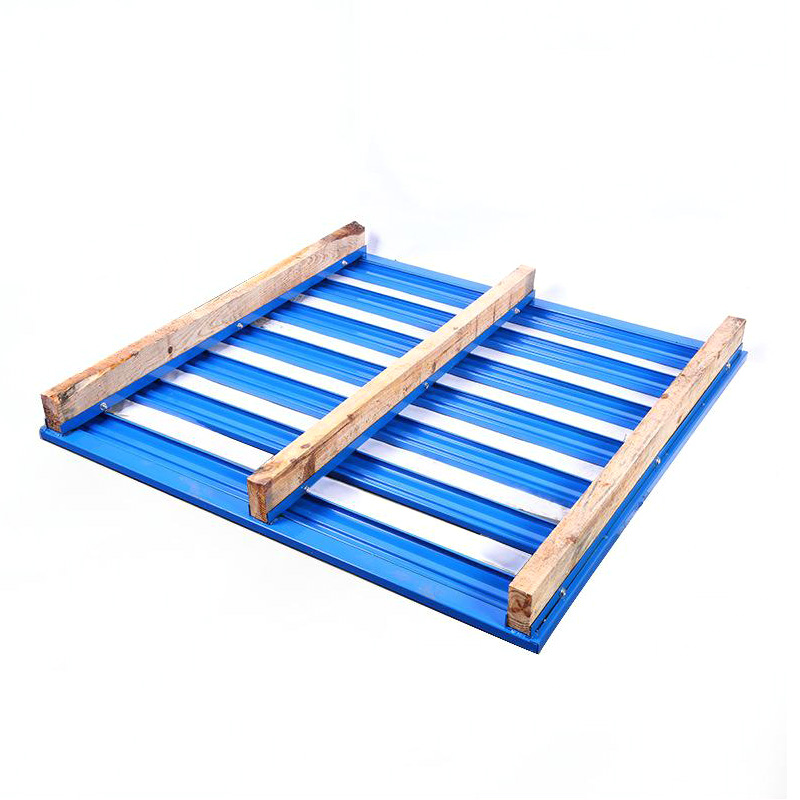
Material handling depends on predictable structural integrity. Welded metal prevents dangerous deflection under heavy point-loads. When you place a two-ton die-cast automotive part on a plastic base, it bends. This bending creates instability during forklift transit. A Steel Pallet remains completely rigid.
Static load capacities often exceed 6,000 kg, while dynamic loads easily handle 2,000 kg to 3,000 kg. This massive strength makes them exceptionally safe for heavy machinery, automotive components, and metal manufacturing facilities. By eliminating deck sagging, you protect both the loaded goods and the personnel maneuvering them. Rackable weight limits also increase, allowing you to maximize vertical storage space safely.
International shipping features strict regulations regarding wood packaging materials. ISPM 15 standards require wood to undergo extensive heat treatment or chemical fumigation to prevent global pest transmission. Wood requires constant re-certification. Missing stamps lead to severe customs delays.
Metal eliminates quarantine risks entirely. Bugs cannot burrow into welded metal joints. You ensure zero border delays when shipping internationally. Exporters save substantial costs because they skip continuous heat treatments and administrative paperwork. Customs officials instantly pass metal packaging, accelerating your cross-border logistics timelines.
Many supply chains operate in brutal climates. You must evaluate how your equipment performs across temperature extremes. Blast freezers in cold chain logistics make plastic incredibly brittle. A minor forklift bump shatters frozen plastic runners. Conversely, high-heat industrial processing environments melt plastic and ignite wood.
Metal does not suffer from temperature-induced brittleness. It also offers zero moisture absorption, unlike wood which rots, warps, and gains weight in humid conditions. Metal platforms perform identically in a sub-zero freezer and a sweltering casting plant. They withstand harsh chemical spills, offering easy cleanup without structural degradation.
Table 1: Material Performance Under Extreme Conditions
Performance Metric | Wood | Plastic | Steel |
|---|---|---|---|
Sub-Zero Freezers | Absorbs moisture, freezes | Becomes brittle, cracks easily | Maintains complete structural integrity |
High Heat Environments | Combustible, fire hazard | Melts or deforms | Highly resistant, non-combustible |
Hygiene / Washdown | Porous, harbors bacteria | Good, but can scratch and hide germs | Excellent, fully sanitizable |
Not all metal solutions feature the same surface treatments. You must choose a finish based on your specific operational environment. Galvanized surfaces undergo a hot-dip zinc process. This creates a metallurgical bond offering superior rust and corrosion resistance. You should select galvanized finishes for outdoor storage, maritime shipping, or chemical exposure areas.
Powder-coated finishes provide a highly cost-effective alternative for indoor, dry storage applications. Manufacturers bake a dry polymer powder onto the metal. This creates a hard, durable skin. Powder coating allows for custom color-coding. You can use blue units for outbound freight and red units for internal quarantine areas, enhancing visual warehouse management.
Your choice of structural design directly impacts your warehouse footprint and transportation budget. Stackable designs feature solid runners or picture-frame bottoms. They distribute weight evenly across the load below them. You use stackable designs to maximize vertical storage for heavy goods without racking.
Nestable designs feature hollowed-out legs. The feet of one unit slide perfectly into the deck of the unit below it. This drastically reduces empty-storage space in your warehouse. More importantly, nestable designs slash return-freight costs. You can fit up to three times as many nested units into a return trailer compared to standard stackable designs. This efficiency makes closed-loop distribution networks highly profitable.
Procurement teams often balk at the upfront price of metal platforms. Transparently addressing this initial purchase price is essential. A Steel Pallet typically costs significantly more on day one than a standard wooden counterpart. However, you must model a 10-year ROI comparing replacement rates to understand the true financial impact.
During a single decade, a busy logistics hub might replace a wooden platform five to ten times due to structural failure. Plastic units might need replacing two or three times. A single well-manufactured metal unit easily survives the entire ten-year span. When you map the aggregate cost of repeated purchases against one initial capital expense, metal yields a vastly superior financial return.
You must also highlight the hidden operational costs of traditional materials. Wood requires constant repair labor. You pay staff to hammer nails and replace broken boards. You also pay landfill disposal fees when wood completely splinters. Metal requires zero maintenance. You simply wash it and return it to service.
Finally, factor in end-of-life value. Wood becomes expensive waste. Plastic recycling degrades the polymer quality over time. Metal offers 100% recyclability without material degradation. When a metal unit finally reaches the end of its useful life, you sell it for residual scrap value. This scrap payment effectively acts as a cash rebate on your initial investment, further widening the lifecycle financial advantage.
Metal platforms do not serve every single supply chain. They excel in specific, high-stress environments where their unique properties drive massive value.
Heavy manufacturing and automotive industries represent the strongest use cases. Factories constantly move dense, heavy, or sharp metal components. Engine blocks, stamped chassis parts, and massive coils easily destroy plastic or wood. Metal platforms absorb these extreme point-loads without bending, ensuring safe transit from the assembly line to the shipping dock.
Automated Storage and Retrieval Systems (ASRS) demand absolute precision. Robotic shuttles rely on predictable dimensions. Wood warps over time, and plastic sags under heavy loads. These dimensional changes trigger sensor errors, causing robotic mechanical jams. A single jam shuts down an entire fulfillment aisle. A Steel Pallet maintains precise, unchanging dimensions forever, guaranteeing smooth ASRS operations.
Pharmaceuticals and food processing facilities mandate sterile environments. Porous wood absorbs blood, grease, and moisture, creating a breeding ground for dangerous bacteria. Metal offers completely smooth, non-porous surfaces. Maintenance crews execute high-pressure chemical washdowns quickly. This ease of sanitization prevents product contamination and ensures strict FDA compliance.
Transitioning to heavy-duty metal solutions requires careful facility planning. You cannot simply swap them into your existing workflow without auditing your equipment.
Address weight considerations first. Metal platforms possess a higher tare weight than wood. A typical unit might weigh between 25 kg and 40 kg. You must audit your forklift load capacities. A forklift rated for 2,000 kg must account for the heavier base. You also need to monitor transportation freight limits, as heavier packaging reduces the total product payload you can legally load into a trailer.
Safety and handling risks also require attention. Unfinished metal features sharp edges. Wet metal becomes extremely slippery. You must protect your workforce and your goods.
When shortlisting vendors, use this comprehensive 3-point procurement checklist:
Verify welding quality and certifications: Request independent load-testing certificates. Examine the weld seams for consistency. Poor welds break under dynamic stress.
Assess custom-sizing capabilities: Ensure the manufacturer can adjust dimensions. Specialized product lines often require custom deck sizes or specific runner placements for custom machinery.
Confirm warranty terms and coating quality: Look for vendors offering safety-rolled edges to prevent cuts. Demand anti-slip surface treatments, such as embedded rubber grommets. Ensure the galvanization process meets industrial thickness standards.
Steel pallets are not a universal replacement for all casual shipping needs. They remain a targeted, high-performance solution designed specifically for heavy-duty manufacturing, high-hygiene sectors, and tightly controlled closed-loop supply chains. By upgrading to metal, you eliminate pest risks, survive extreme warehouse temperatures, and stop the endless cycle of replacing broken wooden boards.
To move forward safely, do not replace your entire fleet overnight. Encourage your logistics planners to conduct a targeted pilot test. Procure a small batch of metal platforms. Measure their precise compatibility with your automated ASRS sensors. Evaluate how your forklift operators handle the increased tare weight. This measured approach guarantees a smooth, highly profitable transition.
A: Untreated metal will oxidize, but modern industrial units use hot-dip galvanization or powder coating. Galvanization bonds a thick zinc layer to the surface, completely sealing out oxygen and moisture. This prevents rust even in harsh, damp outdoor environments.
A: A standard wooden unit weighs between 15 kg and 25 kg. A metal unit typically weighs between 25 kg and 40 kg depending on load capacity. This increased tare weight requires careful auditing of your shipping freight limits.
A: They are incredibly durable, but catastrophic impacts can cause damage. Unlike swapping a wooden board, repairing structural metal requires professional cutting and welding. In most cases, severely damaged units are sold for scrap value rather than repaired.
A: Yes, they are exceptional for automation. They maintain rigid, predictable dimensions over decades. They do not warp, sag, or shed debris, completely eliminating the sensor errors and mechanical jams common with traditional materials.


