
 News
News Views: 0 Author: Site Editor Publish Time: 2026-08-24 Origin: Site


Warehouses face a constant battle to maximize vertical space. You must absorb rising inventory costs without compromising safety. However, high-level stacking introduces severe safety liabilities and load-crush risks. Standard wooden pallets easily fail under heavy bulk loads. Furthermore, permanent selective racking lacks the layout flexibility dynamic facilities demand. You cannot simply unbolt and move permanent aisles during a seasonal rush. We need an engineered, compliant approach to vertical storage. Implementing a purpose-built Stacking Rack protects your inventory, your operators, and your margins. In this guide, you will learn how to evaluate different rack architectures for your specific loads. We will cover safe stacking ratios, essential compliance protocols, and key procurement steps. By the end, you will know exactly how to scale your storage vertically while mitigating severe warehouse liabilities.
Safe high-level stacking requires matching specific load types to engineered rack architectures (fixed vs. modular).
Compliance hinges on strict adherence to verified stacking ratios (e.g., 3-on-1 or 4-on-1) and static vs. dynamic load limits.
Choosing between collapsible, fixed, or insert-tube configurations directly impacts return-on-floor-space during off-peak seasons.
Routine inspection for weld fatigue and post deflection is non-negotiable for mitigating warehouse liabilities.
Floor-stacking bulk materials creates hidden operational costs. You risk crushed inventory at the bottom tier. Standard pallets simply cannot bear the weight of heavy super sacks or industrial parts stacked three high. Stacks often lean dangerously over time. Operators also struggle with poor SKU accessibility when items sit directly on the floor. Moving the front pallet just to reach the back pallet wastes valuable labor hours.
To solve these issues, facilities must define clear success criteria for high-level storage. First, systems must show zero structural deflection under maximum rated capacity. The steel base must remain perfectly flat. Second, you must achieve a 100% elimination of load-on-load contact. The rack itself must bear the total vertical weight, never the product. Third, your warehouse needs the agility to reconfigure layouts instantly. You cannot do this easily with dismantled bolted racking systems. Modular systems let you clear floor space in minutes.
We must view this decision through a strict ROI lens. Compare the initial capital expenditure of heavy-duty steel racking against the massive reduction in product damage. Engineered systems drastically increase your cubic volume utilization. You effectively multiply your usable square footage without leasing a new building. This translates directly to better operational margins and safer daily shifts.
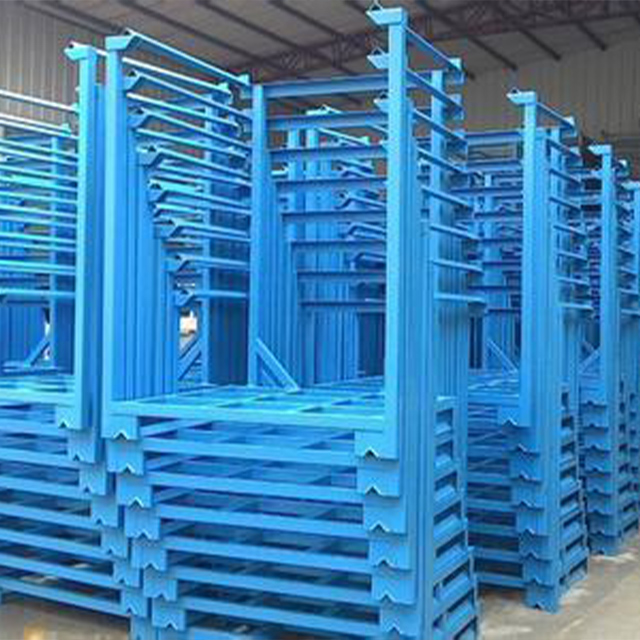
Different load profiles demand specific structural designs. Matching the rack to your exact operational workflow ensures maximum safety and efficiency.
Many operations require variable height clearances depending on the season. An Insert-Tube Stack Rack is the best choice for these unpredictable scenarios. The removable posts allow you to customize clearances based on fluctuating product dimensions. You swap out long tubes for short tubes as needed. However, this flexibility brings a distinct consideration. It requires manual assembly and disassembly of the corner posts. Operators must ensure pins and tubes seat fully before they begin stacking. A partially seated tube creates a critical tipping hazard.
Best Practice: Keep a dedicated storage bin for unused tubes to prevent trip hazards.
Common Mistake: Mixing tubes of slightly different lengths on the same rack base.
Seasonal inventory creates massive floor space challenges. A Collapsible Stack Rack serves as the optimal choice for these cycles. It also excels in return logistics and closed-loop shipping. When empty, it folds flat to recover up to 80% of your valuable floor space. You can stack dozens of collapsed units safely in a corner. One drawback exists regarding maintenance. Moving parts like steel hinges and folding bases require stricter inspection protocols than rigid alternatives. Rust or debris in a hinge can prevent the rack from locking open securely.
Some heavy industrial environments demand maximum rigidity above all else. A Fixed Stacking Rack provides high-capacity static storage. It is built strictly for heavy manufacturing, dense automotive parts, and permanent layout fixtures. Because it features fully welded joints and no moving pieces, it offers the highest stability available for maximum-height stacking. Forklift operators love them because they never shift or rattle during transport.
Oddly shaped, highly fragile components require scratch-free nesting. A Fabric Stacking Rack utilizes suspended textile bags or protective fabric sides. This specialized design is absolutely essential for storing automotive fascia, painted doors, or delicate soft goods. The fabric cradles the individual parts securely. Meanwhile, the outer steel frame supports the heavy vertical load of the stack above it.
High-level stacking shifts the center of gravity in your warehouse. You must evaluate structural limits closely to prevent catastrophic failures.
Safety relies entirely on understanding capacity limits. You must differentiate between static capacity and dynamic capacity. Static capacity applies when the unit sits motionless on the concrete floor. Dynamic capacity applies when a forklift moves the unit across a dock plate. Dynamic limits are always lower due to motion forces.
Furthermore, you must understand how loads distribute weight. Uneven point-loads severely compromise structural integrity. Imagine resting a heavy engine block entirely on the center mesh. Always compare this to uniformly distributed loads (UDL). Point-loads stress specific welds dangerously. UDL spreads the burden safely across the entire tubular frame. Manufacturers always base their highest ratings on UDL.
Engineered ratios dictate exactly how high you can build safely. You must understand the standard "3-on-1" configuration. This means stacking three fully loaded racks on top of one base rack on the floor. Lighter footprints may safely allow a "4-on-1" setup based on the steel gauge used. Never exceed manufacturer stack limits. Doing so exponentially increases the risk of catastrophic base-tier buckling. If the bottom rack buckles, the entire column collapses instantly.
Forklift operators need physical guidance during high-level placement. We must evaluate target-to-target systems against pin-and-hole alignment systems. Engineered nesting targets are an absolute necessity. Cupped feet slide over corner posts naturally. This structural guidance prevents operator error when visibility decreases twenty feet in the air. A misaligned rack poses a lethal threat to aisle traffic.
Stacking Rack Capacity and Alignment Matrix
Rack Architecture | Max Typical Stacking Ratio | Best Load Distribution | Primary Alignment Mechanism |
|---|---|---|---|
Insert-Tube | 3-on-1 or 4-on-1 | UDL (Uniformly Distributed) | Target-to-target cups |
Collapsible | 3-on-1 (varies by hinge) | UDL (Uniformly Distributed) | Pin-and-hole or target cups |
Fixed | 4-on-1 to 5-on-1 | Heavy Point-Loads & UDL | Welded target guides |
Fabric | 2-on-1 or 3-on-1 | Suspended Point-Loads | Pin-and-hole locking |
Engineered steel cannot protect your facility if your staff lacks discipline. You must bridge the gap between structural capability and daily operator behavior.
Forklift handling procedures require immediate updates for high-level stacking. Standard pallet movement rules do not apply here. Operators must respect strict mast tilt limits. Tilting a stack too far backward or forward destabilizes the entire unit. They must practice extreme speed reduction during transport. Teach them precise visual alignment techniques for placing racks accurately at maximum heights.
Approach the stack squarely at a walking pace.
Level the forks completely before lifting the rack.
Lift smoothly to clear the nesting targets below.
Back away slowly without tilting the mast aggressively.
Warehouse compliance relies heavily on clear communication. OSHA guidelines emphasize load rating visibility across the entire facility. Facilities must attach clearly visible, permanent manufacturer placards to every rack system. These stamped metal placards must detail max capacities and strict stack heights. Never leave operators guessing about safe load limits. If an inspector finds unmarked racks, they will likely issue citations.
Daily wear and tear happens constantly in active warehouses. Forklifts bump frames. Loads shift unexpectedly. You need a reliable, scheduled inspection framework. Look closely for critical structural failure indicators.
Bent Insert Tubes: Even a slight bend compromises vertical load-bearing strength.
Weld Hairline Fractures: Inspect the corners where the base meets the uprights.
Base Deflection: Lay a straight edge across the bottom frame to check for sagging.
Establish a strict quarantine protocol immediately. Any compromised unit must exit the daily workflow. Tag it clearly with red tape until a qualified welder repairs it or you scrap it entirely.
Purchasing industrial storage requires careful facility analysis. Do not rush into a massive procurement order without auditing your physical space first.
Never buy racks without measuring your warehouse dimensions accurately. Conduct a thorough facility audit this week. Measure the exact clear-height ceilings in all designated storage zones. You must calculate sprinkler system drop limits to satisfy local fire codes. Most codes require at least 18 to 36 inches of clearance below the sprinkler heads. Audit your forklift reach capacities as well. Ensure your current fleet can actually lift a fully loaded rack to your desired fourth-tier height safely.
You must decide between standard models and custom engineering. Rely on standard off-the-shelf sizes for uniform boxes or standard wood pallets. Standard sizes ship faster and cost less. However, invest in custom base dimensions for specialized dunnage. If you manufacture unusually long pipes or asymmetrical engine parts, custom racks secure them properly. Customization requires more upfront capital but protects uniquely shaped parts perfectly.
We highly recommend running a pilot test before attempting a full facility rollout. Order a single stack tier first. Load it with your heaviest product. Test it dynamically with your forklifts. Alternatively, request CAD layout simulations directly from your rack manufacturer. These digital simulations verify load physics accurately. They confirm your chosen design works safely within your specific warehouse footprint.
High-level stacking is never about pushing structural limits. It is about operating safely within engineered parameters to protect your staff and inventory. You must prioritize verifiable steel quality. Focus heavily on exact load-matching rather than lowest-cost procurement. A cheap rack that buckles costs far more than a premium rack that lasts decades. Safety always pays off in the long run.
Actionable next steps:
Audit your current floor-stacked inventory immediately for hidden crush damage.
Measure your facility's clear heights and check local sprinkler drop limits today.
Consult directly with a racking engineer to audit load requirements and spec the appropriate system.
A: Height is dictated by the manufacturer's safe stacking ratio (commonly 3-4 tiers), base dimensions, load weight, and building clear heights (accounting for fire codes).
A: Yes, when fully seated and rated correctly. However, fixed racks eliminate the variable of operator assembly error, making them marginally safer for the heaviest loads.
A: The sides or posts fold down flat against the base, allowing them to be tightly nested or stacked 10+ high, significantly reducing their off-season storage footprint.


