 Products


| Quantity: | |
|---|---|


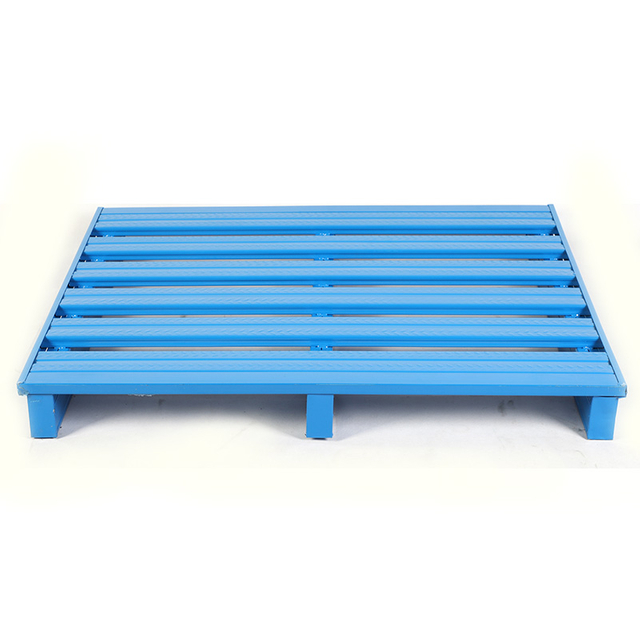
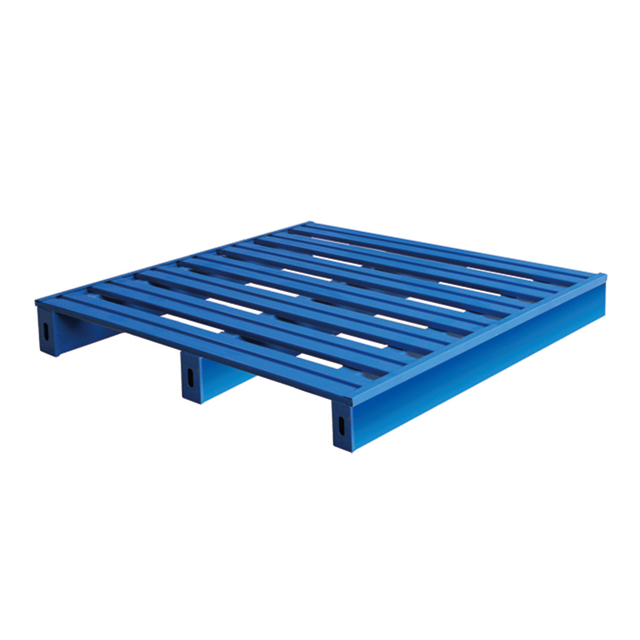
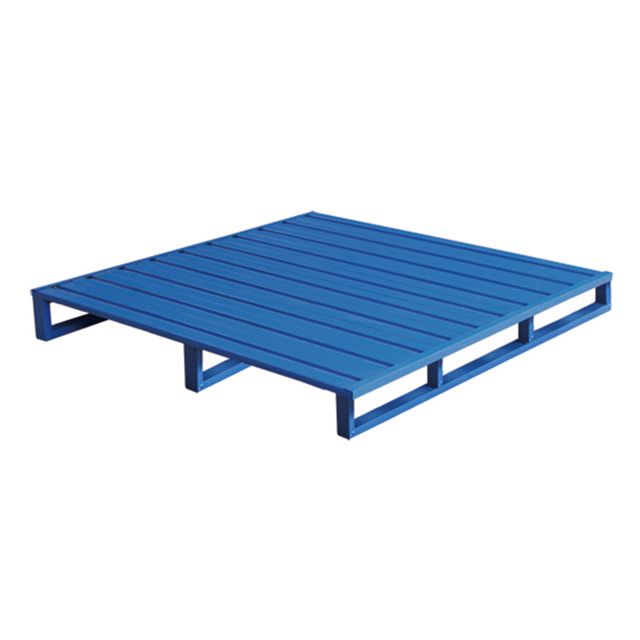
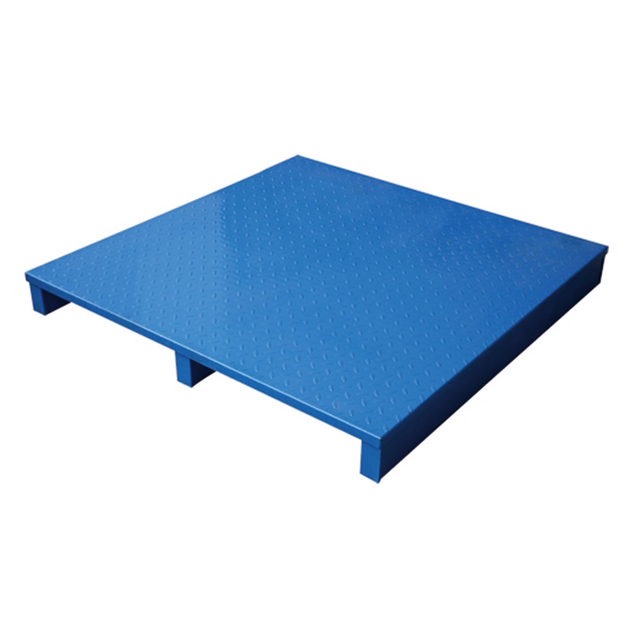
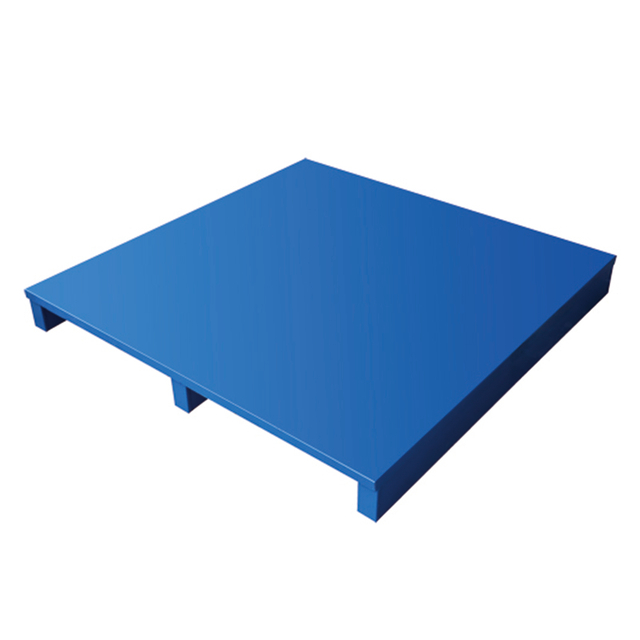
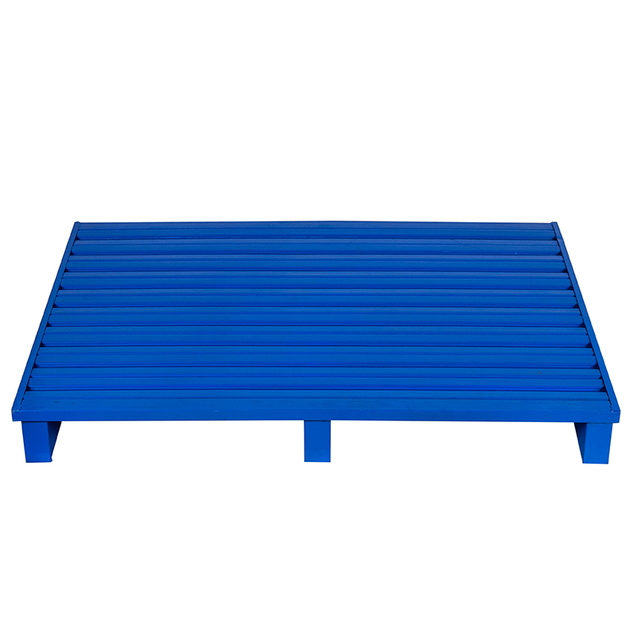
Steel pallets, also known as steel pallets, iron pallets, and metal pallets, are one of the important storage and transportation auxiliary equipment in modern industry. The main material is galvanized steel plate and steel, which are formed by special equipment, supported by various profiles, connected and strengthened by rivets, and then welded under C02 gas protection. Used for ground storage, shelf storage, cargo intermodal transportation, turnover and other ultra-light metal tray series.
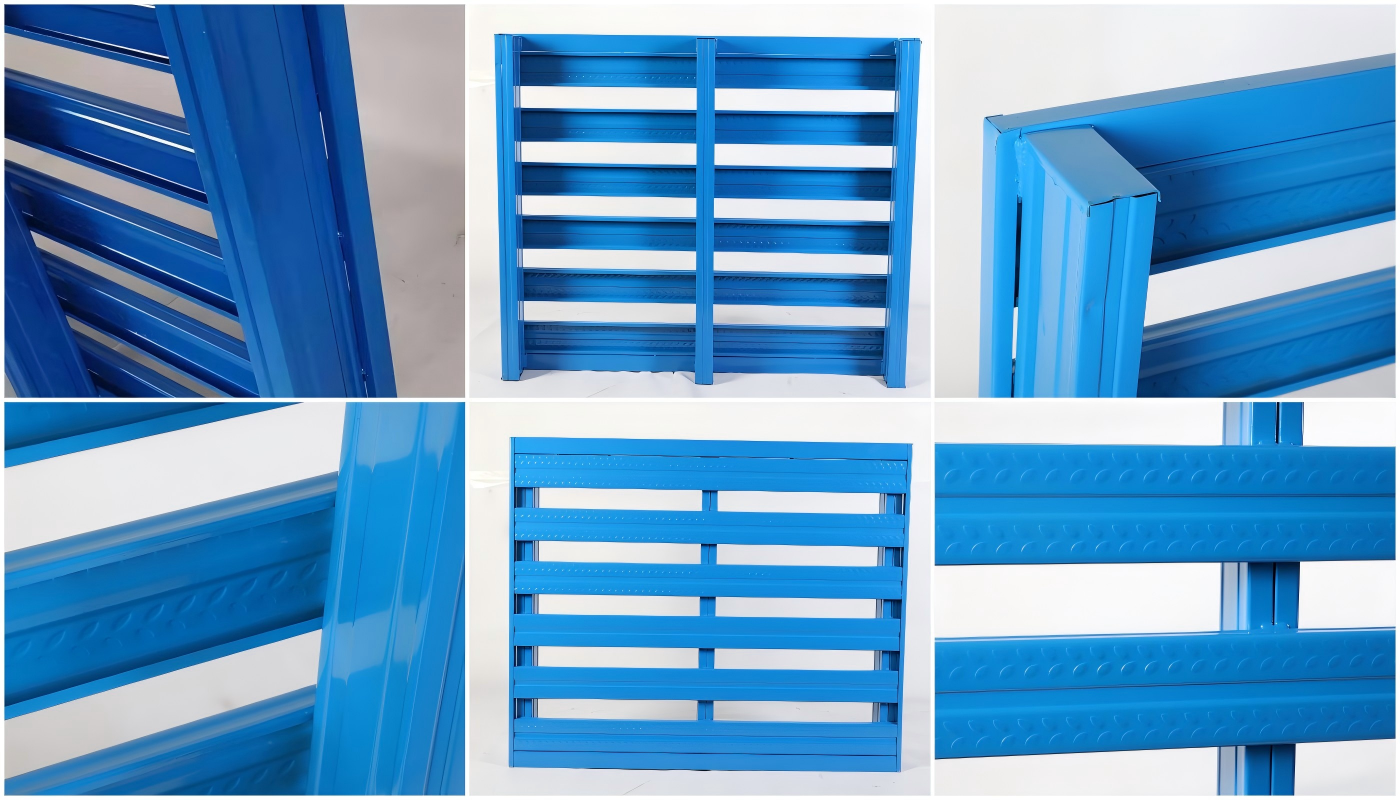
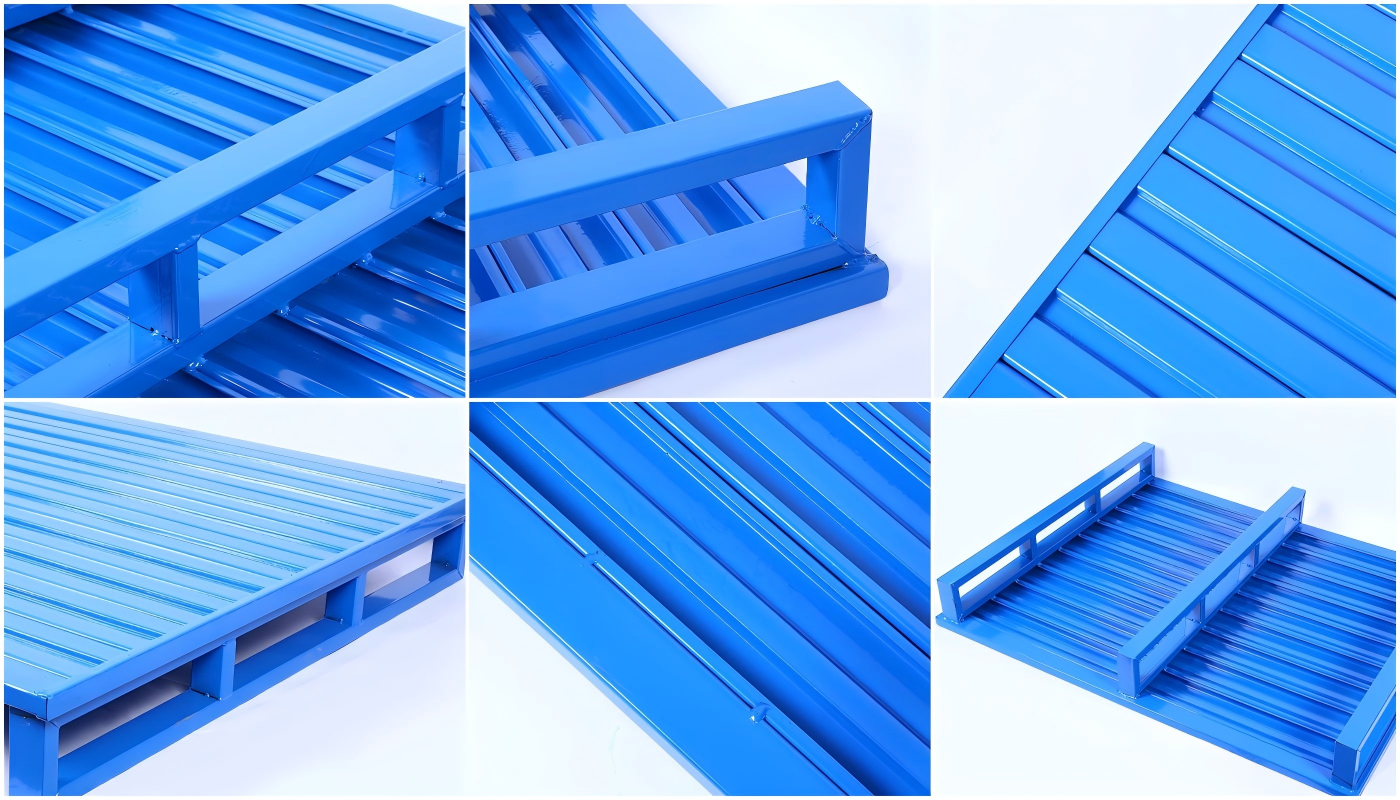
Steel pallets serve as the foundational horizontal platform devices for modern industrial warehousing, acting as critical unit loads for containment, stacking, handling, and transportation. Designed specifically to optimize forklift operations, these lightweight metal platforms facilitate highly efficient cargo storage and retrieval across versatile floor storage, rack storage, intermodal transport, and cargo turnover scenarios. Constructed primarily from premium steel or galvanized steel sheets, each pallet is precision-formed using specialized equipment. You can physically feel the smooth, cold-rolled finish of the galvanized surface, which provides immediate tactile assurance of its structural density. Various structural profiles provide mutual support, reinforced by exact rivet connections and subsequently joined via CO2 gas-shielded welding. This specific welding technique ensures deep penetration and a rigid bond, emitting a solid, resonant sound when handling heavy loads, confirming its exceptional durability.
A steel pallet functions as a unitized container tool for the mechanized loading, unloading, handling, and stacking of goods. Its basic structure consists of a single-layer deck supported underneath by longitudinal beams, blocks, or legs. The minimum height of the pallet is strictly determined by the requirement to facilitate easy access for forklifts or pallet jacks. Beyond standard configurations, these platforms undergo rigorous quality control and production workflows. From initial load assessment and prototype modeling to internal batch manufacturing, every unit passes strict dimensional and weight-bearing inspections before leaving the facility, guaranteeing highly consistent performance across large fleet deployments. Furthermore, custom engineering designs are available to match specific load distributions, handling methods, and non-standard dimensions, ensuring a perfect fit for your specialized logistics systems.
1. Exceptional Load Carrying Capacity: These platforms deliver the strongest carrying capacity among all pallet categories, easily supporting massive industrial loads without structural deflection.
2. 100% Environmentally Friendly: They are fully recyclable and can be repurposed without wasting resources, ensuring zero waste of resources and supporting aggressive corporate sustainability targets.
3. Stable Packaging Performance: The surface of the steel tray shall be treated with a smooth surface and the periphery shall be wrapped. The tray chassis is solid, light in weight and strong in rigidity, providing an exceptionally stable base for securing complex cargo with stable packaging performance.
4. Superior Weather Resistance & Hygiene: Featuring a waterproof, moisture-proof and rustproof steel tray, these units excel in demanding environments. Compared with wooden pallets, it has environmental advantages (such as eliminating the capacity of wooden pallets to breed pests). The anti-rust coating also supports high-pressure washing and high-temperature steam cleaning, preventing bacterial growth and fully complying with the strict hygiene standards required in food processing and pharmaceutical sectors. Compared with plastic pallets, it has strength, wear resistance, temperature resistance, and price advantages.
5. Streamlined Export Operations: Especially when used for export, steel pallets do not require re steaming, high-temperature disinfection, or anti-corrosion treatment in accordance with international environmental regulations, eliminating costly customs delays.
6. Exceptional ROI & Flexible Use: Flexible use of steel pallets ensures long-term value. The 4-way insertion design virtually improves the convenience of space utilization and operation, and its sturdy bottom plate design also conforms to the use of assembly lines and automatic packaging systems. By offering an extended service life and an incredibly low damage rate, these platforms convert a recurring packaging expense into a long-term circular asset.
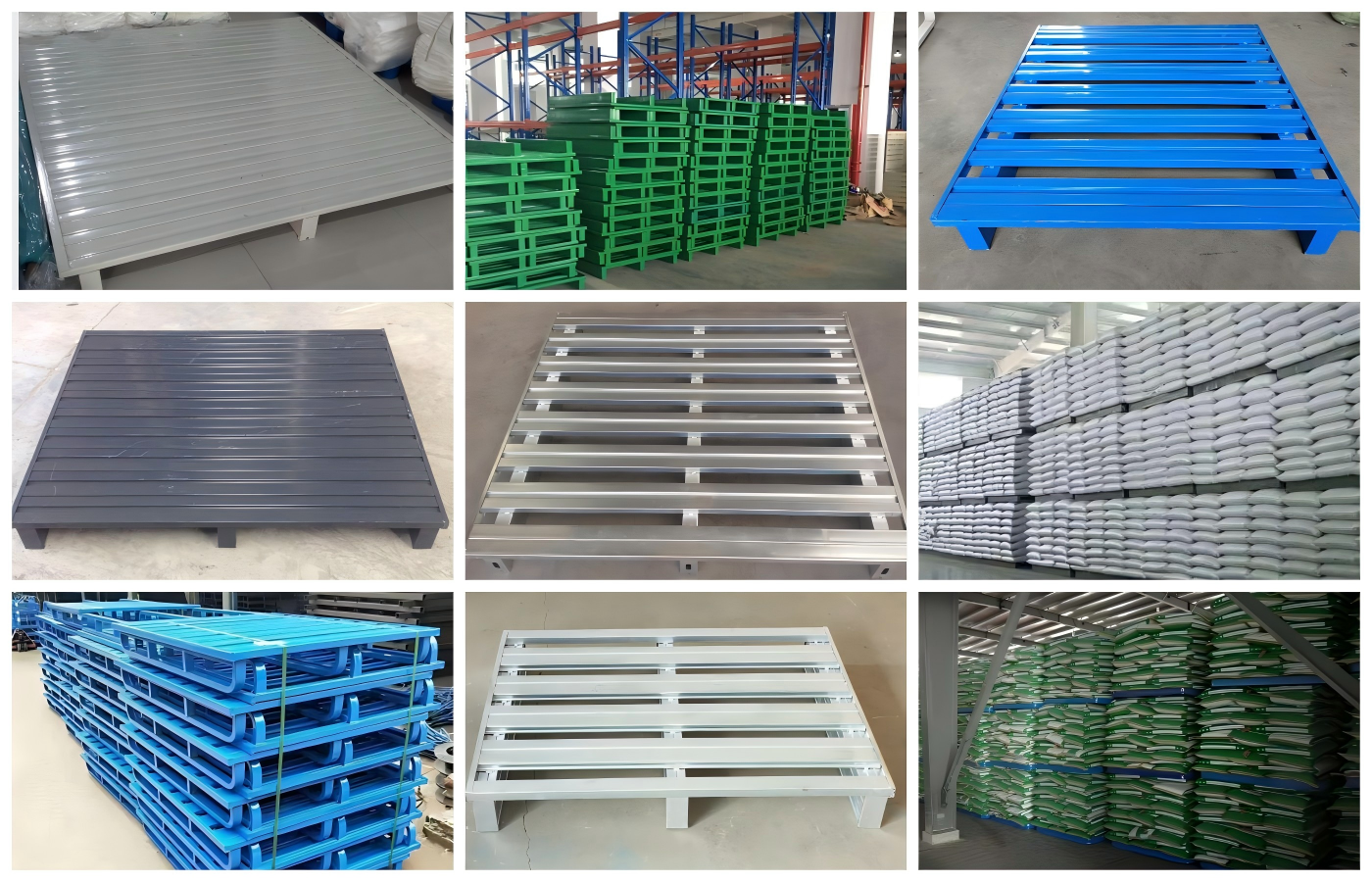
Engineered for extreme industrial demands, this equipment possesses the highest load-bearing capacity among all types of pallets. Safety and durability are paramount; the unit exhibits a high coefficient of friction when placed on storage racks. This critical design feature prevents slippage under heavy loads, ensuring safe, reliable operation even in fast-paced warehousing environments. Its excellent structural rigidity allows for high load capacities and ensures exceptional durability and a long service life.
The construction features a non-slip surface treatment and reinforced edge banding. The base structure is robust, offering a lightweight profile combined with high structural rigidity, thereby ensuring stable packaging performance. Furthermore, it provides outstanding weather and corrosion resistance—highly resistant to water, moisture, and rust. Compared to wooden pallets, they offer significant environmental advantages (as wooden pallets are prone to pest infestation). It also ensures superior performance over plastic pallets, offering distinct advantages in terms of strength, abrasion resistance, temperature tolerance, and cost-effectiveness. Because it is 100% eco-friendly, fully recyclable, and reusable, it ensures zero waste of resources. It remains ideal for exports, requiring no fumigation, high-temperature sterilization, or anti-corrosion treatments, thereby complying with international environmental regulations.
To accommodate diverse material handling requirements, operational flexibility is built into every unit. It features a four-way entry design that inherently optimizes space utilization and operational efficiency. Furthermore, its sturdy base design is fully compatible with conveyor roller systems and automated packaging lines. Depending on your specific facility layout, we offer multiple structural configurations, including flat decks, hollow grids, two-way or four-way entry systems, half-pallets, and bottomless slip sheets. This structural adaptability ensures direct integration with automated packaging lines, roller conveyors, and various specialized forklift equipment.
Due to their exceptional structural density and resistance to environmental degradation, these metal platforms are widely deployed across highly demanding industrial environments. They are engineered to solve specific storage and compliance challenges across multiple sectors:
Automotive & Parts Manufacturing: Capable of supporting dense, heavy engine components and metal stampings without structural fatigue, ensuring safe transit between assembly stations.
Food Processing & Cold Chain: The galvanized, easily washable surfaces withstand sub-zero temperatures and resist moisture accumulation, meeting strict sanitary requirements for perishable goods.
Chemical Manufacturing: Highly resistant to temperature fluctuations and accidental chemical exposure, providing a stable foundation for hazardous material containers.
Heavy Machinery & Military: Designed to endure extreme physical impact and support asymmetrical loads, making them indispensable for handling oversized mechanical components and defense-related equipment in rigorous operational theaters.
Heavy machinery and defense-related equipment present unique handling challenges that standard pallets cannot address. Key engineering factors built into this series include:
Asymmetrical Load Support: Reinforced beam placement compensates for off-center weight distribution common in irregular mechanical components.
Impact Resistance: Thicker gauge steel and additional weld reinforcement at stress points resist deformation from accidental drops or rough handling.
Point-Load Reinforcement: Additional cross-bracing beneath high-pressure contact zones prevents localized deck buckling under concentrated weight.
Extended Fatigue Life: Structural profiles are engineered to withstand repeated loading cycles typical in military logistics and heavy manufacturing rotation schedules.
When evaluating heavy-duty steel pallets against disposable alternatives, consider the full lifecycle cost picture:
Reusability Factor: A single heavy-duty steel pallet can replace dozens of single-use wooden pallets over its service life, reducing per-trip packaging cost.
Damage & Claims Reduction: Superior rigidity minimizes cargo damage claims associated with pallet failure under heavy or asymmetrical loads.
Scrap Recovery Value: At end-of-life, steel content retains recoverable scrap value, partially offsetting initial procurement cost.
Reduced Replacement Frequency: Extended fatigue resistance lowers the frequency of mid-cycle pallet replacement compared to wood or plastic alternatives in high-load rotations.
Beam thickness and spacing engineered to match specific point-load requirements
Deck configuration selection (flat/hollow grid) based on cargo shape and weight distribution
Optional reinforced corner guards for handling oversized or protruding components
Custom dimensions to accommodate non-standard machinery bases or military equipment crating specifications
Q1: How do I determine which load tier is right for my cargo?
A: Share your cargo's total weight, footprint, and whether the load is evenly or unevenly distributed; our team will recommend the appropriate load tier and structural configuration.
Q2: What is the difference between hollow grid and flat deck for heavy-duty use?
A: Flat deck offers full surface support ideal for irregular or unstable heavy items, while hollow grid reduces pallet weight where the cargo has its own stable base, such as machinery with a flat mounting foundation.
Q3: Can these pallets handle asymmetrical or off-center heavy loads?
A: Yes, reinforced beam placement and point-load bracing are engineered specifically to support uneven weight distribution common in irregular mechanical components.
Q4: Are bottomless slip sheets a viable alternative for heavy cargo export?
A: Slip sheets work well for maximizing container volume on stable, uniformly shaped heavy loads, but rigid flat deck or hollow grid pallets are generally recommended for irregular or high-point-load cargo.
Q5: How does the extra-heavy-duty tier differ structurally from standard heavy-duty?
A: Extra-heavy-duty units feature thicker steel gauge, denser cross-bracing, and reinforced weld points to safely support loads exceeding 8,000 kg without deflection.