 Products


| Quantity: | |
|---|---|


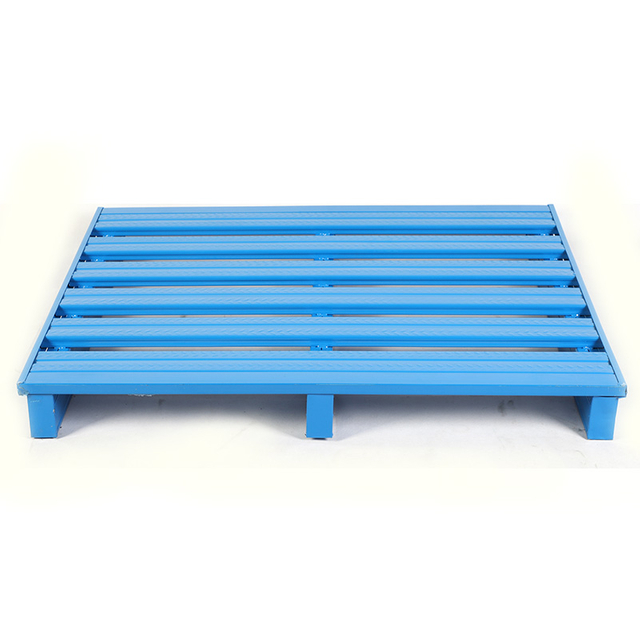
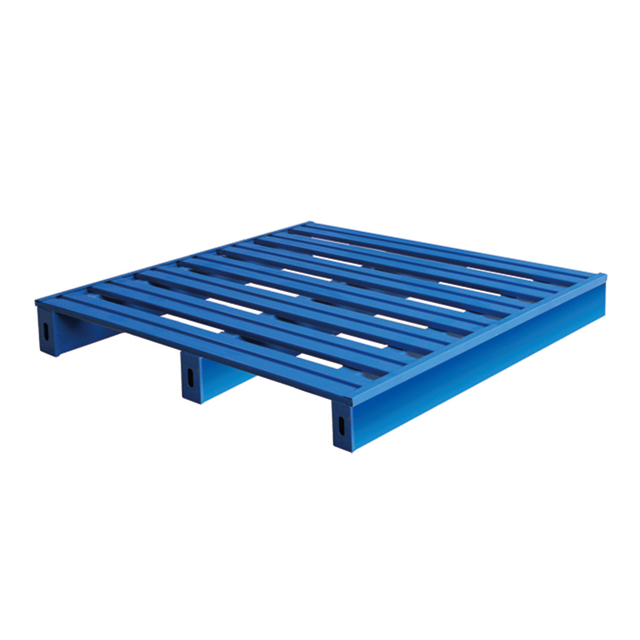
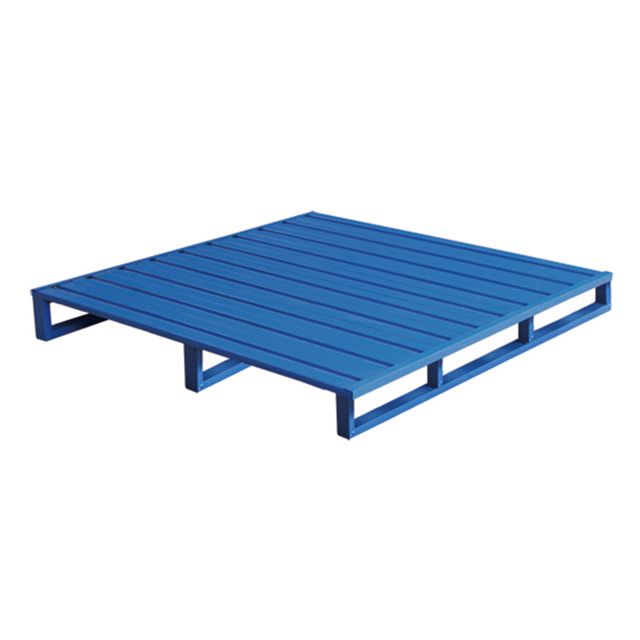
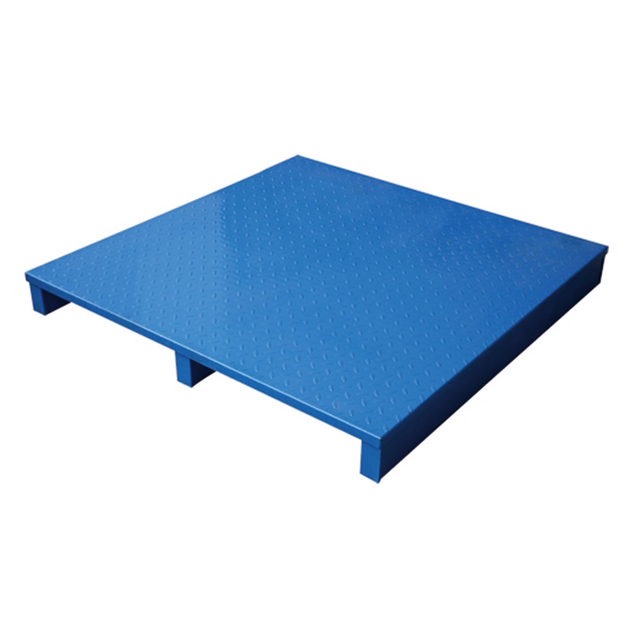
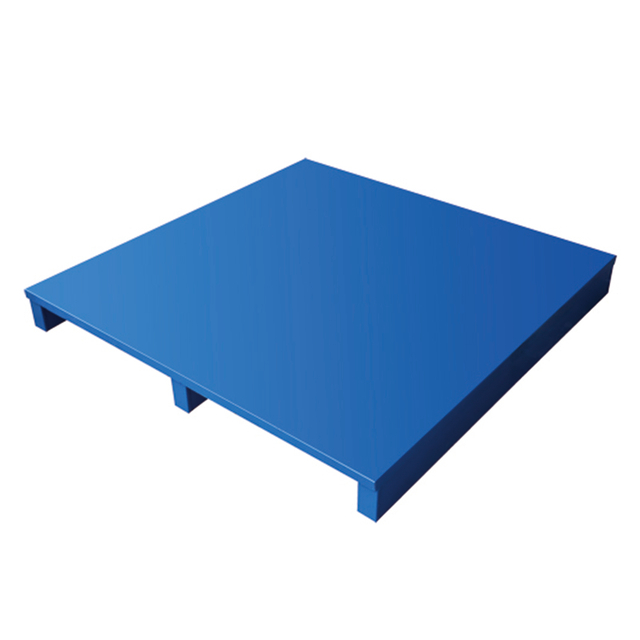
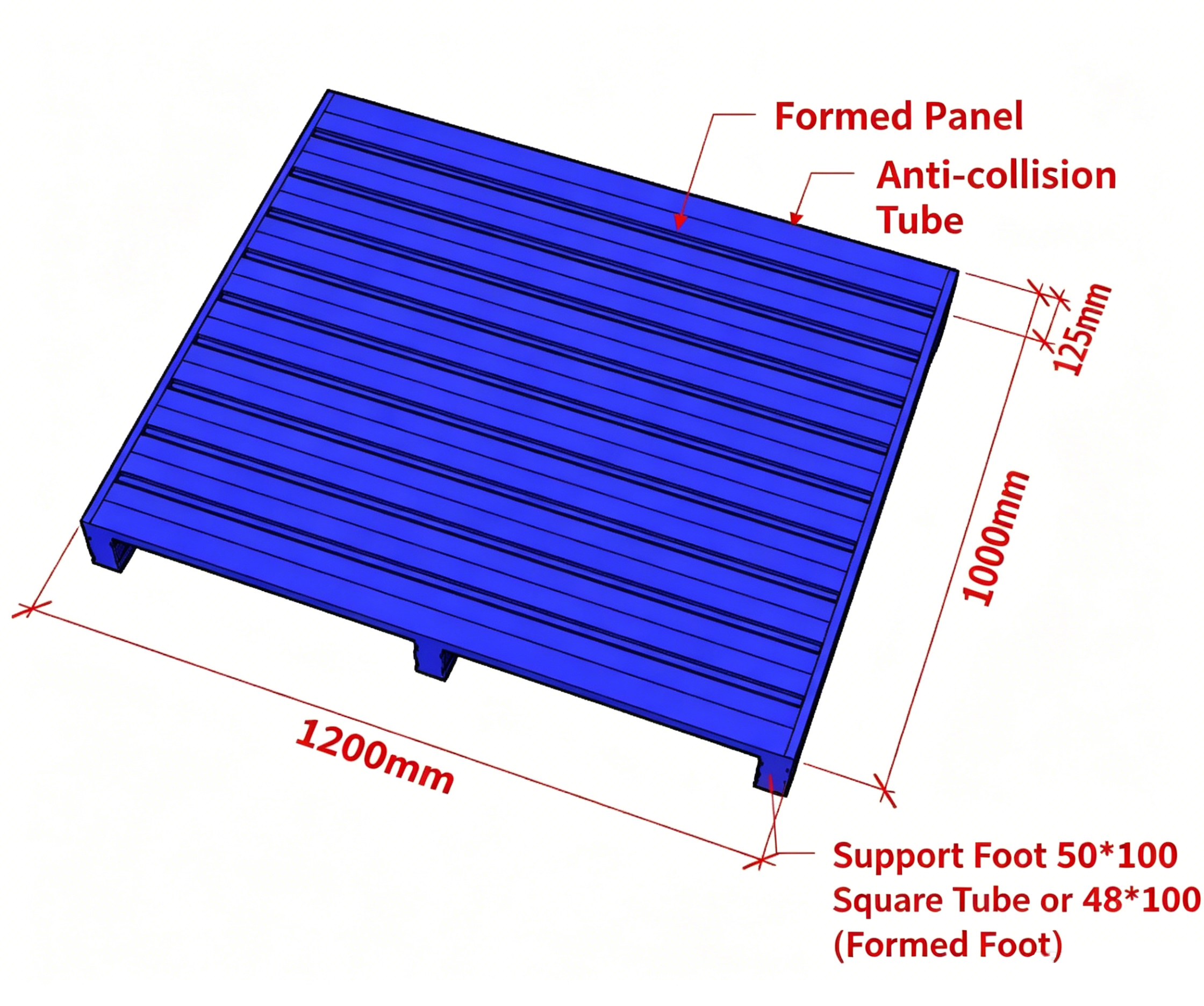
Steel pallets, also known as steel pallets, iron pallets, and metal pallets, are one of the important storage and transportation auxiliary equipment in modern industry. The main material is galvanized steel plate and steel, which are formed by special equipment, supported by various profiles, connected and strengthened by rivets, and then welded under C02 gas protection. Used for ground storage, shelf storage, cargo intermodal transportation, turnover and other ultra-light metal tray series. The integration of specialized professional anti-rust coatings ensures exceptional weather resistance, making them highly suitable for harsh environments such as cold chain logistics, automotive manufacturing, and chemical processing facilities. The solid chassis delivers a reassuringly rigid tactile feel, confirming its capability to handle turnover tasks seamlessly within automated storage and retrieval systems (AS/RS).
Engineered specifically for rigorous forklift operations, these steel pallets provide a highly efficient horizontal platform for cargo containment, stacking, and transportation. Serving as a foundational unit load device, they are indispensable for modern industrial warehousing, facilitating rapid cargo storage and retrieval. Manufactured from premium galvanized steel sheets, each unit undergoes precision forming through specialized industrial equipment. The architecture relies on various structural profiles that offer mutual support, mechanically reinforced by heavy-duty rivet connections and permanently fused via CO2 gas-shielded welding. This meticulous construction yields a cold, solid metallic finish that actively resists deformation under extreme stress, ensuring long-term reliability in demanding environments.
Functioning as a unitized container tool, the structure empowers the mechanized loading, unloading, and handling of heavy goods. The fundamental design features a single-layer deck supported underneath by strategically placed longitudinal beams, blocks, or legs. The minimum clearance height is strictly calibrated by the requirement to facilitate easy access for standard forklifts, hydraulic pallet trucks, and automated guided vehicles. To accommodate diverse enterprise requirements, comprehensive OEM and ODM customization services are available, allowing facility managers to precisely adjust dimensions, load-bearing tiers, and panel configurations to match specific operational workflows.
1. The carrying capacity is the strongest in pallets, supported by rigorous mechanical compression testing to guarantee absolute safety during heavy cargo stacking and intensive daily use.
2. Steel pallets are 100% environmentally friendly and can be recycled without wasting resources, fully complying with ISO quality management systems and international ecological standards.
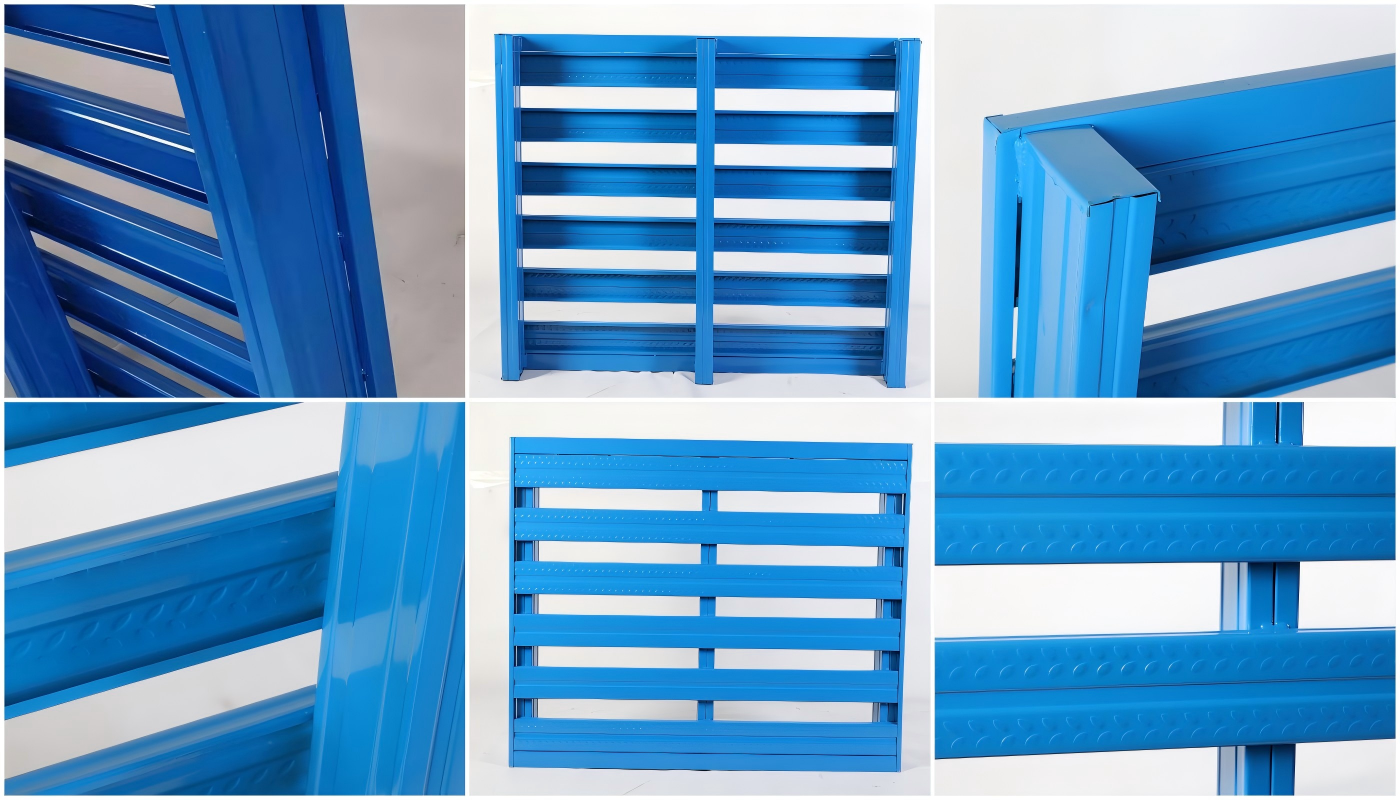
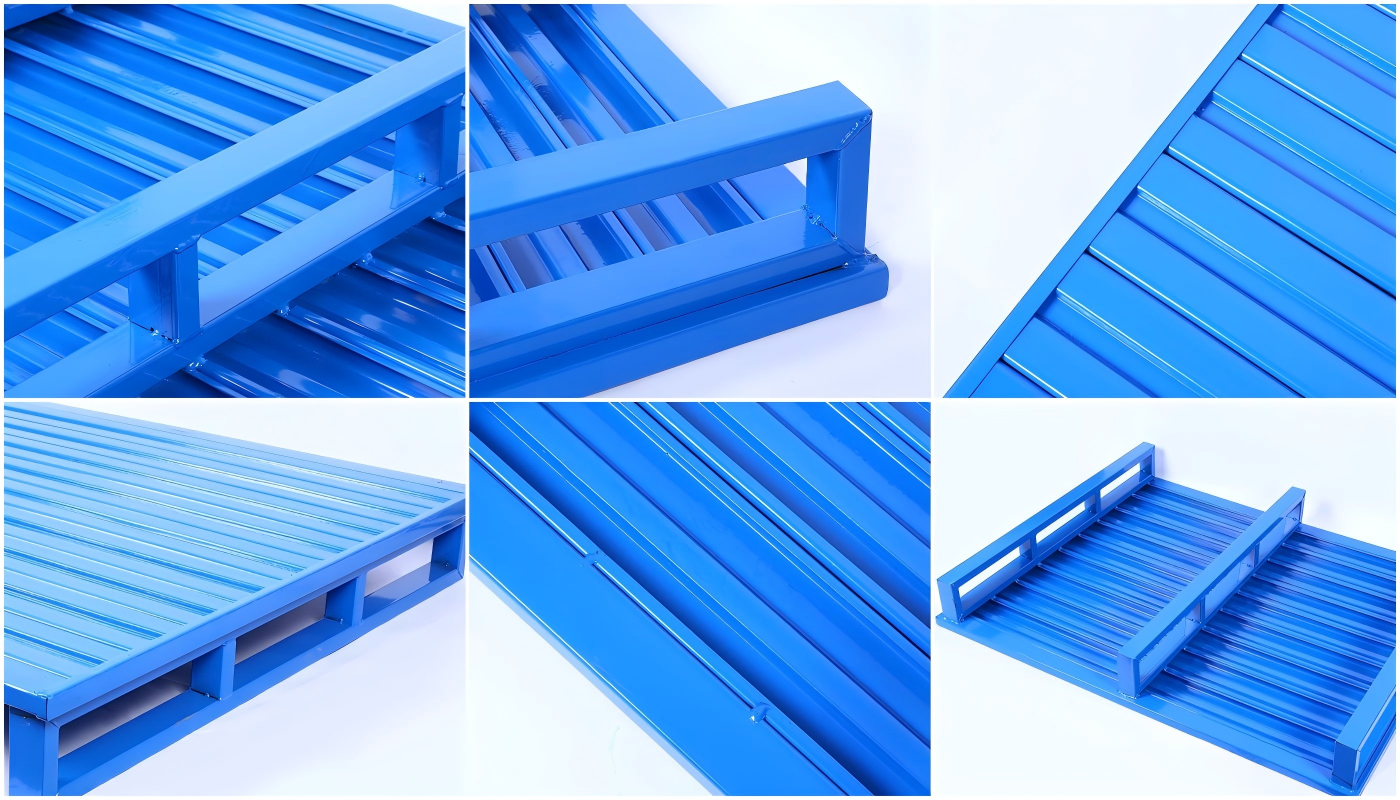
3. The surface of the steel tray shall be treated with a smooth surface and the periphery shall be wrapped. The tray chassis is solid, light in weight and strong in rigidity, with stable packaging performance, protecting operators from sharp edges while securing the load.
4. Waterproof, moisture-proof and rustproof steel tray; Compared with wooden pallets, it has environmental advantages (such as the capacity of wooden pallets to breed pests); Compared with plastic pallets, it has strength, wear resistance, temperature resistance, and price advantages, particularly in freezing cold storage environments.
5. Especially when used for export, steel pallets do not require re steaming, high-temperature disinfection, or anti-corrosion treatment in accordance with international environmental regulations, dramatically reducing compliance risks and border wait times.
6. Flexible use of steel pallets (4-way insertion design virtually improves the convenience of space utilization and operation, and its sturdy bottom plate design also conforms to the use of assembly lines and automatic packaging systems, ensuring frictionless integration into existing logistics networks).
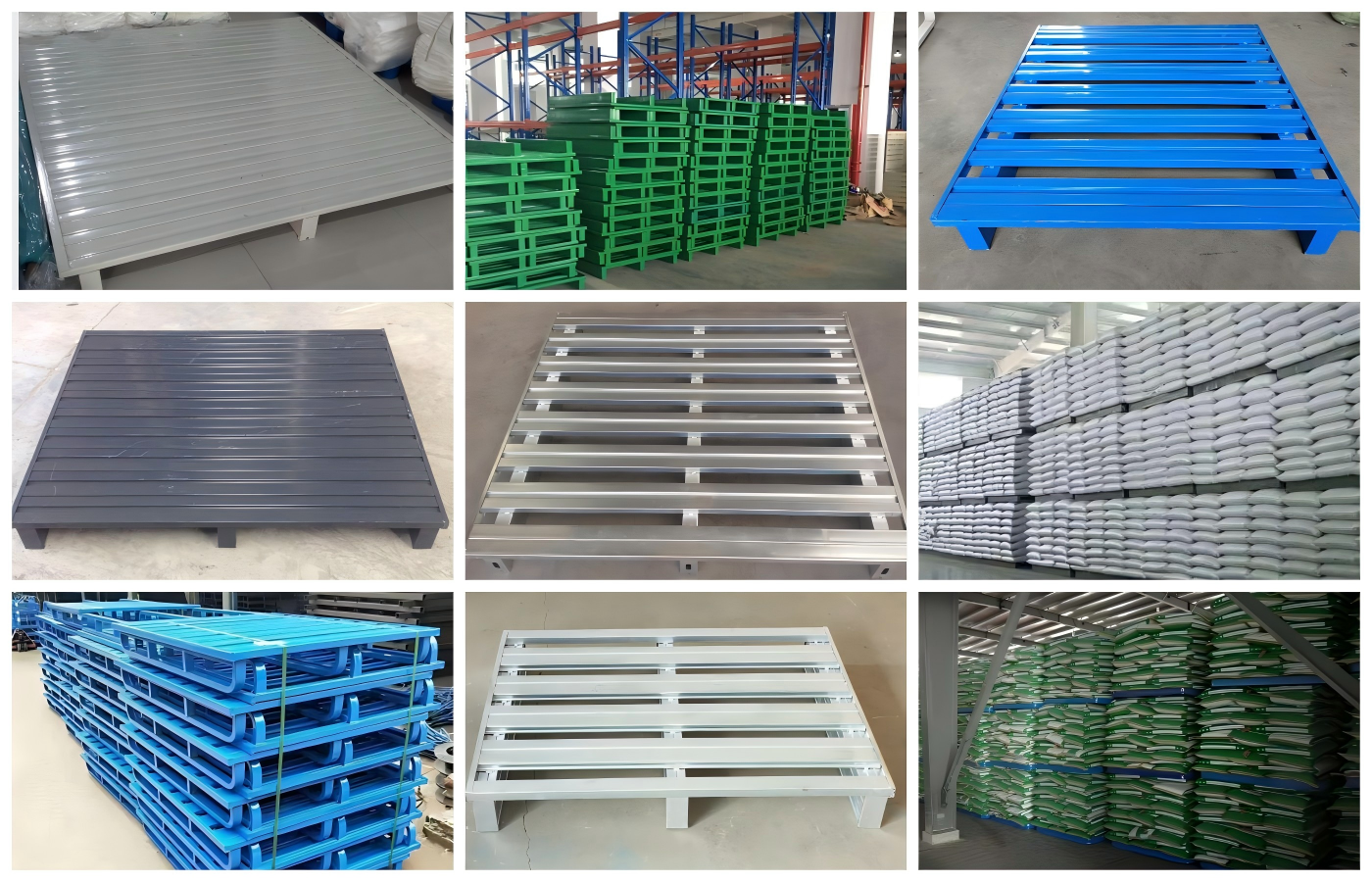
Possesses the highest load-bearing capacity among all types of pallets. By providing clear dynamic, static, and rack load indicators, facility managers can confidently deploy these units in heavy machinery and automotive manufacturing sectors without risking structural failure.
Fully recyclable and reusable, ensuring zero waste of resources. This aligns perfectly with modern corporate sustainability initiatives, allowing enterprises to reduce their carbon footprint while maintaining industrial-grade performance.
Features a non-slip surface treatment and reinforced edge banding. The base structure is heavily reinforced, offering a lightweight profile combined with high structural rigidity, thereby ensuring stable packaging performance. The scientific profile mutual-support design actively prevents cargo displacement during transit.
Resistant to water, moisture, and rust. Compared to wooden pallets, they offer significant environmental advantages (as wooden pallets are prone to pest infestation). The premium galvanized finish ensures reliable operation even in the demanding microclimates of chemical and pharmaceutical storage.
Offers distinct advantages in terms of strength, abrasion resistance, temperature tolerance, and cost-effectiveness compared to plastic pallets. The metallic construction emits a reassuringly solid acoustic resonance when handled, confirming its density and long-term durability.
Requires no fumigation, high-temperature sterilization, or anti-corrosion treatments—particularly beneficial for export shipments—thereby complying with international environmental regulations. This directly translates to reduced compliance risks and accelerated cross-border logistics.
Exhibits a high coefficient of friction when placed on storage racks, preventing slippage under heavy loads and ensuring safe, reliable operation. Its excellent structural rigidity allows for high load capacities and ensures exceptional durability and a long service life, protecting both inventory and warehouse personnel.
Features a four-way entry design that inherently optimizes space utilization and operational efficiency; furthermore, its sturdy base design is fully compatible with conveyor roller systems and automated packaging lines, ensuring a direct interface with modern automated material handling equipment.
The "in-and-out forked" design refers to the specific approach and exit pathway engineered into the pallet's leg structure, distinguishing it from simple two-way designs:
Entry Clearance: Fork channels are dimensioned to allow forklift tines, hydraulic pallet trucks, or AGV forks to fully engage from either end without partial insertion risk.
Exit Stability: The channel geometry maintains consistent tine support throughout the withdrawal motion, reducing the chance of load tilt during retraction.
AGV Compatibility: Precise, repeatable channel dimensions are particularly important for Automated Guided Vehicles, which rely on consistent physical tolerances to execute pick-up and drop-off without manual correction.
This engineered entry/exit pathway makes the pallet particularly reliable in facilities transitioning from manual forklift operations to automated guided vehicle fleets.
Specification Intake – Submit your cargo dimensions, weight profile, and preferred entry configuration (two-way in-and-out forked).
Engineering Review – Our technical team assesses beam spacing, ply coverage ratio, and load path design based on your data.
Free Drawing Proposal – A detailed technical drawing is provided at no cost for your approval before production.
Prototype Sample (Optional) – A sample unit can be produced for on-site fit and load testing prior to bulk manufacturing.
Batch Production & Inspection – Full production run under standardized dimensional and load-bearing quality checks.
Mechanical Compression Testing: Units are tested under compressive load to the rated static capacity to confirm zero permanent deformation.
Rack Load Verification: Simulated edge-support conditions confirm safe performance when the pallet spans between rack beams rather than resting on a solid floor.
ISO-Aligned Quality Process: Production workflow follows standardized quality management documentation practices, supporting compliance-driven procurement requirements for automotive and industrial buyers.
Weld & Rivet Integrity Check: Each joint is inspected to confirm consistent fusion depth and mechanical strength across the batch.
For facilities operating or planning automated storage and retrieval systems (AS/RS) or AGV fleets, this pallet's dimensional consistency offers specific integration benefits:
Consistent leg height across production batches minimizes calibration adjustments for automated pick-up sensors
Two-way forked entry aligns with common AGV fork approach patterns used in linear rack aisles
Half-ply deck reduces overall unit weight, which can improve AGV battery efficiency during high-frequency pallet transport cycles
Units are stacked and strapped for transit, with the lighter half-ply structure reducing overall shipment weight compared to full-ply alternatives
Nestable stacking of empty units improves container fill rate for bulk export orders
Standard Incoterms (FOB, CIF, EXW) supported; lead time varies based on customization complexity and order volume
Q1: What does "in-and-out forked" mean compared to standard two-way entry?
A: It specifically refers to the engineered fork channel geometry that ensures stable engagement and withdrawal from either end, which is especially beneficial for AGV and automated handling precision.
Q2: Is the half-ply deck strong enough for automotive parts handling?
A: Yes, for parts with their own structural base or packaging (such as crated components), the half-ply deck provides sufficient support; for loose or irregular parts, a full-ply deck may be recommended.
Q3: Can this pallet be used with AGV fleets?
A: Yes, the consistent fork entry geometry and dimensional tolerances make it well-suited for AGV pick-up and drop-off operations in automated warehouses.
Q4: What compression testing is performed before shipment?
A: Units undergo mechanical compression testing to rated static load and rack load verification to confirm structural performance before leaving the factory.
Q5: Can the ply coverage ratio be adjusted for specific cargo?
A: Yes, deck strip spacing and coverage ratio can be customized based on your cargo's base support requirements — share your specifications for a tailored design proposal.