 Products


| Quantity: | |
|---|---|


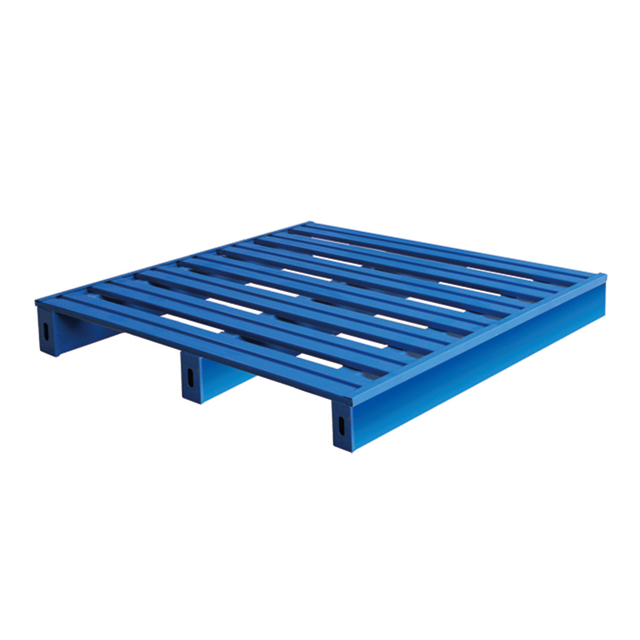
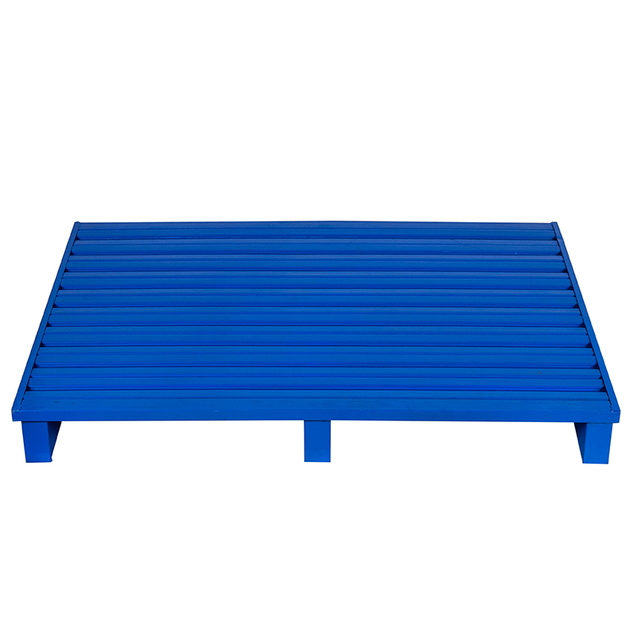
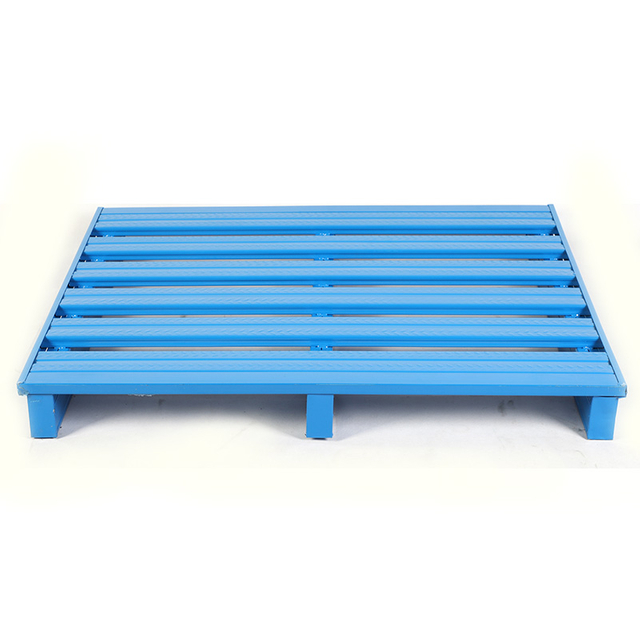
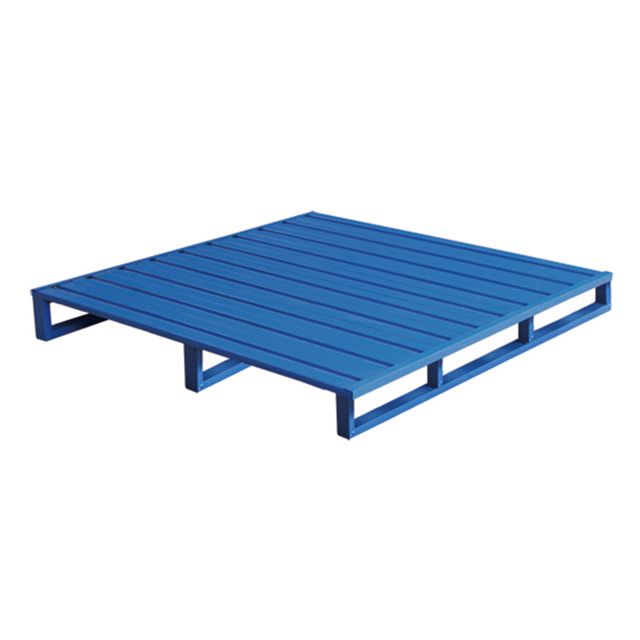
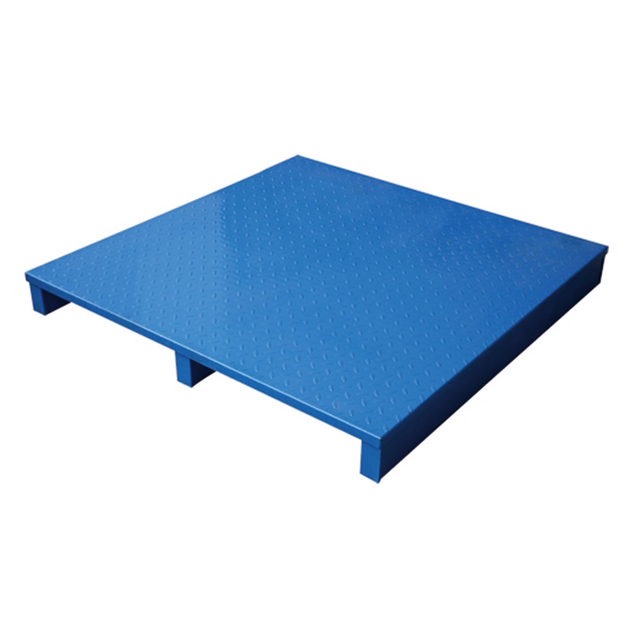
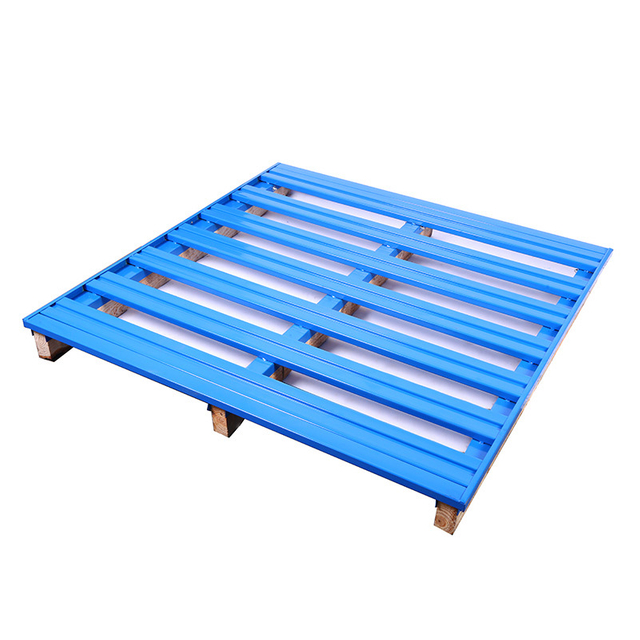
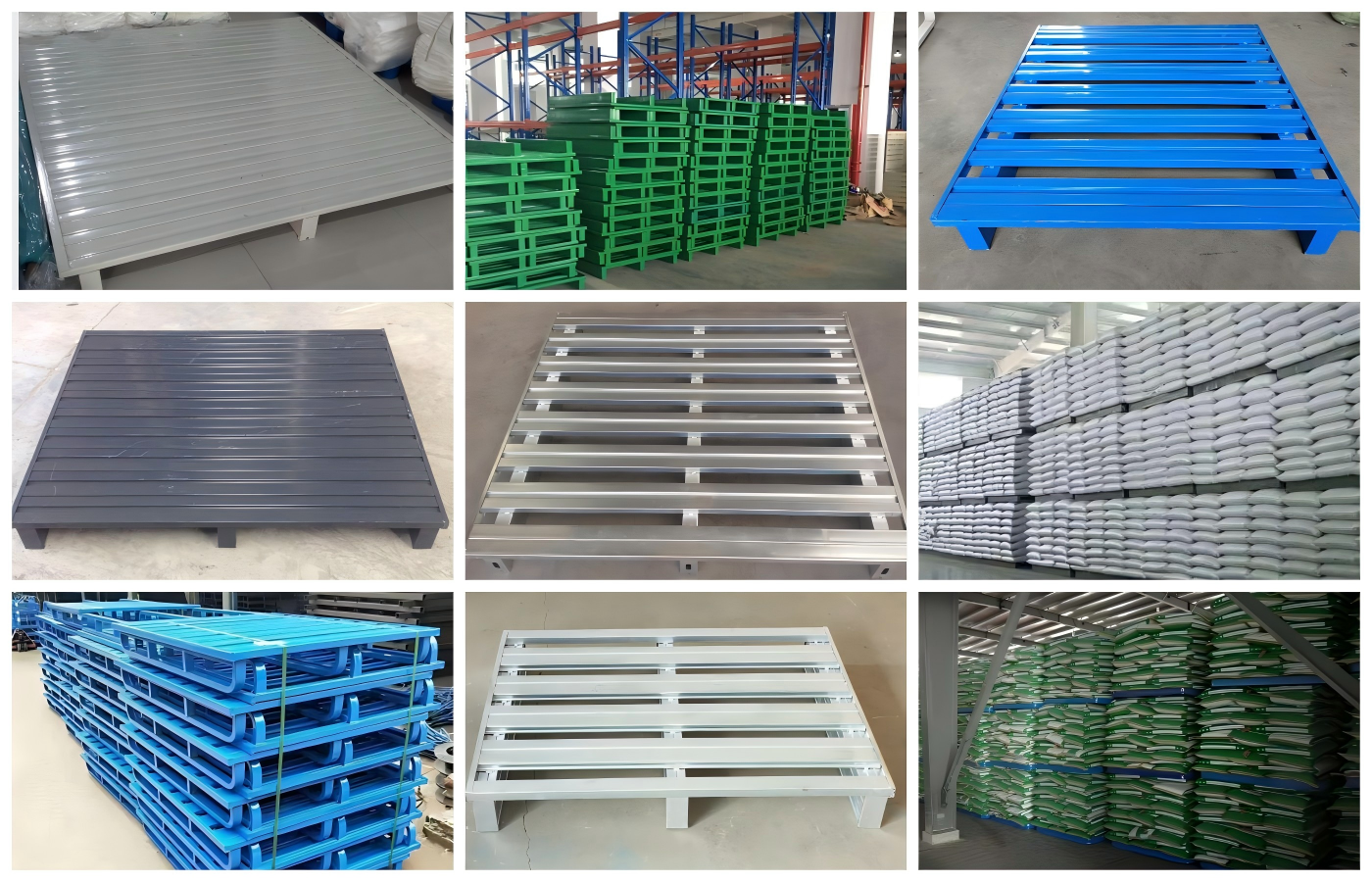
Steel pallets, frequently referred to within the industry as iron pallets or metal transit platforms, represent one of the most vital storage and transportation auxiliary equipment categories in modern industrial environments. The primary material composition relies on high-tensile galvanized steel plates and raw steel, which are cold-formed by special heavy-duty equipment. The structure is supported by various geometric profiles, mechanically connected and strengthened by industrial rivets, and then permanently welded under C02 gas protection to ensure joint integrity. This ultra-light metal tray series is extensively used for ground-level block storage, elevated shelf storage, intermodal cargo transportation, and rapid inventory turnover, adapting perfectly to automated packaging lines and conveyor roller systems.
Designed to serve as the critical foundation for demanding material handling operations, these industrial-grade steel pallets are optimized for seamless forklift integration, facilitating highly efficient cargo storage and rapid retrieval. Belonging to an advanced series of lightweight yet highly rigid metal pallets, they are primarily utilized across versatile applications, including high-density floor storage, multi-tier rack storage, intermodal transport, and continuous cargo turnover. Functioning as dependable horizontal platform devices, they act as unified load carriers specifically engineered for the containment, safe stacking, handling, and long-distance transportation of heavy goods. Consequently, they constitute one of the most indispensable auxiliary tools for modern warehousing and global logistics infrastructures. Constructed primarily from premium-grade steel or specially treated galvanized steel sheets, these pallets are precision-formed using specialized heavy machinery. Their architecture relies on various structural profiles that provide mutual load-bearing support, reinforced by heavy-duty rivet connections, and subsequently permanently joined via precise CO2 gas-shielded welding to eliminate structural weak points.
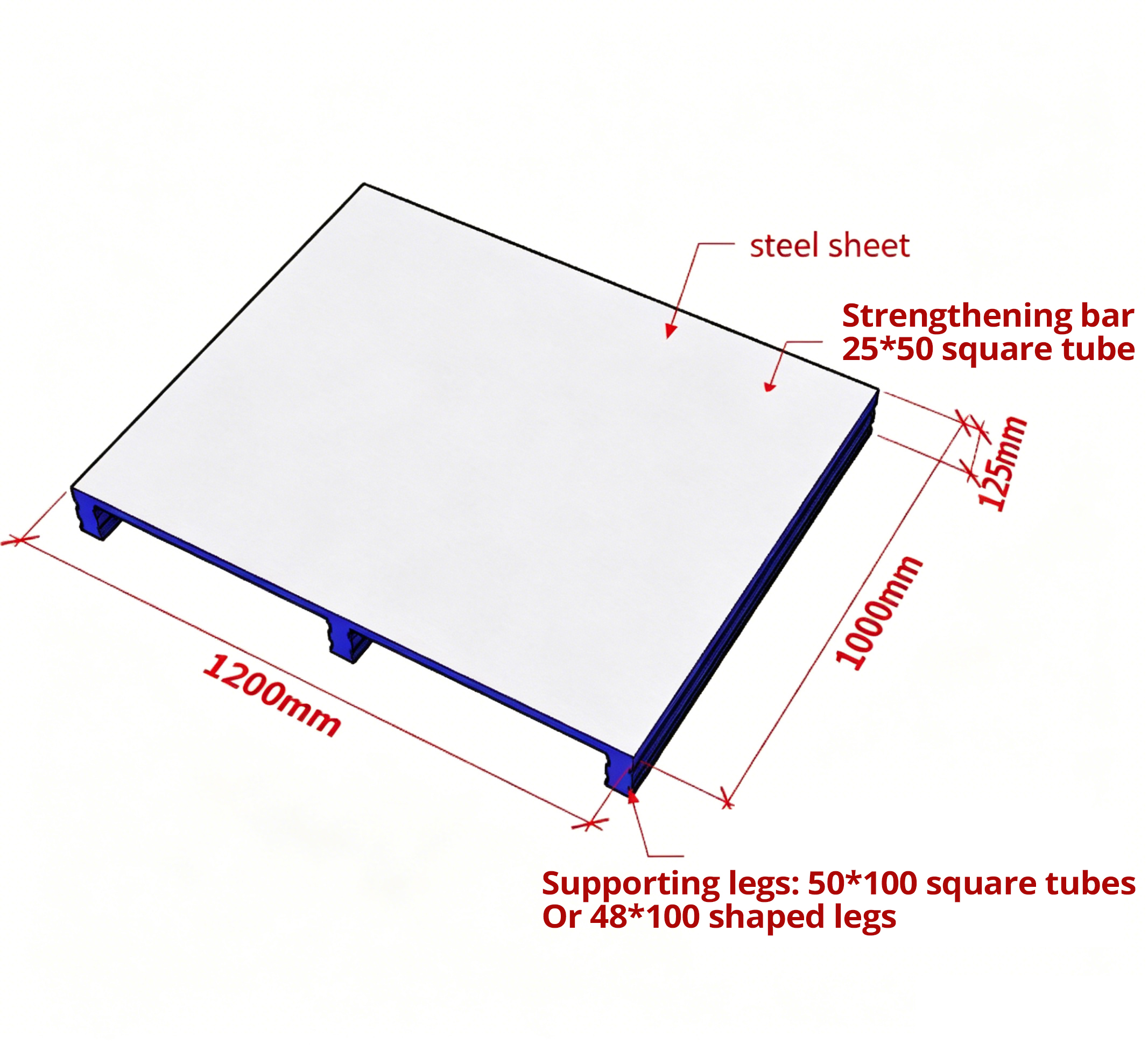
A steel pallet functions as a unitized container tool essential for the mechanized loading, unloading, handling, and stacking of commercial goods. Its fundamental structure consists of a meticulously crafted single-layer deck supported underneath by strategically placed longitudinal beams, blocks, or legs. The minimum height of the pallet is carefully determined by strict ergonomic and mechanical requirements to facilitate immediate, frictionless access for standard forklifts or motorized pallet jacks, emitting a solid, reassuring metallic resonance when engaged by lifting tines.
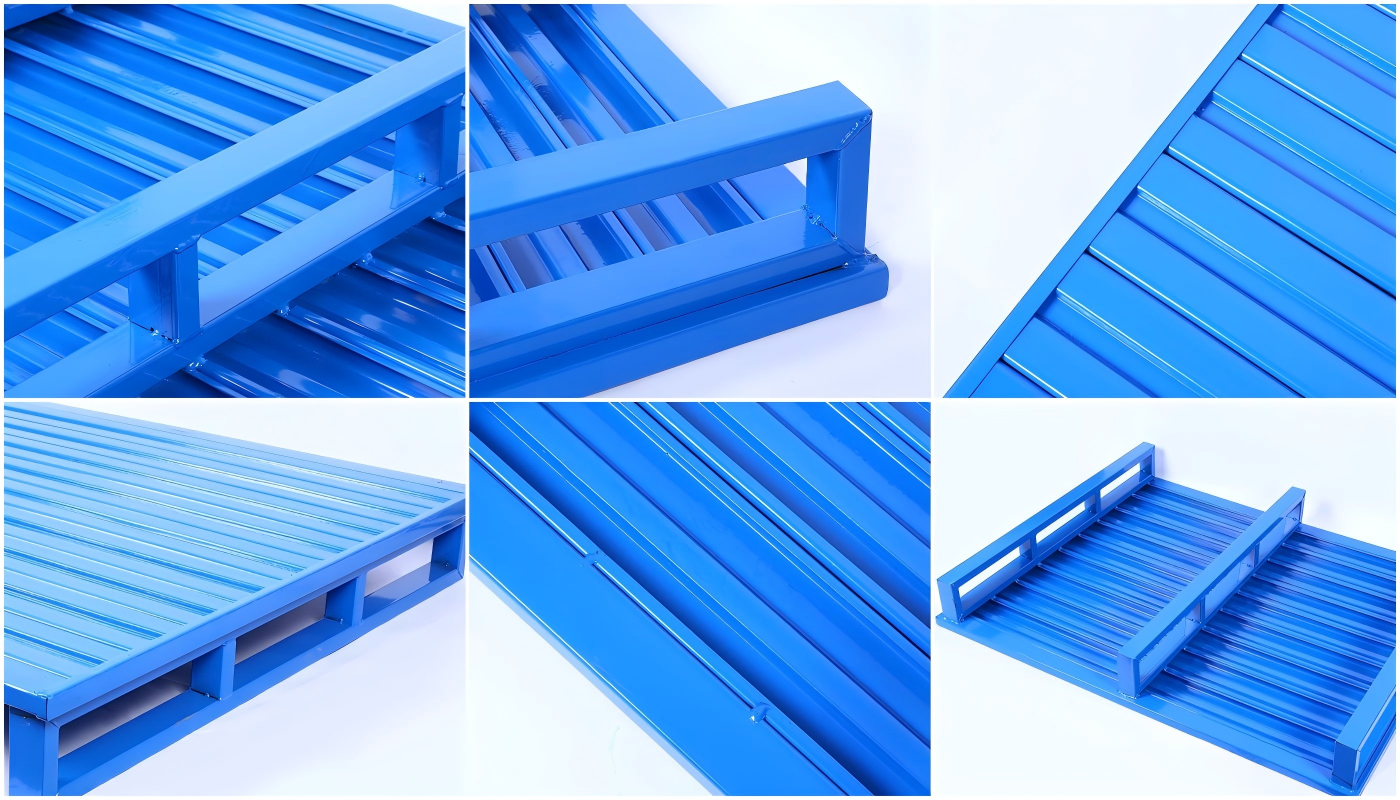
The carrying capacity is unequivocally the strongest among all commercial pallets, easily managing concentrated point-loads that would cause alternative materials to bow or fracture under pressure.
Steel pallets are 100% environmentally friendly and can be continuously recycled without wasting natural resources, contributing to sustainable operational practices.
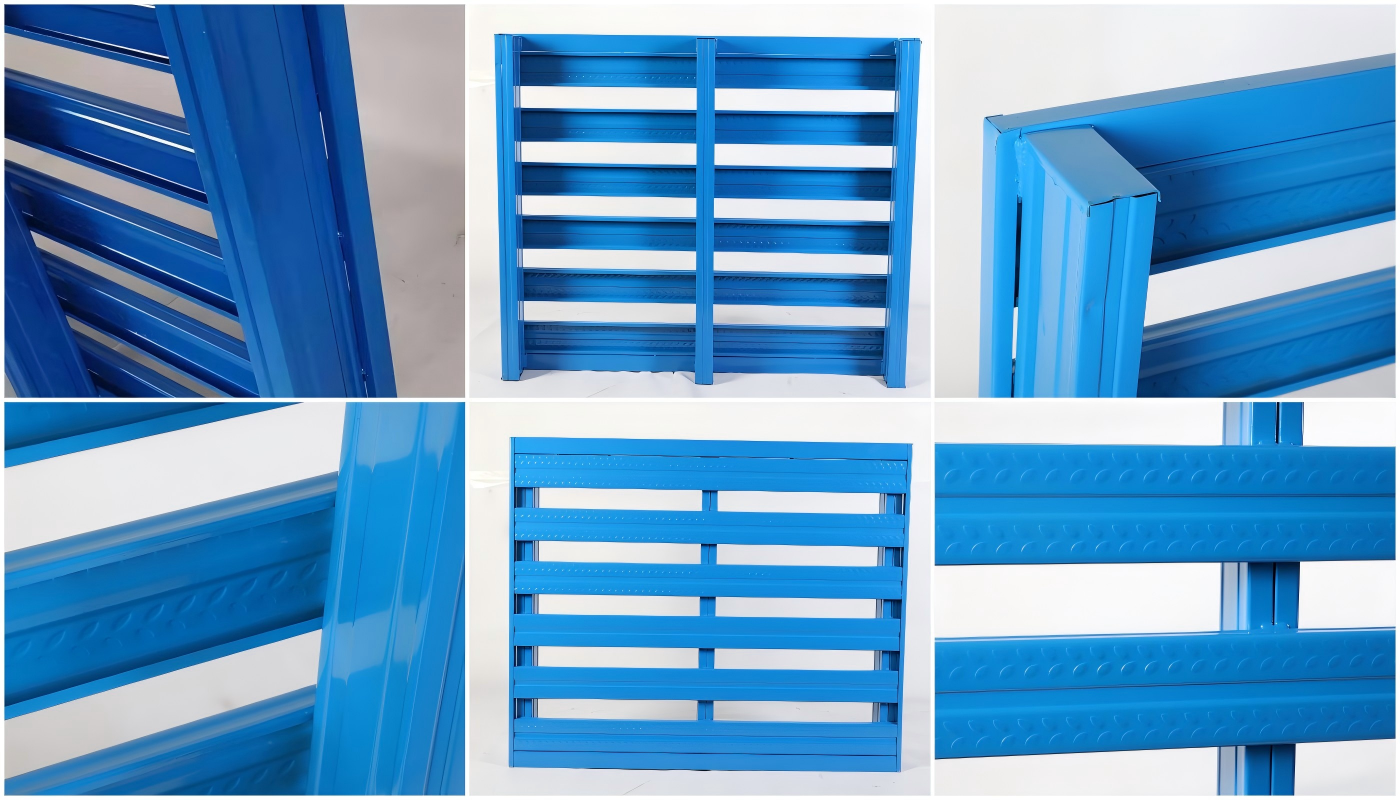
The surface of the steel tray shall be treated with a smooth, snag-free finish, and the periphery shall be carefully wrapped and hemmed. The tray chassis is exceptionally solid, offering a lightweight profile while maintaining strong rigidity, which guarantees stable packaging performance during transit;
Engineered as a waterproof, moisture-proof, and rustproof steel tray; compared with traditional wooden pallets, it presents significant environmental and sanitary advantages (completely eliminating the capacity of wooden pallets to breed pests, mold, or fungi); compared with plastic pallets, it delivers superior strength, wear resistance, extreme temperature resistance, and distinct long-term price advantages.
Especially when utilized for international export, steel pallets do not require re-steaming, high-temperature disinfection, fumigation, or chemical anti-corrosion treatment in accordance with international environmental regulations, ensuring frictionless cross-border logistics.
Flexible use of steel pallets is guaranteed through intelligent engineering: the 4-way insertion design virtually improves the convenience of space utilization and operational speed for material handlers, and its sturdy bottom plate design strictly conforms to the rigorous demands of assembly lines and automatic packaging systems.
Possesses the highest load-bearing capacity among all types of pallets available in the industrial sector. The structural geometry distributes heavy, uneven loads across the longitudinal beams, preventing deflection and ensuring that even the most demanding heavy-machinery components or dense raw materials are supported without compromise.
Fully recyclable and reusable at the end of its extensive lifecycle, ensuring zero waste of resources. By integrating these platforms into your supply chain, organizations significantly reduce their carbon footprint and eliminate the continuous disposal costs associated with broken wooden alternatives.
Features a specialized non-slip surface treatment and reinforced edge banding that is cool and smooth to the touch, preventing damage to stretch-wrapped goods. The base structure is robust, offering a remarkably lightweight profile combined with high structural rigidity, thereby ensuring stable packaging performance even when subjected to sudden logistical impacts.
Highly resistant to water, moisture, and rust due to the premium galvanized finish. Compared to wooden pallets, they offer significant environmental advantages (as wooden pallets are highly prone to pest infestation, moisture absorption, and subsequent structural decay), making them ideal for outdoor storage or damp industrial environments.
Offers distinct, measurable advantages in terms of sheer strength, abrasion resistance against concrete floors, temperature tolerance (unaffected by freezing cold storage or extreme heat), and overall cost-effectiveness over time compared to plastic pallets, which often become brittle and shatter under similar stress.
Requires absolutely no fumigation, high-temperature sterilization, or chemical anti-corrosion treatments—factors that are particularly beneficial for time-sensitive export shipments. They inherently comply with stringent international environmental regulations and ISPM 15 standards, guaranteeing that your cargo passes through global customs without quarantine delays.
Exhibits a calculated high coefficient of friction when placed on metal storage racks, actively preventing dangerous slippage under heavy loads and ensuring safe, reliable daily operation. Its excellent structural rigidity allows for exceptionally high load capacities and ensures outstanding durability, translating to a long service life that maximizes return on investment.
Features an optimized four-way entry design that inherently maximizes space utilization and operational efficiency, allowing operators to approach from any angle in tight warehouse aisles. Furthermore, its sturdy, flat base design is fully compatible with advanced conveyor roller systems and automated packaging lines, preventing jams and maintaining continuous operational flow.
To accommodate the diverse requirements of large-scale industrial operations, our production facilities are fully equipped to support extensive OEM and ODM customization. Whether your facility requires specific dimensional adjustments to fit proprietary racking systems or enhanced load-bearing modifications for specialized heavy machinery, our scalable production lines deliver exact specifications with uncompromising consistency. Every single unit undergoes a rigorous 100% factory inspection protocol prior to dispatch, verifying structural rigidity, weld integrity, and dimensional accuracy to ensure flawless integration into your existing material handling ecosystem.
Volume Procurement Policies | We provide structured, tiered pricing discounts for large-volume orders, supported by flexible international payment terms including L/C and T/T. Reasonable Minimum Order Quantities (MOQ) are established to optimize your procurement budget while maintaining supply chain fluidity. |
Export Packaging & Logistics | All platforms are prepared using professional, seaworthy export packaging designed to maximize container space. We specialize in Full Container Load (FCL) shipping strategies that protect the galvanized finish from maritime elements, ensuring safe and punctual global delivery. |
Comprehensive After-Sales Support | Backed by a solid warranty commitment, our dedicated service team provides 7x24 hour online response. From initial technical integration guidance to ongoing operational support, we eliminate the complexities and concerns traditionally associated with cross-border equipment sourcing. |
Automotive & Machinery Manufacturing: Transporting heavy engine components, castings, and metal parts across production and warehousing zones.
Chemical & Pharmaceutical Storage: Corrosion-resistant surface suits environments requiring strict hygiene and chemical exposure resistance.
Food & Beverage Logistics: Non-porous steel surface avoids the mold and pest risks associated with wooden pallets, supporting sanitary compliance.
Cross-Border Export Trade: Exemption from fumigation requirements streamlines customs clearance for international shipments.
Automated Warehousing (AS/RS): Dimensional precision and flat, rigid decks ensure reliable compatibility with automated storage and retrieval systems.
We support fully tailored steel pallet production based on your technical drawings or sample requirements:
Custom deck dimensions, beam spacing, and entry direction (2-way/4-way)
Adjustable load rating engineering for specific heavy-duty or lightweight applications
Surface finish selection: standard galvanizing, powder coating, or custom color coding for warehouse zoning
Optional anti-slip surface texture or edge reinforcement for specific handling conditions
Client logo, batch number, or QR code marking available for asset tracking
Incoming steel sheet inspection for thickness tolerance and tensile strength
In-process weld seam inspection under CO2 shielding to confirm joint integrity
Load testing at rated static and dynamic capacity before batch approval
Coating thickness and adhesion verification for corrosion resistance assurance
100% final inspection covering dimensional accuracy and surface finish prior to packing
Q1: What is the typical load capacity difference between 2-way and 4-way steel pallets?
A: 4-way entry pallets generally offer more flexible handling but may have slightly reduced structural rigidity compared to certain 2-way designs; exact capacity depends on beam configuration and material thickness.
Q2: Are these steel pallets compliant with international export regulations?
A: Yes, as steel pallets do not require fumigation or heat treatment, they simplify compliance with international phytosanitary regulations for cross-border shipments.
Q3: Can the pallet dimensions be customized to match our existing racking system?
A: Yes, dimensions, beam spacing, and load capacity can be engineered to match your specific racking, conveyor, or automated system requirements — please share your technical drawings for a free design proposal.
Q4: How do steel pallets compare with plastic pallets for cold storage use?
A: Steel pallets maintain structural performance in extreme temperatures without becoming brittle, making them more reliable than plastic pallets in cold storage or freezing environments.
Q5: What is the minimum order quantity for custom steel pallets?
A: MOQ is flexible and depends on the specific structural configuration; please contact us with your requirements for a tailored quotation and tiered pricing options.