 Products


| Quantity: | |
|---|---|


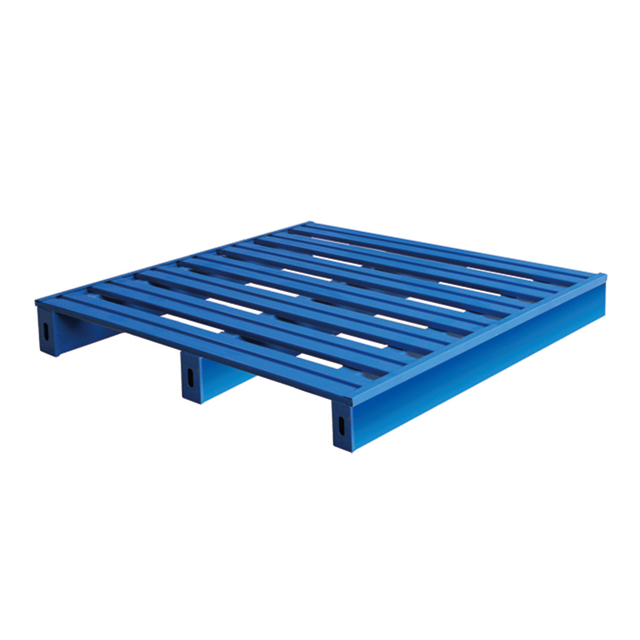
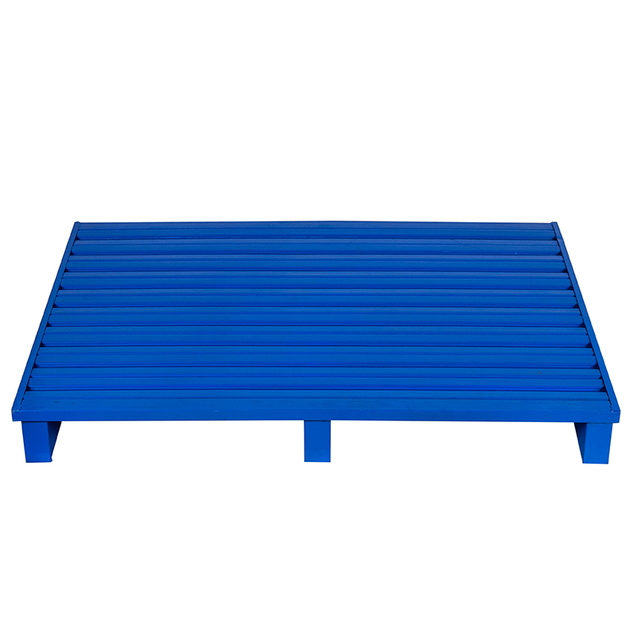
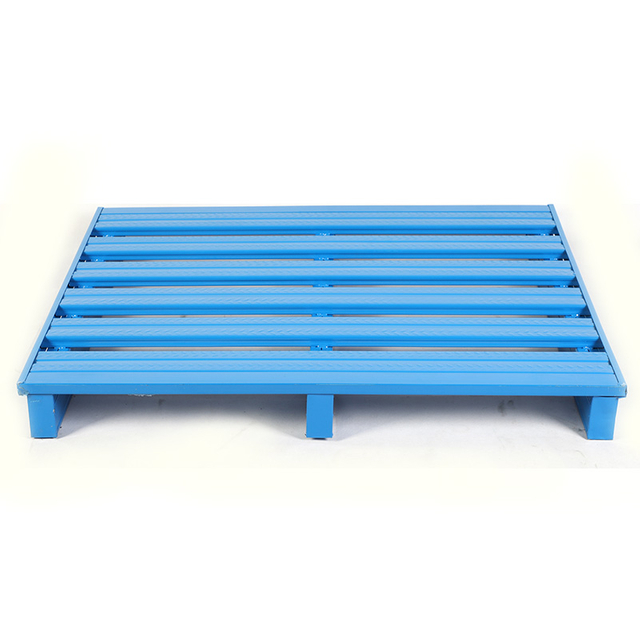
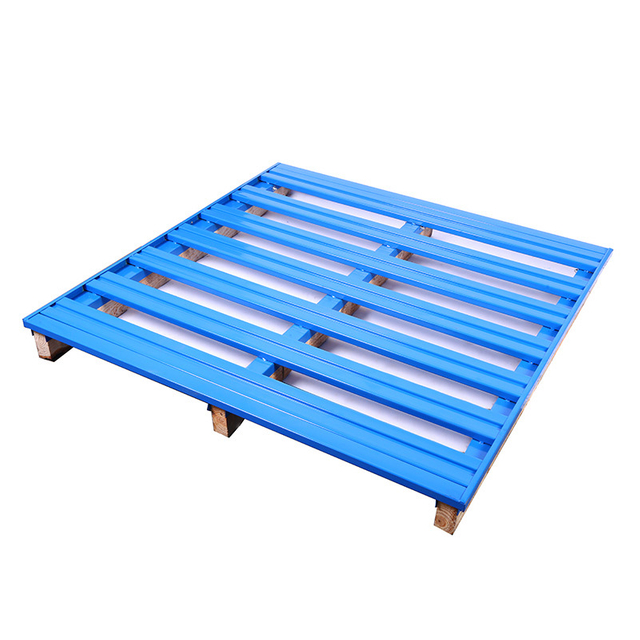
Steel pallets, also known as steel pallets, iron pallets, and metal pallets, are one of the important storage and transportation auxiliary equipment in modern industry. The main material is galvanized steel plate and steel, which are formed by special equipment, supported by various profiles, connected and strengthened by rivets, and then welded under C02 gas protection. They are exceptionally suited for ground storage, shelf storage, cargo intermodal transportation, continuous turnover, and other ultra-light metal tray series applications. Standardized four-way entry design ensures they flawlessly integrate with AS/RS (Automated Storage and Retrieval Systems), conveyor roller lines, and automated packaging setups, eliminating operational bottlenecks and providing an unyielding foundation for your most valuable inventory.
A steel pallet functions as a unitized container tool for the mechanized loading, unloading, handling, and stacking of goods. Its basic structure consists of a single-layer deck supported underneath by longitudinal beams, blocks, or legs; the minimum height of the pallet is carefully determined by the requirement to facilitate easy, frictionless access for forklifts or pallet jacks. Beyond basic storage, these pallets seamlessly adapt to complex industry application scenarios. They are widely utilized in the food and beverage sector due to their easy-to-clean, pest-resistant surfaces, and in chemical manufacturing where moisture and corrosion resistance are paramount. Furthermore, their high-rigidity chassis is perfectly tailored for heavy machinery components requiring strict hygiene and extreme load-bearing capabilities.
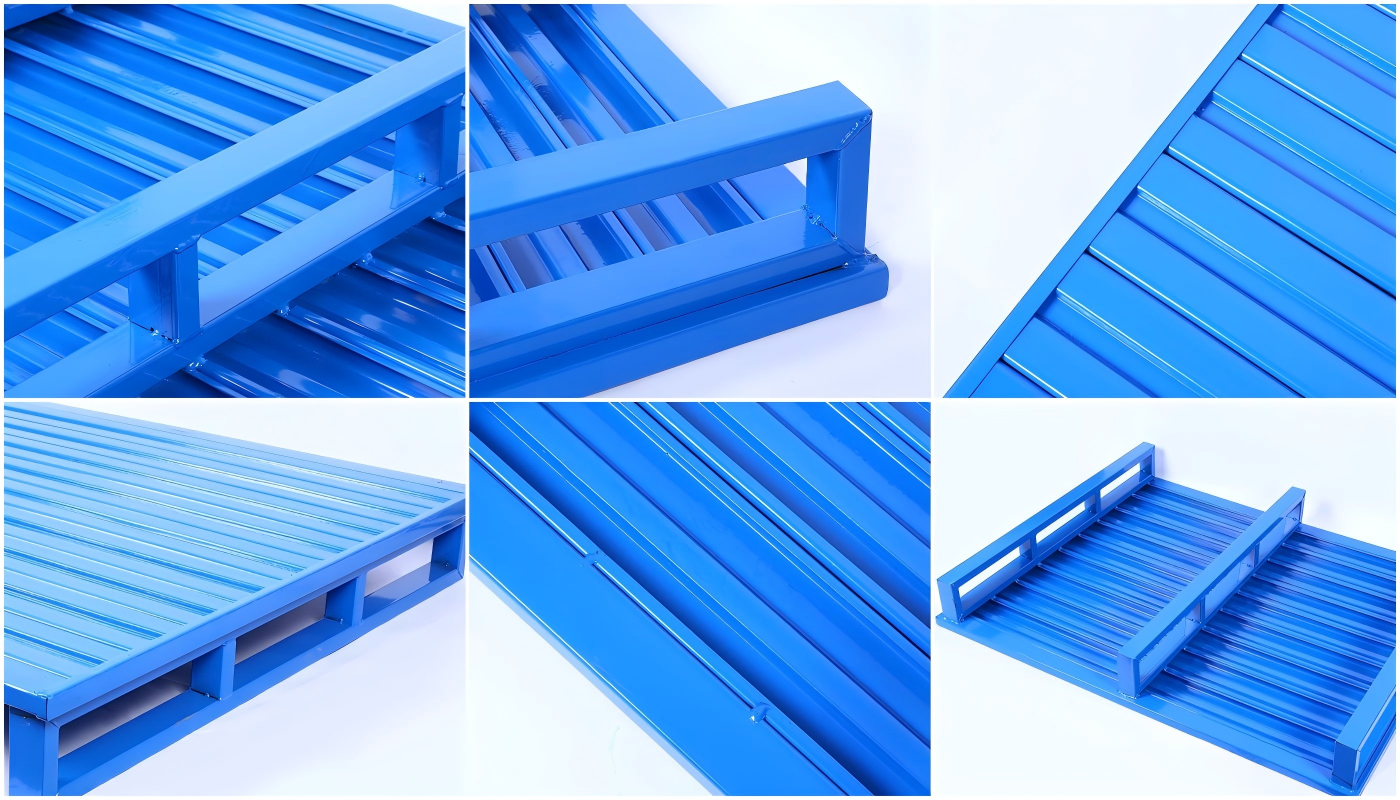
1. Unmatched Load-Bearing Capability: The carrying capacity is the strongest among all pallets in the market, easily supporting massive weights without deflection, ensuring your heavy-duty inventory remains secure during transit.
2. Exceptional ROI and ESG Compliance: Steel pallets are 100% environmentally friendly and can be recycled without wasting resources. Their ultra-long service life and high recyclable scrap value significantly reduce the Total Cost of Ownership (TCO) per trip, directly assisting modern enterprises in achieving their ESG carbon reduction targets.
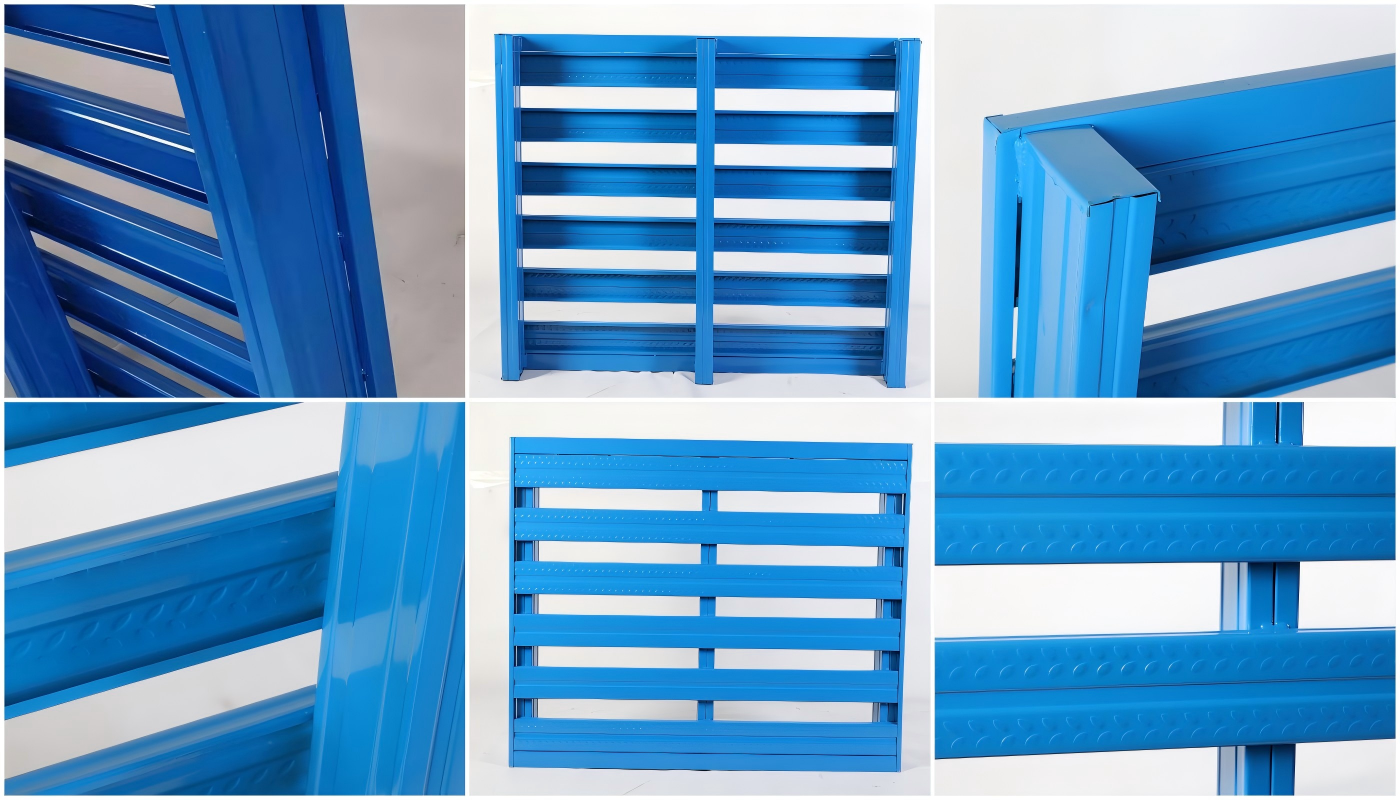
3. Precision Engineering and Stability: The surface of the steel tray shall be treated with a smooth surface and the periphery shall be wrapped to prevent sharp edges. The tray chassis is solid, surprisingly light in weight and incredibly strong in rigidity, guaranteeing stable packaging performance even under dynamic movement.
4. Ultimate Environmental Resilience: Engineered as a waterproof, moisture-proof and rustproof steel tray; Compared with wooden pallets, it has profound environmental advantages (such as completely eliminating the capacity of wooden pallets to breed pests or absorb moisture); Compared with plastic pallets, it has distinct strength, wear resistance, extreme temperature resistance, and long-term price advantages.
5. Frictionless International Logistics: Especially when used for export, steel pallets do not require re steaming, high-temperature disinfection, or anti-corrosion treatment in accordance with international environmental regulations. They fully comply with ISPM-15 quarantine laws, accelerating global supply chain flow and optimizing container space utilization.
6. Automated System Compatibility: Flexible use of steel pallets is a core design philosophy. The 4-way insertion design virtually improves the convenience of space utilization and operation for forklift drivers, and its sturdy bottom plate design also conforms perfectly to the use of assembly lines and automatic packaging systems.
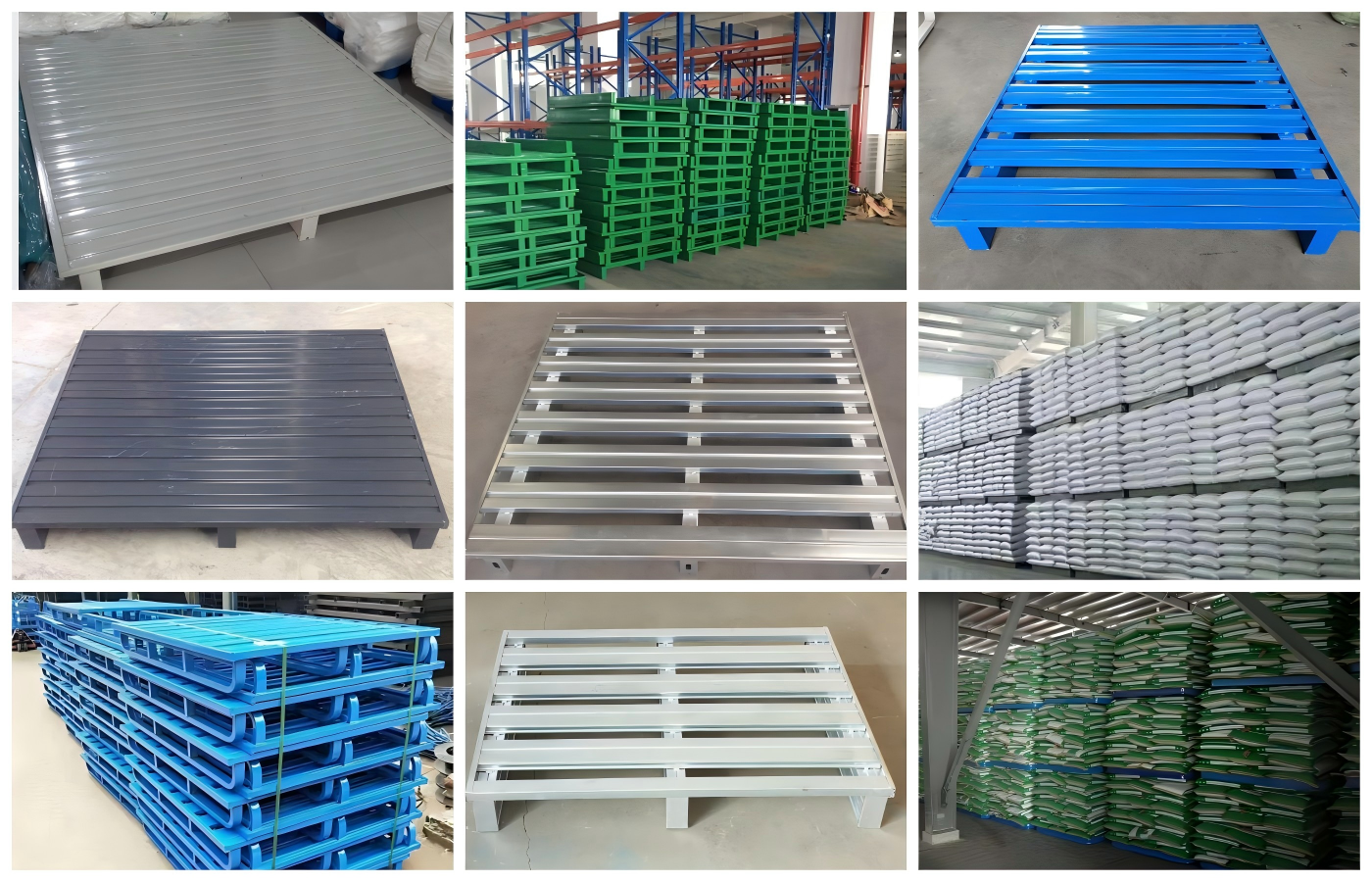
To ensure absolute reliability in extreme environments, our fully-covered pallets undergo rigorous quality control, including slip resistance coefficient evaluations, heavy compression tests, and simulated drop assessments. Below is a detailed breakdown of their technical edge:
Dimensions & Customization | Available in mainstream international standards (e.g., GMA 48x40, Euro). Fully supports non-standard customization based on specific cargo dimensions and specialized racking requirements. |
Dynamic & Static Load Metrics | Clearly defined dynamic load, static load, and rack load-bearing limits. Engineered to meet the high-intensity stacking and safe handling requirements of exceptionally heavy goods. |
Possesses the highest load-bearing capacity among all types of pallets, providing an unyielding base for dense, heavy materials.
Fully recyclable and reusable, ensuring zero waste of resources while delivering a substantial end-of-life scrap value.
Features a specialized non-slip surface treatment and reinforced edge banding. The base structure is robust, offering a lightweight profile combined with high structural rigidity, thereby ensuring stable packaging performance during rapid transit.
Highly resistant to water, moisture, and rust. Compared to wooden pallets, they offer significant environmental advantages (as wooden pallets are prone to pest infestation and moisture degradation).
Offers distinct advantages in terms of sheer strength, abrasion resistance, extreme temperature tolerance (performing flawlessly in cold storage or hot climates), and long-term cost-effectiveness compared to plastic alternatives.
Requires no fumigation, high-temperature sterilization, or anti-corrosion treatments—particularly beneficial for expedited export shipments—thereby strictly complying with international environmental and customs regulations.
Exhibits a high coefficient of friction when placed on high-bay storage racks, preventing dangerous slippage under heavy loads and ensuring safe, reliable operation. Its excellent structural rigidity allows for high load capacities and ensures exceptional durability and a remarkably long service life.
Features a four-way entry design that inherently optimizes warehouse space utilization and operational efficiency; furthermore, its sturdy base design is fully compatible with modern conveyor roller systems and automated packaging lines.
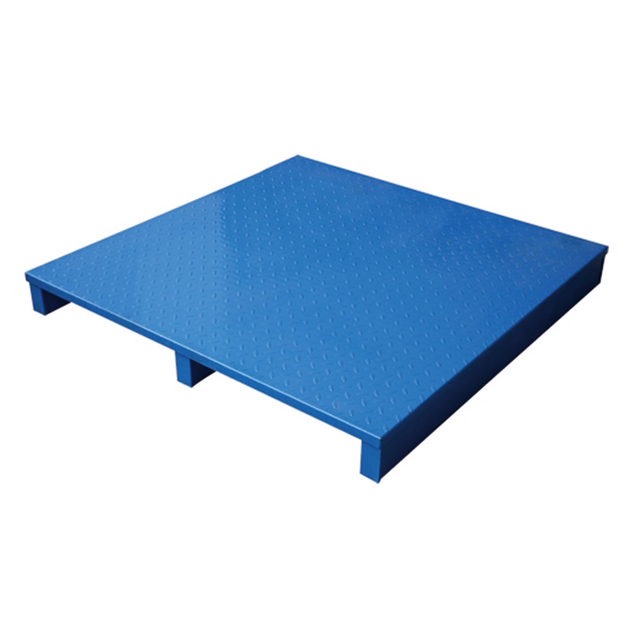
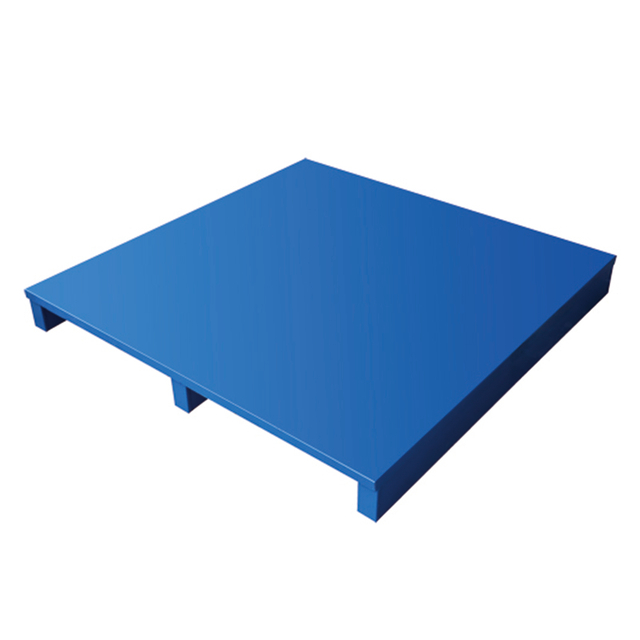
Unlike perforated or patterned deck pallets, the fully-covered flat surface eliminates any gaps between the deck and stored goods. This design delivers specific operational advantages:
Dust & Debris Containment: Solid deck surface prevents small components, granules, or packaging fragments from falling through to the floor below during handling.
Stable Support for Irregular Loads: Provides continuous contact area for cartons, bags, or unevenly shaped items that might otherwise sag or shift on gapped decks.
Simplified Cleaning: A flat, uninterrupted surface is easier to wipe down or hose off compared to ribbed or perforated designs, reducing maintenance time.
Reduced Product Damage Risk: Eliminates the possibility of small items becoming lodged or pinched in deck gaps during loading/unloading cycles.
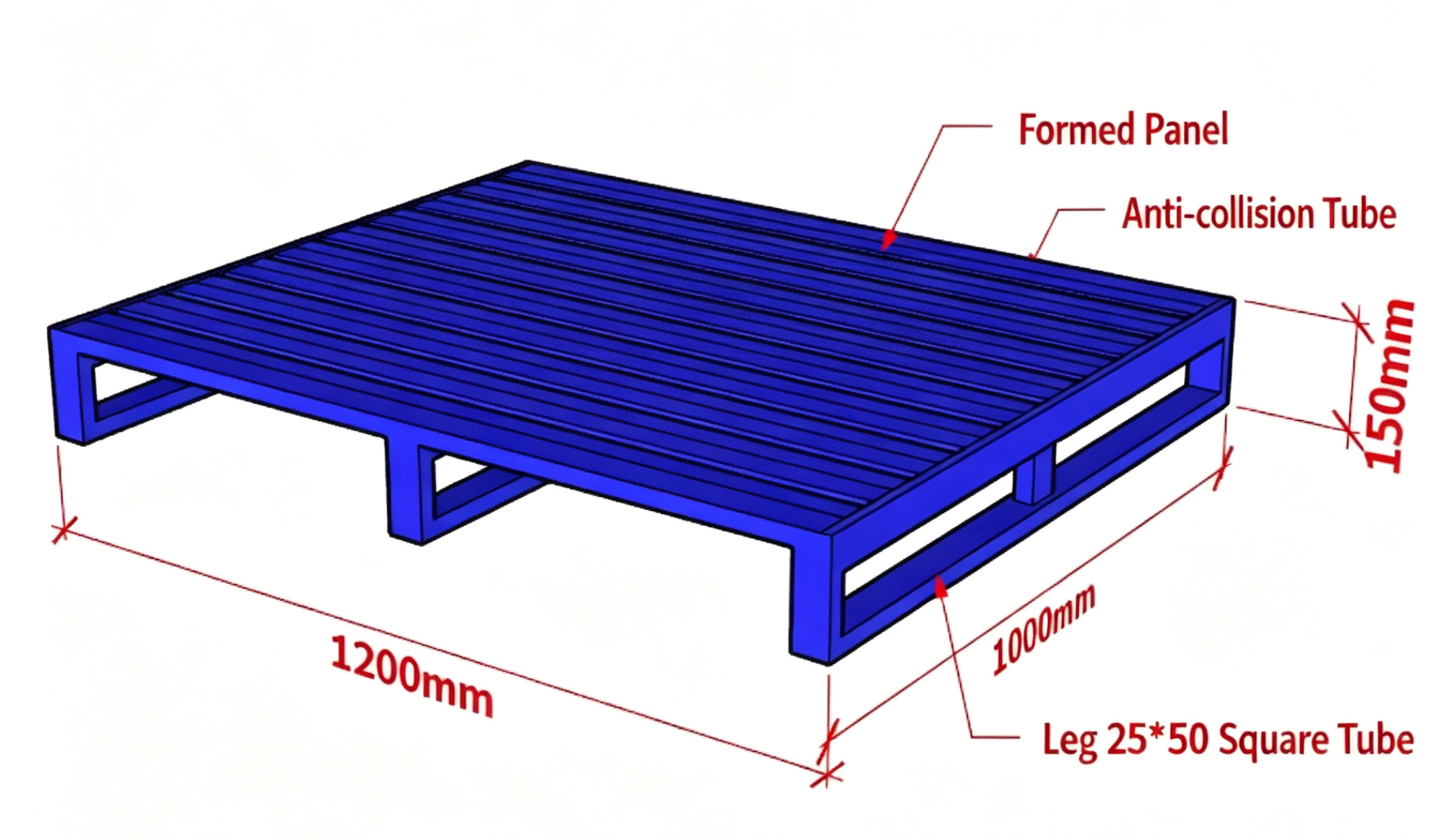
Deck Panel: Continuous flat steel sheet, cold-formed for uniform load distribution across the entire surface.
Support Legs/Blocks: Positioned to create four-way forklift and pallet jack entry clearance from any approach angle.
Reinforcement Ribs: Underside stamped ribbing increases rigidity without adding significant weight, preventing deck deflection under concentrated loads.
Edge Wrapping: Rolled or hemmed edges eliminate sharp corners, protecting both goods and warehouse personnel during manual handling.
The precise dimensional consistency of this pallet series makes it particularly suited for automated warehousing environments:
Uniform leg height and spacing ensure reliable engagement with automated storage and retrieval system (AS/RS) shuttle mechanisms
Flat, gap-free deck surface reduces sensor misreads on automated conveyor and scanning lines
Consistent structural tolerance across production batches supports large-scale automated racking deployments without individual unit calibration
Electronics & Precision Component Manufacturing: Solid deck prevents small parts or fasteners from falling through during assembly line transfers.
Pharmaceutical Warehousing: Easy-to-clean flat surface supports strict hygiene protocols required in regulated storage facilities.
Bulk Packaging & Bagged Goods: Continuous support surface prevents bag punctures or sagging common with gapped or perforated decks.
Automated Distribution Centers: Dimensional precision supports integration with robotic shuttle systems and high-bay automated racking.
Confirm rated static, dynamic, and rack load limits before stacking multiple loaded pallets
Ensure forklift tines are fully inserted through the four-way entry points before lifting to avoid uneven load distribution
Inspect deck and leg welds periodically in high-frequency handling environments to maintain long-term structural reliability
Q1: What is the difference between a fully-covered deck and a perforated or patterned deck pallet?
A: A fully-covered deck has a continuous flat surface with no gaps, ideal for containing small items and easy cleaning, whereas perforated or patterned decks are designed for drainage or anti-slip purposes.
Q2: Can this pallet be used with GMA or Euro standard racking systems?
A: Yes, the pallet is available in mainstream standard sizes including GMA 48×40 and Euro 1200×800, and can also be custom-sized to match your existing racking infrastructure.
Q3: Is this pallet suitable for automated warehouse systems?
A: Yes, the four-way entry design and dimensional consistency make it well-suited for AS/RS and conveyor-based automated handling systems.
Q4: How does the fully-covered design benefit food or pharmaceutical storage?
A: The flat, gap-free surface is easier to clean and sanitize compared to gapped decks, helping facilities meet hygiene requirements in regulated storage environments.
Q5: What load testing is performed before shipment?
A: Units undergo compression testing, simulated drop assessment, and slip resistance evaluation to verify rated static, dynamic, and rack load limits prior to dispatch.